


Frontiers Policy Labs
Rethinking the world with science
The Frontiers Policy Labs initiative seeks to strengthen the connection between robust scientific research and informed policymaking. Now is the time to look to science as a tool to enable better, more holistic decision making; an interface through which policy is driven by evidence. To enable that, science must be open, science must be trusted, and science must be accessible. Frontiers Policy Labs provides an evidence-based discussion platform, covering topics where commentaries are judged as scientific pieces, ensuring rigorous and informed contributions to policy development.
Introduction from our CEO
Dr Kamila Markram, Frontiers’ CEO and co-founder, welcomes you to Policy Labs – a platform unifying world experts from business, science, and policy so that together, we can look toward creating a brighter, more sustainable future for all people.
In Honour of Professor Caroline Wagner

It is with profound sadness that we announce the passing of our Editorial Board Member, Professor Caroline Wagner. Caroline brought invaluable expertise, dedication, and passion to Frontiers Policy Labs, bridging the gap between scientific research and actionable policy. Beyond her professional brilliance, she was a cherished colleague and mentor. Our thoughts are with her loved ones during this difficult time.
As a distinguished faculty member at the John Glenn College of Public Affairs at The Ohio State University, Caroline was a world-renowned leader in science, technology, and innovation policy, focusing heavily on international scientific collaboration networks. Her deep dedication to our mission was exemplified most recently by her active participation in the Frontiers Policy Labs Workshop in collaboration with the International Science Council, held at the Frontiers office in Switzerland in November 2025, where she joined global thought leaders to shape the future of science governance in the 21st century—a focus she was incredibly passionate about, and her enthusiastic contributions during the event continue to inspire the written pieces currently being developed from those discussions.
Caroline’s impactful ideas and voice will continue to guide our community. We invite you to explore her lasting contributions below:


Policy brief
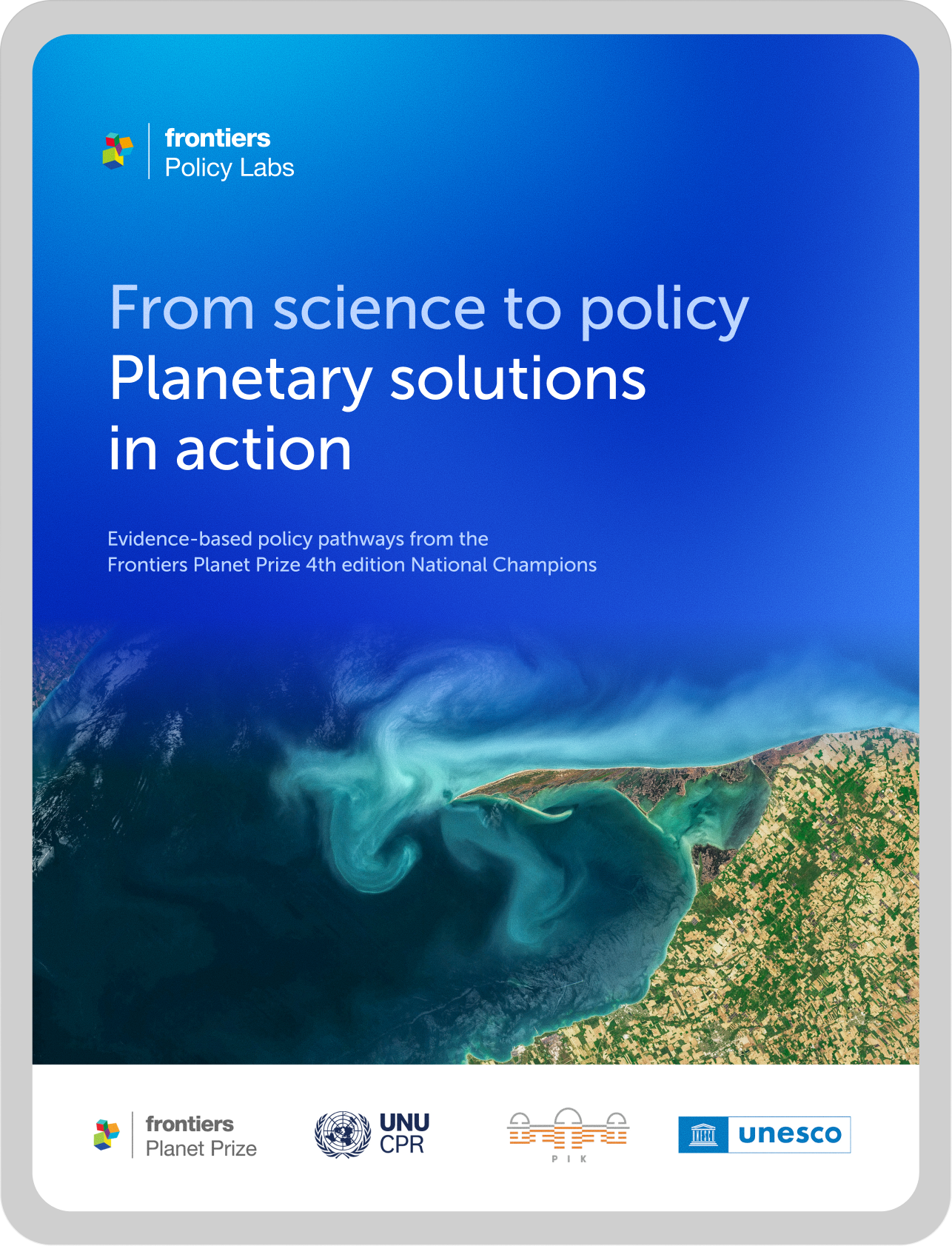
This policy brief synthesizes insights from the 25 National Champion research projects of the 4th edition Frontiers Planet Prize and translates cutting-edge science into actionable policy pathways for governments, international organizations, and industry leaders.




Browse by type of content

Commentaries

As geopolitical rivalry strains the institutions that have underpinned global cooperation since 1945, José Manuel Durão Barroso argues that science can still hold the door open. In this piece, the former European Commission President makes the case for science diplomacy as a bridge across political divides, for open collaboration balanced with legitimate security concerns, and for treating knowledge as Europe’s “Fifth Freedom” — a strategic asset as vital to the continent’s future as the free movement of goods, people, and capital.

Facing mounting geostrategic, political, and technological pressures, science cannot afford to be passive—it must confront the incentives and cultural failings within its own institutions, from the “bibliometric disease” to weakened self-regulation. Only by pre-emptively reforming how it governs, communicates, and justifies itself can science shape its own future and remain a trusted public good, argues Sir Peter Gluckman.

Science has entered a data-rich era, but its integrity, equity, and openness now depend on treating FAIR data as a first-class output and closing the governance gaps around AI-driven research. Without urgent policy action on data standards, infrastructure, and incentives, AI risks accelerating hallucination and eroding trust rather than advancing trustworthy science, argue Barend Mons, Arie Baak, and Koen Jonkers.
In a rapidly shifting geopolitical landscape, scientific institutions must proactively reform their internal incentives and self-governance to protect research integrity and ensure knowledge remains a trusted global public good. Passive compliance with external pressures will no longer suffice if science is to survive as a credible, universally accessible enterprise, argues Sir Peter Gluckman.
This commentary breaks down the institutional inertia and siloed governance currently blocking cross-sector action on planetary health. The authors propose an "Open One Health Data" framework to bridge the gap between global science and national policymaking.

Science diplomacy has evolved from idealistic collaboration into a pragmatic tool for navigating global tensions, shaping policy, and strengthening international cooperation. As science, diplomacy, and governance become increasingly interconnected, trust, openness, and strategic engagement are becoming essential to solving shared global challenges.

Science for Policy 3.0: AI is transforming how governments use evidence—but efficiency gains may come at a hidden cost. As AI takes over policy workflows, the real challenge is protecting human judgment, expertise, and institutional capacity before they quietly disappear.
This article examines how science advisors in Asia work within diverse political systems. The authors show how advisors deliver scientific evidence while keeping their work accurate and reliable. By comparing state-led development in China and Vietnam with active democracies in India and Indonesia, the text highlights the difficulty of staying neutral. It reviews the trade-offs of inside advisory groups versus independent, arm’s-length systems. Finally, the authors share practical steps to keep science advice stable during government changes, using regional examples like the Fukushima wastewater release.

In this commentary, Guillermo Anlló, Chair of INGSA-Latin America and the Caribbean, argues that shifting political cycles, drastic budget cuts, and the discontinuation of long-term programs are quietly dismantling Latin American science. He warns that losing local research capacity creates global blind spots in climate, biodiversity, and disease tracking, fuels brain drain, and erodes democratic resilience. Anlló calls for regional trust funds, coordinated science diplomacy, and initiatives like INKA to safeguard science as a transnational public good.

Science is driving unprecedented advances in health, technology, and society—yet science advice is facing growing scrutiny and political tension. This piece examines the deeper forces behind this apparent paradox.

A reflection on the institutional, political, and conceptual lessons from the NHS COVID-19 contact tracing app, examining how science advice operates under uncertainty, digital dependency, and crisis conditions.
A first-hand account of the development of the NHS COVID-19 contact tracing app, examining how scientific advice operates under institutional pressure, technical uncertainty, and political scrutiny during a public health crisis.

Ethics advice helps policymakers understand the societal impacts and value trade-offs behind scientific decisions. Strengthening ethics expertise within the science-for-policy ecosystem can lead to more transparent, inclusive, and trustworthy policymaking—especially in times of uncertainty and rapid technological change.

Science today is simultaneously expanding at an unprecedented global scale and facing a growing set of interconnected challenges. This article examines the health of contemporary science in a world of poly-crisis — from internal incentive distortions and declining trust, to geopolitical pressures, access barriers, and the transformative impact of AI — and argues why strengthening science’s robustness and authority is essential to navigating global turmoil.

Barbara Koremenos argues that international scientific collaboration can build trust and help solve global problems, even amid geopolitical rivalry. Using stratospheric aerosol injection (SAI) as a case, she makes the ethical and strategic case for transparent, government-backed research—distinct from deployment—and points to the Antarctic Treaty system (and bodies like SCAR) as a model for credible, science-led governance. She stresses that inclusive participation, especially from the Global South, and clear communication are key to closing today’s trust gaps.

This article traces today’s tension around the post‑WWII “social contract” for publicly funded basic research (shaped by Vannevar Bush’s Science: The Endless Frontier). It argues the contract is straining as governments demand faster, more visible returns, even though long-run payoffs (like mRNA vaccines) show why basic research matters. It proposes updating the model through broader collaboration, clear outcome goals, and continued support for curiosity-driven research as essential, not optional.

Ruth M. Morgan argues that trust between science and society depends on sustained, open dialogue. She highlights that knowledge is disruptive and uncertain, and that progress starts with asking better questions—especially in an era of misinformation.

Science and science advice: a defining moment? explores the evolving role of science and scientists in policymaking amid societal complexity, polarization, and uncertainty. It highlights challenges in trust between society, governments, and research institutions, and considers how science advice can remain effective, inclusive, and evidence-based. The article emphasizes collective intelligence, the role of honest brokers, and the importance of iterative, context-sensitive approaches to navigating complex policy landscapes.

Strengthening the International Ecosystem for Scientific Advice examines the growing global and European efforts to build more coordinated, resilient, and inclusive science-for-policy systems. Drawing on recent initiatives by INGSA, the European Commission, and national advisory communities, the article outlines the opportunities and challenges of linking diverse advisory structures, reducing fragmentation, and enhancing institutional capacity for evidence-informed policymaking. It highlights the importance of connectivity, mutual learning, and principled approaches to scientific advice—especially in a period marked by geopolitical uncertainty, technological transformation, and complex societal challenges.

Science advice in challenging settings is an increasingly relevant issue and there is value in ‘slow conversation’ to explore the challenges and co-create paths forward. This series aims to address some of the recent challenges that emerged in conversations that have taken place through the INGSA Europe community. We invite contributions to this ‘slow conversation’ to explore more deeply how science advice can be effective today and lay evidence based foundations for the future that is being created.
Five years after its launch in November 2020, the Frontiers Policy Labs has grown into a global initiative connecting thousands of readers and contributors worldwide. Born out of the COVID-19 crisis, the Labs explore how open science can inform policymaking, addressing challenges from pandemic responses to sustainability, AI, and biotechnology. Guided by the principle of rethinking the world with science, the Labs aim to develop evidence-based policies for a rapidly changing world, where old frameworks no longer suffice. Looking ahead, priorities include ensuring a healthy planet, responsibly guiding AI and biotechnology, and addressing global security. To support this mission, the new Science House initiative will bring together leaders from science, policy, and industry at the 2026 World Economic Forum. As JCB notes, “Our first five years were just the beginning… we still have a long way to go.”

“No Place to Hide: Science Is the Foundation of Policy” calls for urgent, science-driven climate action. With global temperatures already surpassing 1.5°C, the EU places science at the heart of its Green Deal, climate law, and upcoming 2040 framework. The message is clear: climate policy is not just about nature—it is about security, resilience, and economic survival. Science provides the evidence, innovation, and solutions we need, but action requires breaking silos, effective communication, and shared responsibility across all sectors. The EU’s upcoming climate adaptation plan and investment in resilience show the path forward. The research community is central to this mission, and their work fuels the hope of a safer, stronger, and more sustainable future. There is no time to wait—together, we must act now.

The European Union has embarked on a comprehensive process to phase out animal testing for chemical safety, engaging stakeholders across numerous consultations and workshops, though final implementation remains years away. In contrast, the United States Food and Drug Administration has unveiled a clear and ambitious roadmap to rapidly reduce animal testing, centered on validated New Approach Methodologies such as organ-on-chip and advanced computational models. These regulatory developments underscore a global shift toward innovative, human-relevant safety testing methods and signal important changes for pharmaceutical regulation worldwide.

In a context of tensions and conflict globally and locally, we are seeing polarisation and isolation in our societies, and growing evidence that trust is being eroded. This tension is clear within the science community (in its broadest definition), and between science and society. (…)

As the recent repeated climate-related tragedies in several countries (…) demonstrate, we are now observing what was predicted many years ago on the basis of scientific models. As William Ripple and colleagues have stressed, (…) “We are on the brink of an irreversible climate disaster. This is a global emergency beyond any doubt. Much of the very fabric of life on Earth is imperilled. We are stepping into a critical and unpredictable new phase of the climate crisis.

We live in a time of significant global challenges. The term polycrisis has emerged as we face wide-reaching and impactful issues such as the climate, war and conflict, and health. To address these challenges, we will need political will, global collaboration, inter- multi- and transdisciplinary approaches, systems thinking and scientific breakthroughs at scale. Science and scientists have an important role to play as societies tackle these challenges and lay foundations for actions that will direct the course of the future. It is possible to argue that science that engages effectively with society will depend on the sharing, uptake and accessibility of scientific knowledge and insight, but also on the way that science is designed and co-designed in ways that reflect excellence and the aspirations and expectations of societies.

In the 21st Century, as humanity and the Earth face crises of survival and sustainability, we must fundamentally rethink the values that science and technology aspire to, their social roles and methods, and the norms of scientists. This rethinking will likely lead to significant changes in the 200-year history of modern science, which has been institutionalized since the early 19th Century.

Modern society is one of fragmented logics. Business, finance, government, academia, all apply different logics in their operations. All of them make sense within their limited bubbles, all together create the conditions for self-extinction.
Science is perceived by many as the activity allowing us to make sense of the rest, by unveiling the mysteries of how nature works and enabling human inventions changing, supposedly for good, our relationship to other humans, to nature, and to time. But science itself is a bubble operating with a partial logic. I am talking here of what makes scientists do what they do, investigate certain topics (and not others), and take decisions for their professional careers. Hyper-specialisation has become a useful tool to keep the dynamic of publication-grant-publication running, and that is what defines a good scientific career. Are we sure this logic is enough to serve societal purposes in the 21st century?

In the hyperbole about artificial intelligence, there have been claims about how AI, in the guise of large language models, can plausibly, confidently and succinctly summarise complex science, accompanied by warnings about its propensity for bias, factual inaccuracies and, most notoriously, to ‘hallucinate’ fake references. As was the case with the internet, this fabulous tool has to be used wisely if we are to get the most benefit.
But there is a deeper problem with gazing at the world through an AI lens since, if anything, it can obscure the process of science.

Today's fast-changing society is faced with a variety of complex large-scale societal challenges. Simultaneously, people are losing trust in both science and those studying and researching these challenges. Still, we need those scientists from all fields and backgrounds more than ever to work in inter- and multidisciplinary ways, solving these challenges and having their insights assist politicians and decision-makers. It is apparent that the scientific community has to foster trust in science. But how do we ensure that efforts to build trust in science are sustainable and that trust in science remains integrated in the community for the next decades to come? More than ever we need to engage across the generations and particularly the younger generations.


Lanthanide probes and associated AI should be assessed together within a unified international framework, argue Profs Pingkun Yan and Ge Wang, involved in IEEE projects related to medical imaging, and Prof Mannudeep K. Kalra, radiologist.
The glucose ketone index (GKI) and other evidence-based biomarkers have an important role in personalized nutrition care in the management of chronic diseases. However, realizing their potential requires policy changes to ensure equitable access to personalized nutrition care via competency-based education and licensure and reimbursement reform—argue Corinne Bush and Amy Smith of the American Nutrition Association.

Prof Rita Carsetti, International Union of Immunological Societies, Germany, and Prof Michael Schmueck-Henneresse, University Health Network, Canada — Bringing tolerance-restoring Treg therapies to patients worldwide requires regulation, manufacturing, and reimbursement to evolve alongside the science.
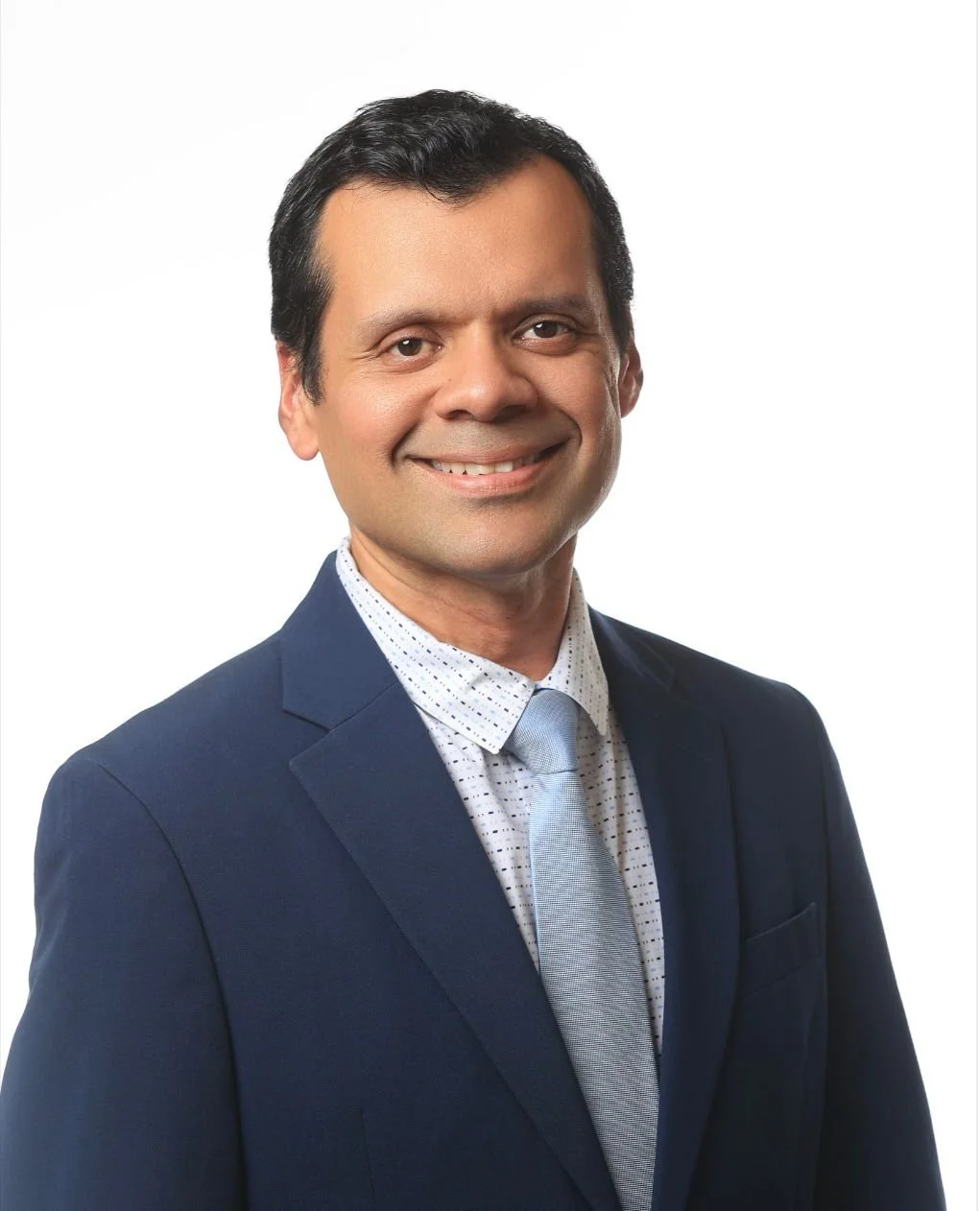
As artificial intelligence and robotics reshape surgical practice, policy and regulatory frameworks must keep pace to address issues such as accountability, safety, and equity, argue members of TROGSS (The Robotic Global Surgical Society) Michail Koutentakis, Nicolas Zucchini, Christian Macias, Aman Goyal, Abhirami Babu, Adel Abou-Mrad, Adolfo Perez-Bonet, and Rodolfo J. Oviedo.

Multi-agent AI could move soil science beyond fragmented data and into actionable policy, if paired with stronger data infrastructure, transparency, and governance, argues Catherine Nakalembe of the University of Maryland.

Achieving a Nature Positive future requires embedding systems thinking into policy and finance so that ecological integrity becomes a foundation—not a constraint—of economic decision-making, says Éliane Ubalijoro, Isaac Rutenberg, Robert Nasi, Paulo Augusto of Center for International Forestry Research and World Agroforestry (CIFOR-ICRAF).

A credible, standardized Nature Measurement Protocol is essential to mobilize the private sector and translate the Nature Positive goal into measurable, accountable action, says Marco Lambertini, the Convener of the Nature Positive Initiative in Switzerland.

Food safety must move beyond binary compliance toward an integrated, risk-based approach that transparently defines appropriate levels of protection and balances safety with sustainability, equity, and trade objectives to enable resilient and secure food systems transformation, argues Steve Wearne, former chairperson of the Codex Alimentarius Commission.

Wastewater must be reimagined as a strategic resource—unlocking water, nutrients, and energy to advance sustainable development—and supported by coordinated policy and investment to build public trust, says Manzoor Qadir of United Nations University Institute for Water, Environment and Health.

Emerging compute is redefining scientific sovereignty, and societies now face a pivotal moment to embed equity and public purpose into AI’s foundations, says Vilas Dhar, President of the Patrick J. McGovern Foundation.

Tackling plastic pollution through coordinated action across global, national, and local levels is both an environmental imperative and a climate solution, essential to safeguarding ocean and planetary health, argues Anja Brandon, Director of Plastic Policy for the Ocean Conservancy.

The convergence of AI and consciousness science demands anticipatory, globally inclusive governance to promote ethical progress and address issues of neuroprivacy, bias, and equity, say Marcello Ienca, Joseph Fins, and Debra Mathews of the International Neuroethics Society.

Cardiovascular health for all demands national action plans that integrate precision approaches based on globally representative research—enabled by leadership committed to equitable access and context-relevant implementation, says Prof Amam Mbakwem, World Heart Federation, Nigeria.

Hybrid proteins face complex regulatory hurdles, and regulatory sandboxes could help balance safety, innovation, and consumer acceptance on their path to market, say Dr Alessandro Monaco and Prof Kai Purnhagen (University of Bayreuth, Germany)

Scaling hybrid proteins requires supportive policy and financing frameworks to reduce the hidden costs of the global food system while strengthening sustainability, resilience, and food security, says Dr Helena Wright (FAIRR Initiative, London, UK).

A growing number of Global South governments and academics are now calling for an international non-use agreement on solar geoengineering, says Prof Aarti Gupta of Wageningen University, the Netherlands.

The rights, leadership, and knowledge of Inuit Peoples must be foundational to geoengineering and other climate policies affecting their Homelands, ensuring meaningful participation and avoiding unfair burdens, emphasizes Sophie Crump, Inuit Circumpolar Council, Greenland.

The Earth BioGenome Project is scientifically viable and globally coordinated—but success now hinges on strategic policy leadership, sustained funding, and unrestricted data access, asserts Prof. Richard A. Gibbs, Baylor College of Medicine, USA.

A holistic, microbiome-informed approach to agrifood systems and childhood nutrition policies—rooted in global collaboration, evidence-building, and equitable innovation—can drive sustainable solutions to undernutrition and improve children’s health worldwide.

Dr. Abdelbagi M. Ismail explores how scientific innovations, strategic partnerships, and policy reforms, led by organizations like the International Rice Research Institute, are crucial for achieving sustainable food security in Africa and globally amid mounting environmental and population pressures.

Disruptive approaches such as NANOSPRESSO could help provide equitable access to advanced therapies for patients with rare diseases worldwide, as called for by the recent World Health Assembly Resolution on Rare Diseases, highlight Alexandra Heumber Perry and Debra Bellon.

Realistic opportunities to extend the human healthspan and ease the societal burden of aging-related diseases are emerging, but require long-term funding for infrastructures that support large-scale data collection and systems-based aging research, advocate Prof. Renaud Jolivet and colleagues.

Global health policies must prioritize investments in sepsis R&D as a cornerstone of pandemic preparedness and response, urge Dr Mariam Jashi, Global Sepsis Alliance, Georgia, and Prof Niranjan Kissoon, University of British Columbia, Canada.


Collaboration between science, medicine, policymakers, and societies is essential for tackling major health emergencies and pandemics, highlights Brigitte Autran of Sorbonne Université and President of the French Committee for Monitoring and Anticipating Health Risks (COVARS).

Capacity, access, data quality, and ethical issues must be addressed for global adoption of genomic surveillance, highlight Dr Stephen A Morse of IHRC Inc, USA, and Dr Segaran P Pillai of the United States Department of Health and Human Services.
Policy outlooks


At the Frontiers Science House in Davos, the first venue dedicated to transformative science during the World Economic Forum Annual Meeting, this set of sessions examined how advances in AI and biomedical innovation are reshaping healthcare systems. Across discussions on discovery, delivery, and prevention, speakers emphasized that the central challenge is no longer technological capability, but system readiness. The convergence of data, incentives, and environmental risk is driving a shift from reactive care toward integrated and predictive health systems.
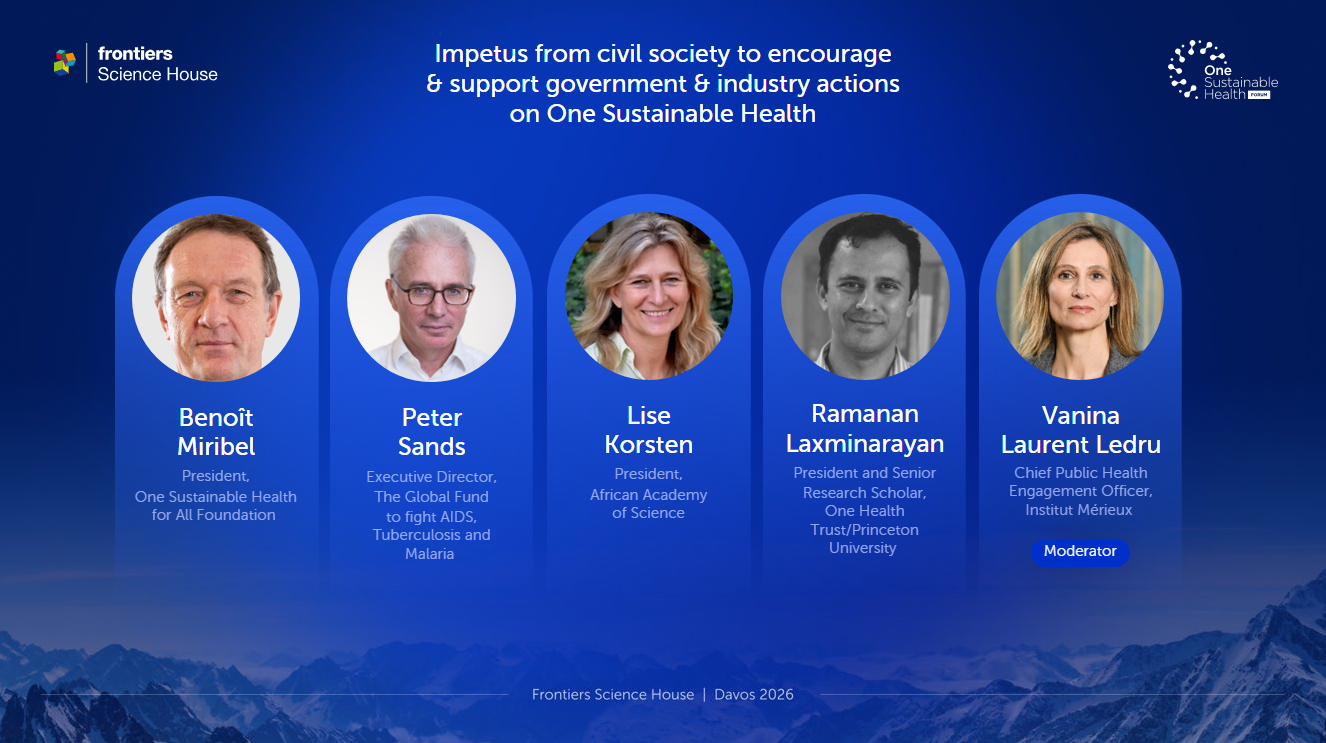
At the Frontiers Science House in Davos, discussions about One Sustainable Health highlighted how interconnected risks across human, animal, and environmental systems are reshaping global health. This session underscored a shift from fragmented interventions to system-level responses grounded in cross-sector collaboration.
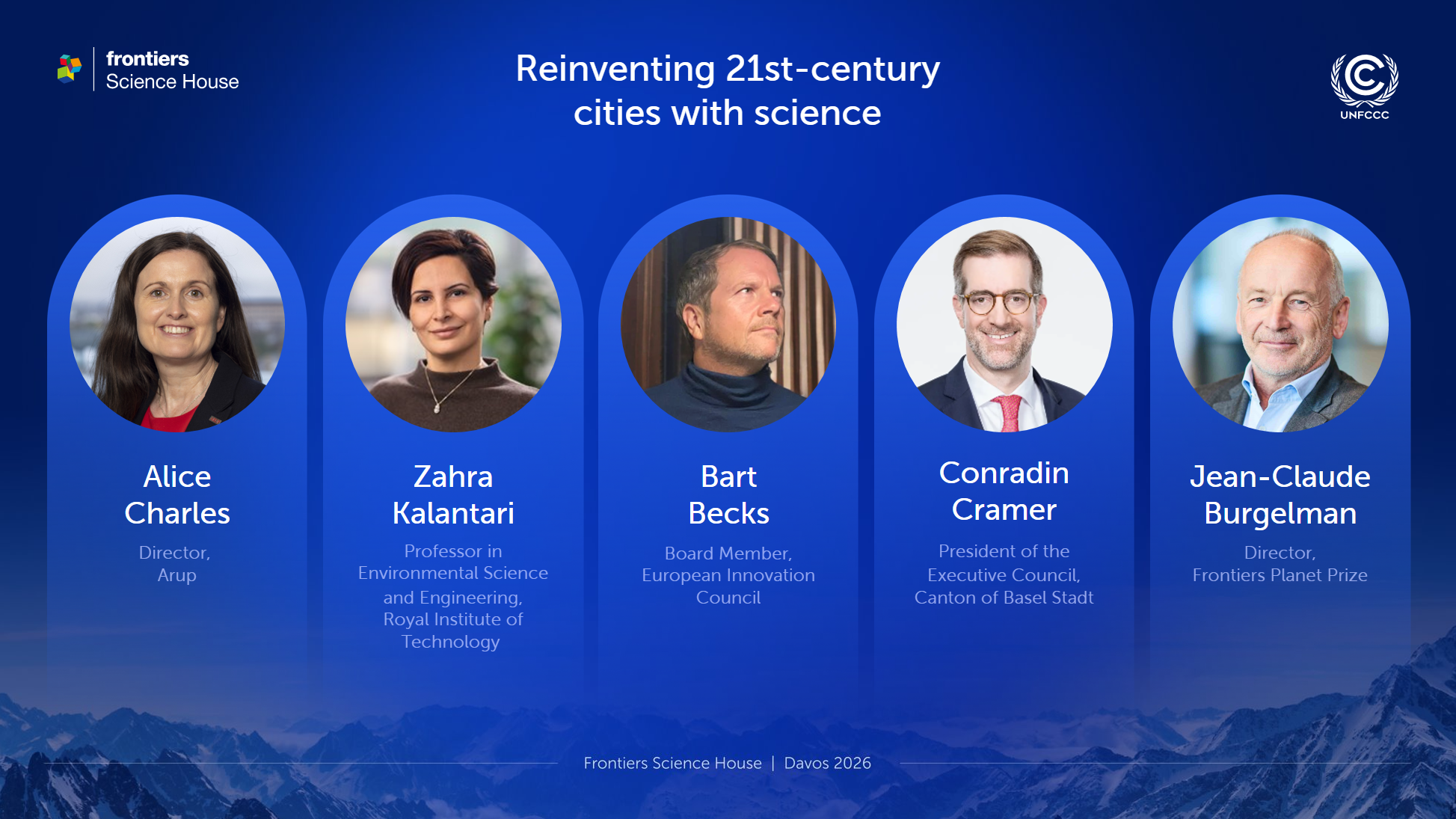
At the Frontiers Science House in Davos, sessions on cities and the Frontiers Planet Prize explored how planetary health can move from scientific insight to large-scale implementation. Speakers connected planetary boundaries with urban systems, food chains, and governance structures, emphasizing that the key challenge is not knowledge but execution. The discussions highlighted the need to align finance, policy, and data to enable measurable, system-wide transformation anchored in real-world contexts.
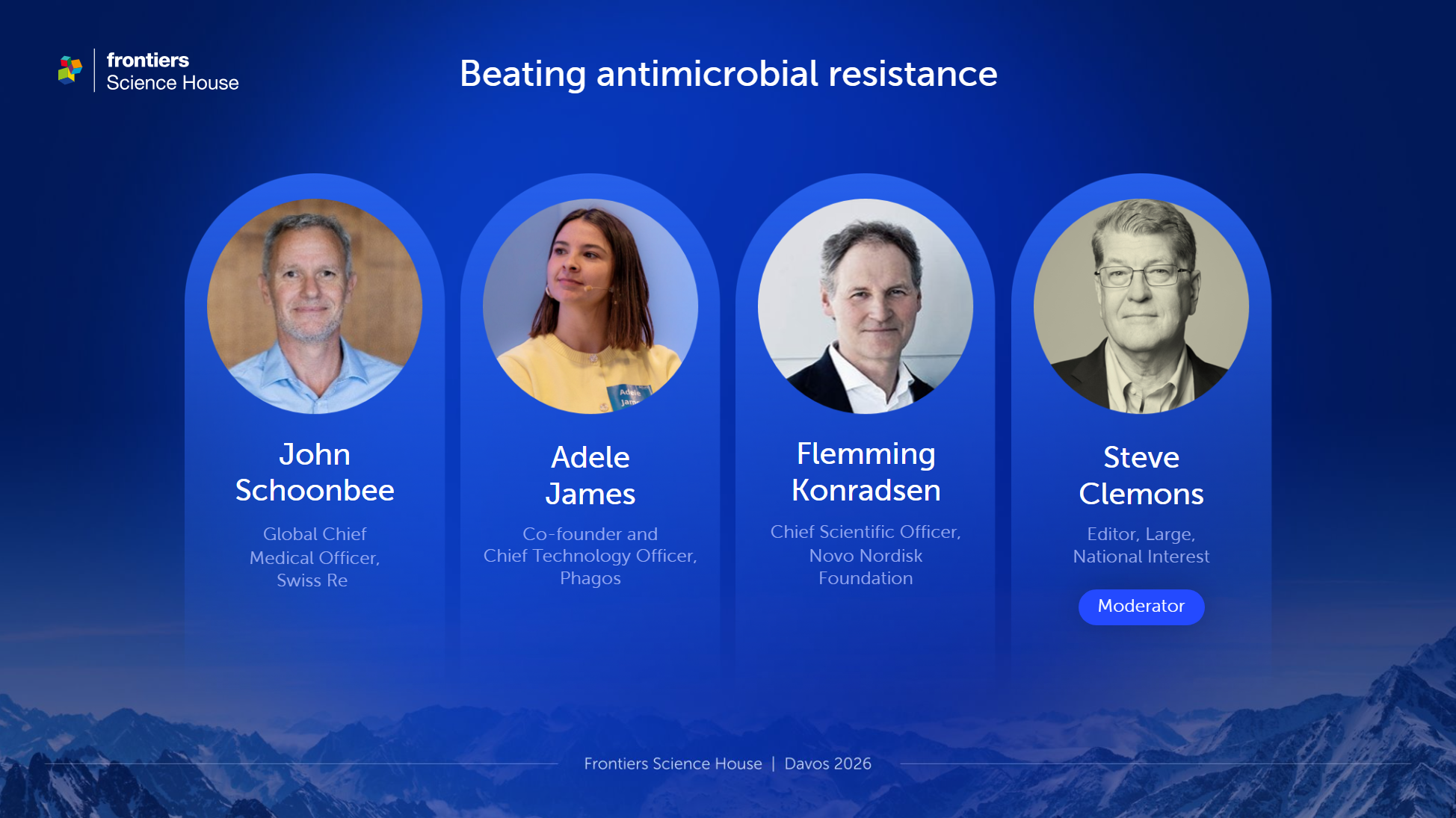
At the Frontiers Science House in Davos, the antimicrobial resistance was framed as one of the most pressing yet under-recognized threats to global health systems. Speakers examined how to resolve this tension while preventing AMR from undermining modern medicine.
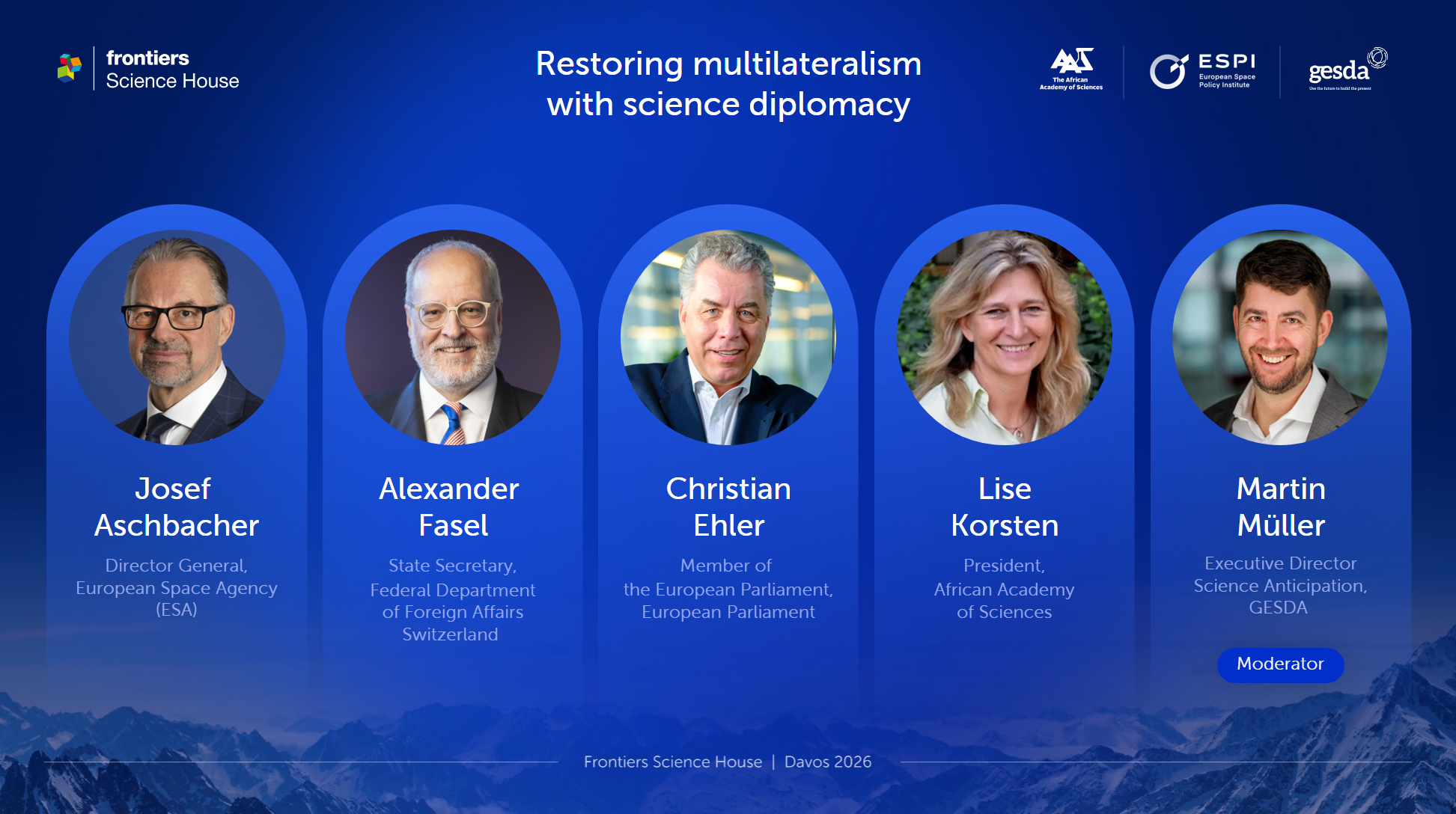
At the Frontiers Science House in Davos, this session examined how science diplomacy is evolving in a context of increasing geopolitical competition. Speakers highlighted the need to move from reactive cooperation to anticipatory engagement, embedding scientific expertise earlier in diplomatic processes. The discussion emphasized that effective science diplomacy will depend on building trust, strengthening international coordination, and enabling more inclusive global participation in shaping emerging technologies.
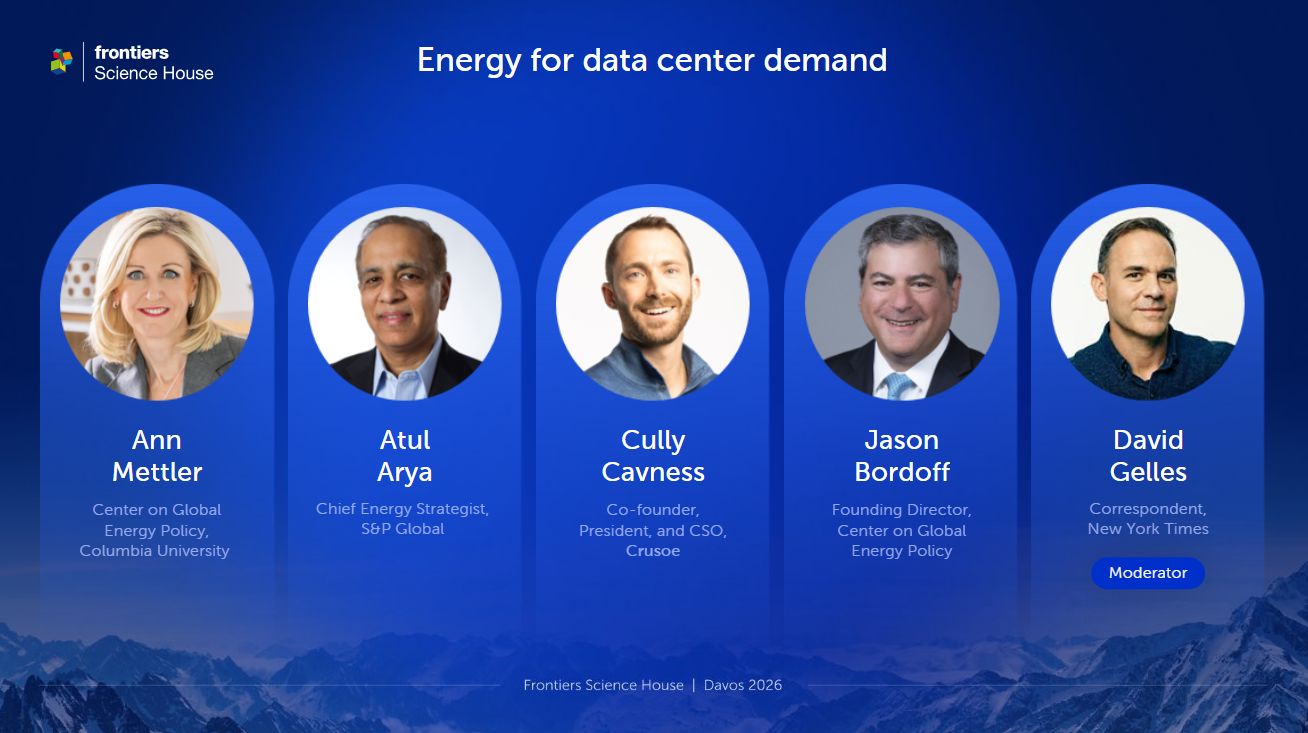
At the Frontiers Science House in Davos, this session explored how the rapid growth of AI and digital infrastructure is placing unprecedented pressure on global energy systems. Speakers highlighted the tension between scaling data capacity and maintaining grid stability, affordability, and climate goals, emphasizing the need for flexibility, new energy sources, and smarter system management.

At the Frontiers Science House in Davos, speakers examined the path from scientific breakthroughs to commercially viable fusion energy. The session emphasized the importance of industrialization, supply chains, and policy frameworks to scale solutions.
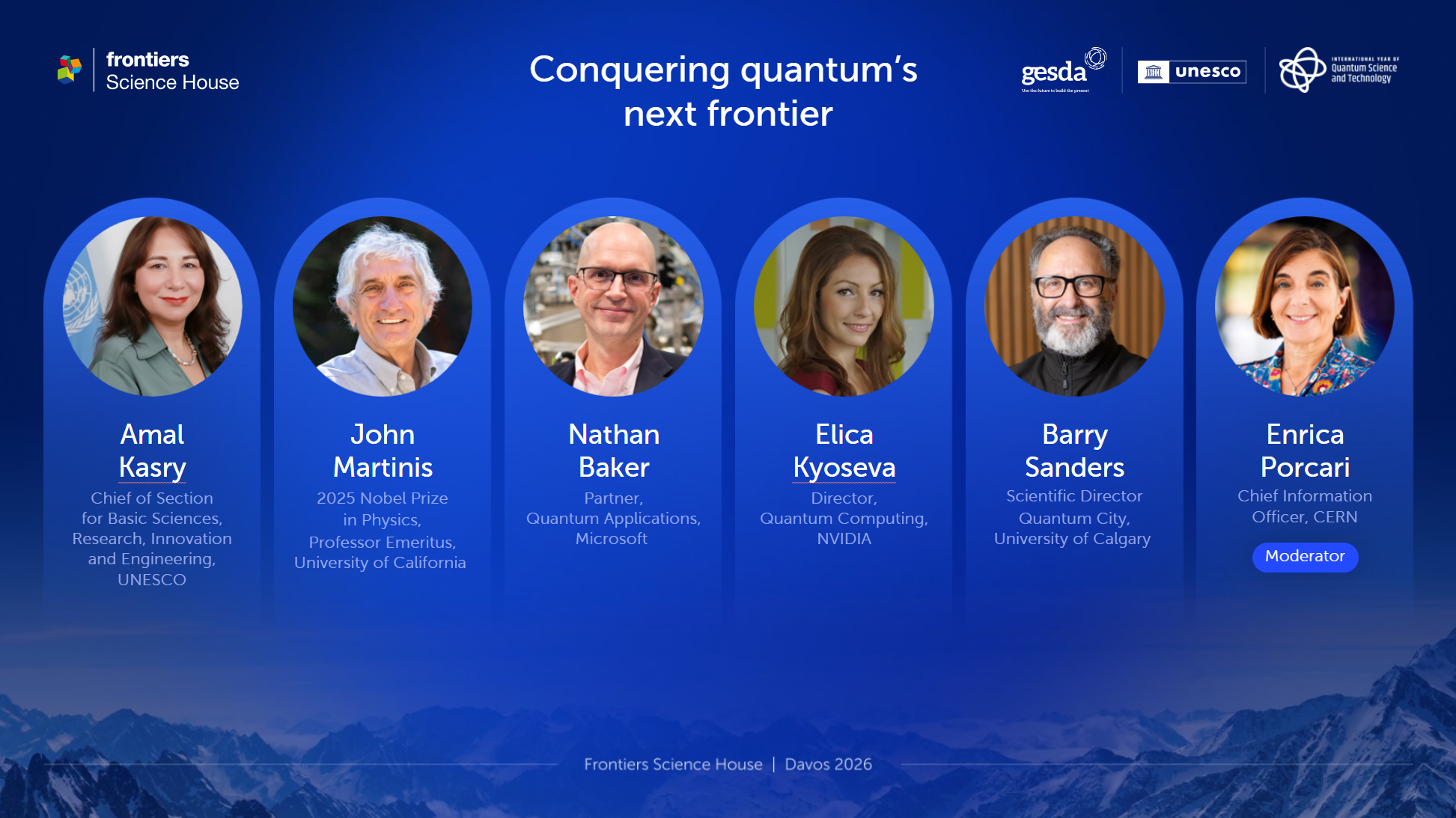
At the Frontiers Science House in Davos, this session explored how quantum technologies are transitioning from research to early application. The discussion focused on hybrid systems, global coordination, and inclusive capacity building.
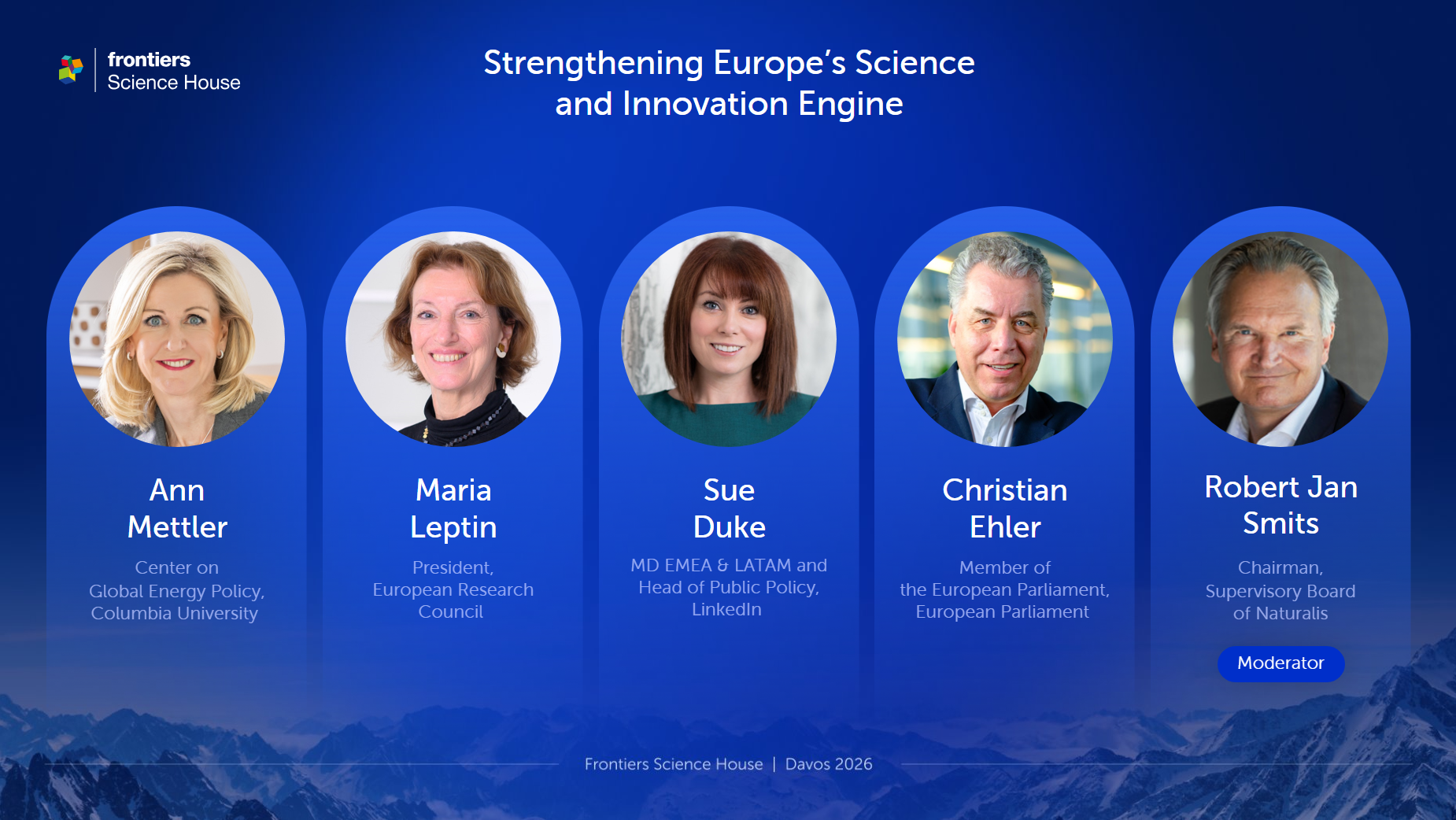
At the Frontiers Science House in Davos, speakers examined Europe’s challenge in translating strong research into scalable innovation to ensure its competitiveness, based on the inputs from the Draghi report. The session emphasized the need to better connect funding, markets, and skills to strengthen global competitiveness.
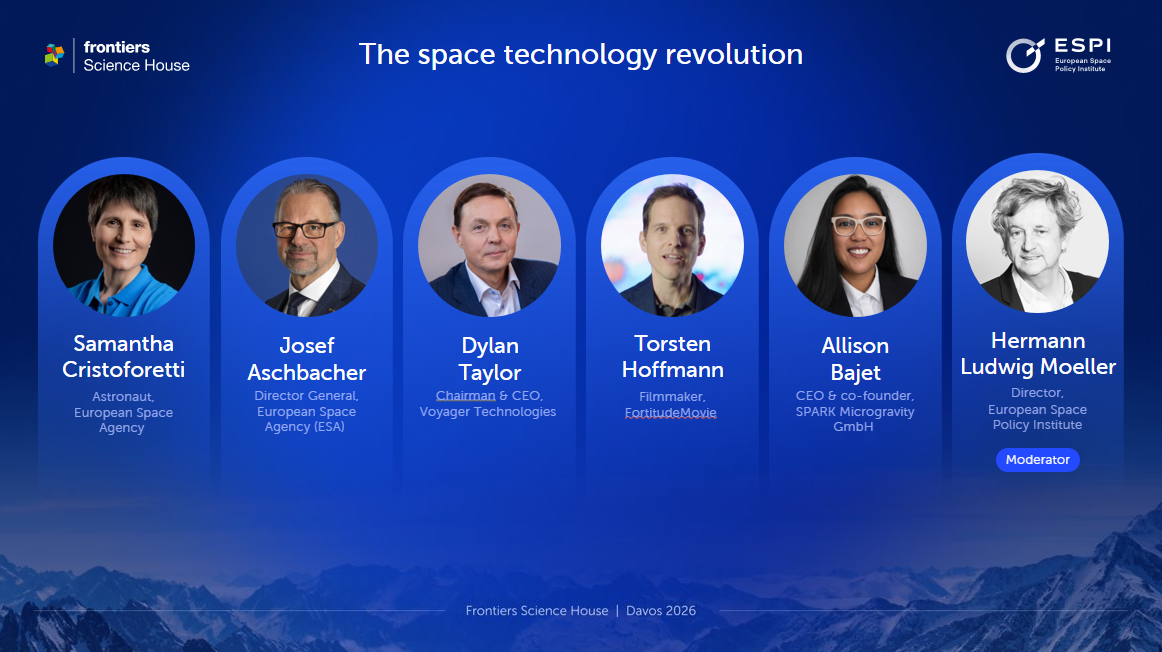
At the Frontiers Science House in Davos, this session explored how space technologies are becoming essential infrastructure for communication, security, and environmental monitoring. The discussion highlighted commercialization trends and the need for faster regulatory and investment frameworks.

At the Frontiers Science House in Davos, this debate explored whether geoengineering should be treated as a necessary risk management tool or a distraction from decarbonization. The discussion highlighted governance challenges, systemic risks, and the urgency of maintaining focus on emissions reduction.

At the Frontiers Science House in Davos, this session examined the widening gap between climate commitments and implementation. Speakers emphasized that the challenge is not awareness but execution, calling for stronger accountability, effective incentives, and deeper engagement from the private sector.
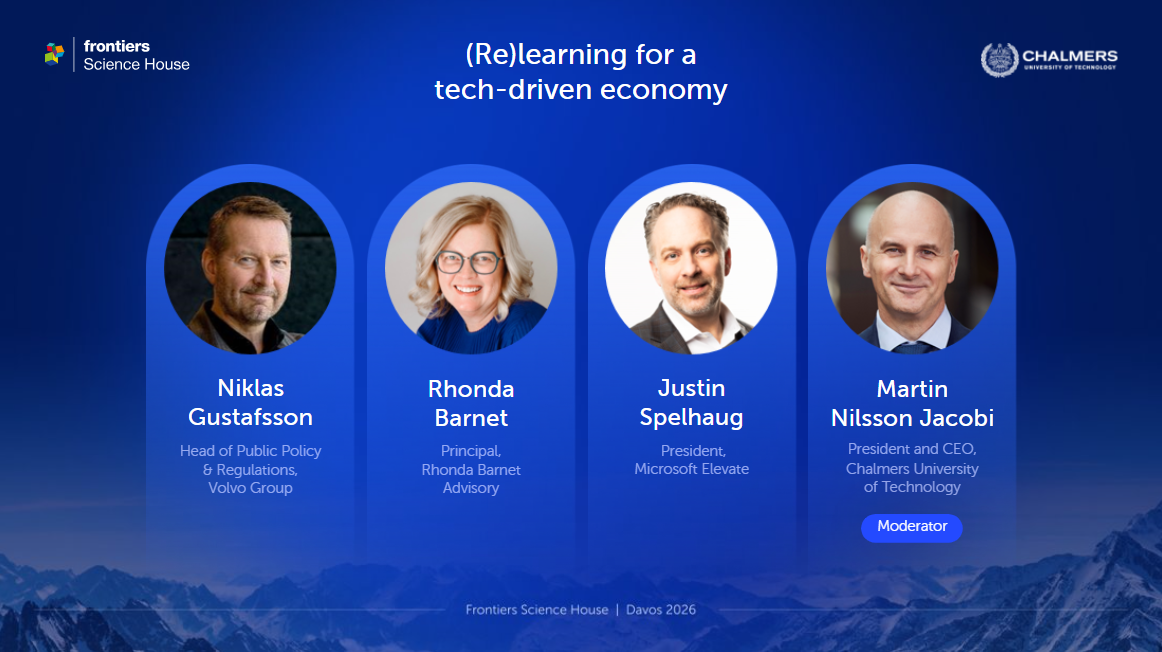
At the Frontiers Science House in Davos, speakers addressed the growing mismatch between the pace of technological change and education systems. The session focused on modular, rapid, and industry-aligned learning models, supported by new intermediaries that can connect skills development directly to labor market demand.
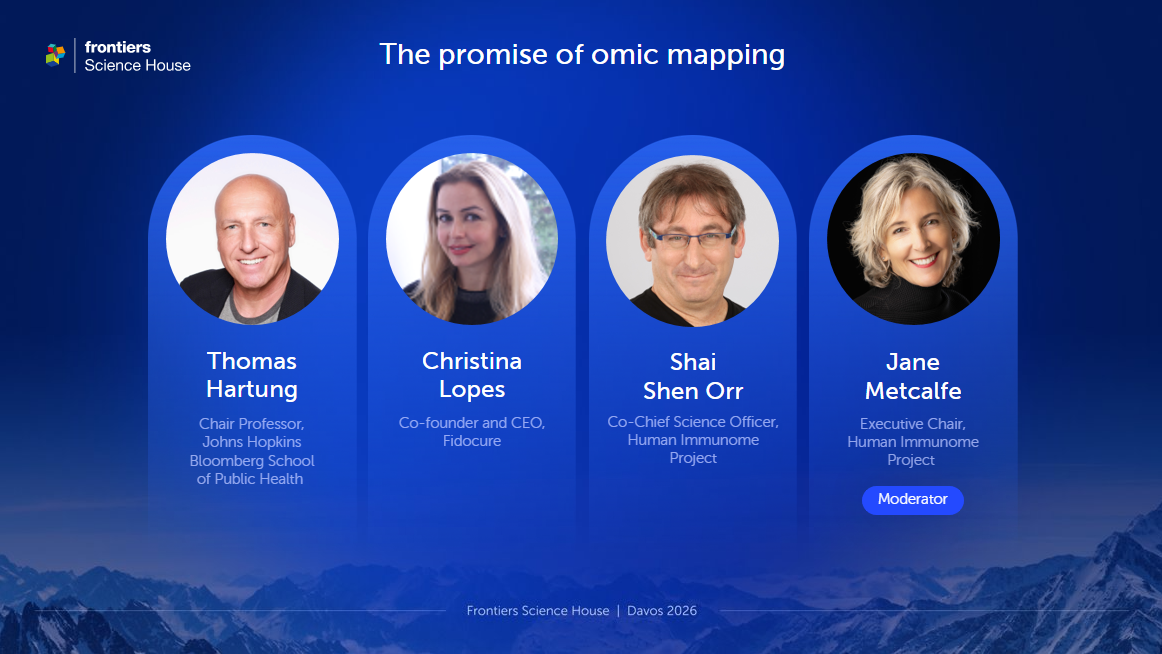
At the Frontiers Science House in Davos, this session highlighted how omic technologies are redefining disease understanding through multi-layered biological insights. The discussion emphasized that the key bottleneck is no longer data generation, but integration, standardization, and open access needed to translate complex datasets into actionable applications.
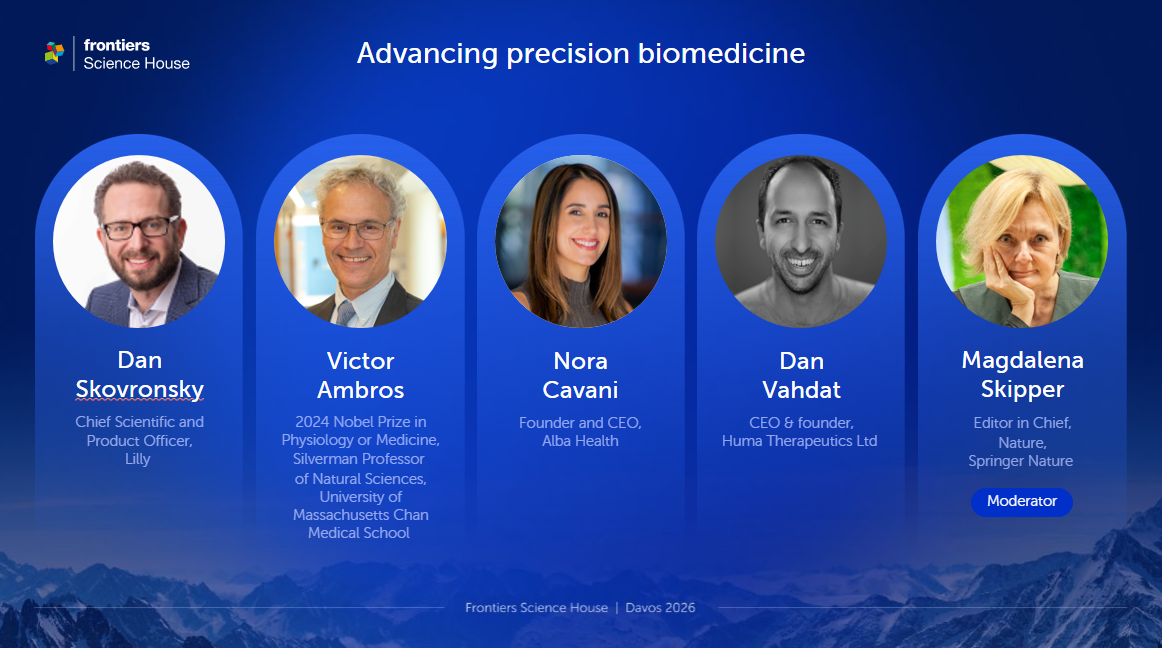
At the Frontiers Science House in Davos, the first venue dedicated to transformative science during the World Economic Forum Annual Meeting, this session examined how precision biomedicine is moving from controlled trials into real-world care. Speakers highlighted the growing gap between scientific capability and system readiness, emphasizing the need to align diagnostics, data infrastructure, and regulatory models to scale personalized therapies equitably.
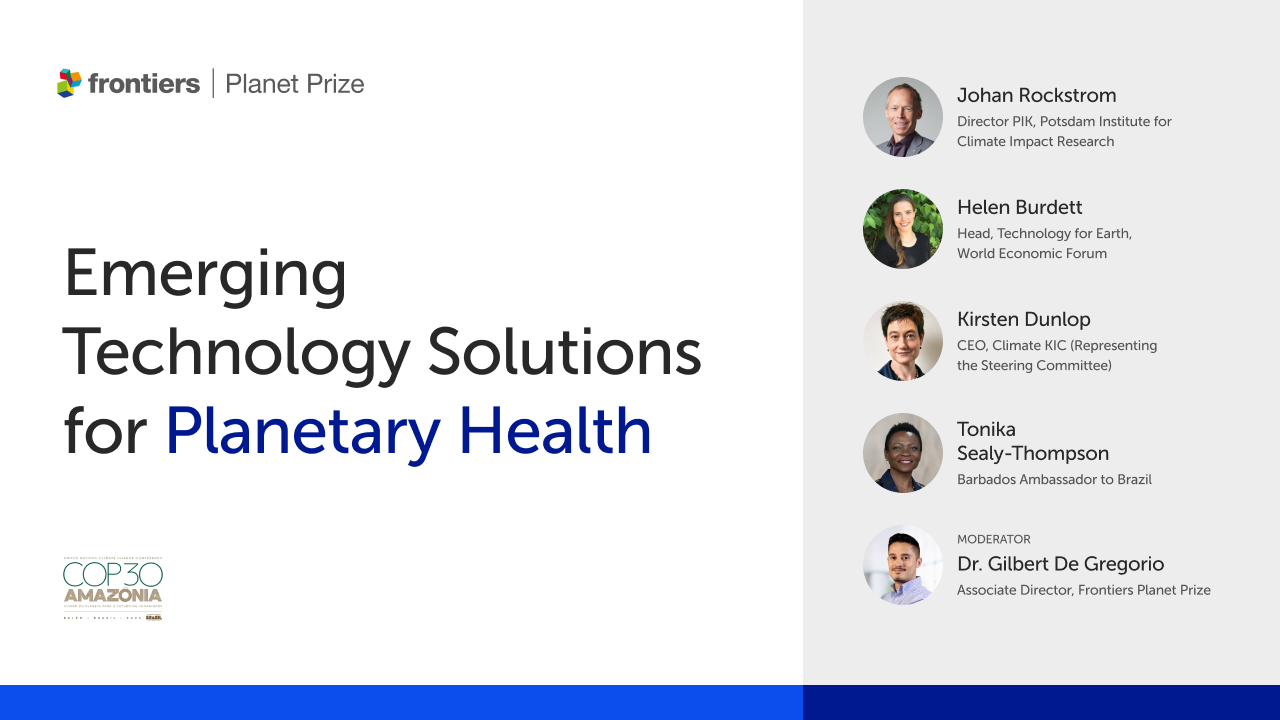
Drawing on the World Economic Forum’s first technology report on planetary health, created in partnership with Frontiers, this COP30 panel highlighted key takeaways for deploying ten emerging solutions at scale. Panellists emphasised shifting from self-reported data to precise earth observation, investing in digital-twin diagnostics, and embedding policy, finance, and community co-creation to ensure equitable, real-world impact for restoring planetary systems.

The Top 10 Emerging Technologies of 2025 report, published by the World Economic Forum in collaboration with Frontiers, highlights breakthrough innovations shaping the future of energy, information technology, and sustainability. During a panel discussion focused on the report, experts explored how fusion energy, green chemistry, and next-generation sensing systems are advancing from research to real-world impact. Key themes included AI as a cross-cutting enabler, the centrality of energy to global transformation, and the need for patient capital and societal readiness to scale these technologies.

Academic freedom is a prerequisite for scientific advancement and innovation. It serves as the cornerstone of scientific inquiry, granting scholars the unfettered ability to explore, teach, and disseminate ideas without fear of censorship or retribution. More recently, academic freedom has faced mounting political, economic, and social pressures, bringing it back into the global spotlight. Safeguarding this freedom is essential for the continued pursuit of knowledge and the betterment of society.

Participating last month at COP29 in Baku, Azerbaijan, I had the pleasure of moderating a discussion with some of the leading voices in climate science and innovation on a subject that couldn’t be more relevant given the setting and the stakes.
The topic of discussion was the underutilization of scientific knowledge in processes geared toward policy consensus and climate action. The question on the floor was: “[If] we possess so much scientific knowledge about the causes for the climate multi-crisis and about the solutions, why then does science not play a bigger role in breaking what seems like an endless cycle of deadlocked discussions?”

In June, the World Economic Forum (WEF) and Frontiers unveiled the awaited Top 10 Emerging Technologies of 2024 report. Now in its 12th year, the report continues to spotlight groundbreaking technologies that are poised to influence society and address critical global challenges. This year's report is the culmination of extensive research and collaboration among leading experts and innovators, broadening the scope and deepening the analysis of the findings. It showcases technologies that are not only innovative but also have the potential to drive sustainable development and economic growth within the next three to five years. From revolutionizing connectivity to pioneering new applications of artificial intelligence (AI), the 2024 report offers a comprehensive overview of the technologies set to shape our future.

The European Parliament, through its standing committee Science and Technology Options Assessment (STOA), commissioned a study on monitoring academic freedom. The study “The state of play of academic freedom in the EU member states” has been led by Peter Maassen, a participant in this Frontiers’ webinar. This follows numerous European and global organizations and networks raising concerns, calling for action, and protection against threats to academic freedom (The European University Alliance (EUA), the League of European Research University (LERU), Scholars at Risk, etc.). Several recent ad hoc events and panels on the subject have also shown the importance and urgency in addressing the matter. Yet, there is still a lack of a permanent forum for factual and constructive dialogue among scholars, academic leaders, civil society groups, and policy makers.

This year’s COP28 was a pivotal moment for the world to unite around tangible climate action and deliver realistic solutions.
Frontiers and the Frontiers Research Foundation organized several complementary panel sessions around open science and pathways towards innovative, sustainable solutions and actions featuring prominent experts and decision makers from policy, academia, and industry.

The 28th Conference of the Parties (COP28) took place in Dubai, United Arab Emirates from 30 November to 12 December 2023. The gathering marked a critical moment for global transformative climate action as world leaders negotiated and agreed action on how to tackle climate change, limit emissions, and halt global warming.
Open science platform Frontiers and the Frontiers Research Foundation participated in COP28 to ascertain the undeniable power of open science and advance the mission to make science open so that scientists can collaborate better and innovate faster to deliver the solutions that enable healthy lives on a healthy planet.

The Falling Walls Science Summit took place from 7 to 9 November in Berlin, Germany, marking its 15th edition. Falling Walls is a leading international, interdisciplinary, and cross-sectoral forum for science discovery and scientific dialogue among leading scientists and society worldwide. The annual event serves as a catalyst for innovation, fostering interdisciplinary dialogue, and promoting breakthrough thinking.
Frontiers and the Frontiers Research Foundation, in collaboration with the Falling Walls Foundation, organized two complementary sessions around the climate crisis and planetary boundary science, respectively

To foster the discussion on AI and academic, Frontiers Policy Labs and Frontiers’ publishing development department organized a live multidisciplinary panel session in October. The event featured distinguished academics from various fields of research, who are recognized for their knowledge and implementation of AI systems in their respective areas. Mathieu Denis, head of the Centre for Science Futures at the International Science Council, moderated the discussion.

In June, the World Economic Forum (WEF) and Frontiers unveiled the eagerly awaited Top 10 Emerging Technologies of 2023 report, marking its 11th edition. This annual report, created in collaboration with Frontiers, spotlights revolutionary technologies poised to make a positive global impact. Read by business leaders, innovators, and policymakers, it has historically predicted game-changers like CRISPR and mRNA. Since its June release, the report has attracted substantial attention, with 750+ citations in global media, 50,000 online views, and 20,000 downloads. In September, WEF and Frontiers hosted a dynamic panel discussion led by Dr. Fred Fenter, delving into key insights on these technologies' implications, especially Artificial Intelligence (AI), spanning policy, governance, and societal influence. Experts shed light on the opportunities and challenges these technologies present.

We face global, existential threats. From health emergencies to climate change, we see and feel them now. These threats can be managed and reversed. But that will require political will, global collaboration, and scientific breakthroughs at a scale not yet seen. Three experts shine a light on the missing links between science and international diplomacy. They ask how we can grow consensus when public trust in science and politics is fragile. And they make the case for science diplomacy.

Robert-Jan Smits
The inside story of Plan S, the ground-breaking campaign pledge to end the restrictive paywalls around taxpayer funded scientific research. Vital scientific knowledge freed and instantly available to the many, not just the few. The campaign coalition's architect, Robert-Jan Smits, shares his account of the shocks that Plan S delivered to the publishing world, and of the progress that unfolded.

Professor Linqi Zhang,
School of Medicine, Tsinghua University
Chair of Comprehensive AIDS Research Center, School of Medicine, Tsinghua University
Chair of Global Health and Infectious Diseases Center

Robert-Jan Smits
President of the Executive Board
Eindhoven University of Technology
Prof. Jean Claude Burgelman, Free University of Brussels discuss the profound and radical change COVID-19 has brought to the science-policy nexus.
Conversations

Evidence snapshots

In 2001, Steve Lawrence published a hugely influential study which showed that OA conference papers in computer science were cited more than twice as often as papers that were not accessible online. But Lawrence’s paper is twenty years old and his study was limited to one kind of paper in a single discipline. Today, we know far more than in 2001. So the Policy Labs team ran a small-scale study to find out what scholars have found out.’
Richard Walker, Frontiers Policy Labs

Frontiers Evidence Snapshots presents a unique data resource summarizing the results of seroprevalence studies in a broad range of countries and populations.
301 studies
600 separate population samples
69 countries
Data for special populations (healthcare workers, elderly people, children, etc.)
New studies added periodically
Expert commentary from Dr. Milo Puhan, Swiss School of Public Health

Frontiers Evidence Snapshots surveys 350 recent papers, reporting ongoing climate change in the atmosphere, the oceans, the Arctic and Antarctic - and the effects of these changes on sea levels and on so-called extreme events (tropical storms, droughts and floods etc.)

How effective are the vaccines we rely on to vaccinate the world’s population? How do they work for the elderly, children, and pregnant women? How well do they protect against infection, severe disease and death? We summarize some of the most important findings
67 studies
5.6 million participants
Data for all major vaccines currently available
Links to original articles
Regular updates
Expert commentary from Luc Debruyne


In this episode Jean-Claude talks to Danielle Cooper and Oya Rieger of Ithaka S+R about the cancellation of big deals between subscription publishers and university libraries.

In this episode Jean-Claude talks to Graham Harrison about the need for a more formal structure for global science and research collaboration.

In this episode Jean-Claude talks to Heather Joseph, Executive Director of SPARC, about open science, its part in the pandemic, and what happens next.

In this episode Jean-Claude talks to Professor Barend Mons about big-data-driven science. He discusses the importance of data stewardship so that research findings can be shared across different countries and different scientific disciplines.

In this episode Jean-Claude discusses the challenges of globalization with Professor Ian Goldin. They talk about how the COVID-19 pandemic revealed some underlying fault lines - but also some strengths - in the global system.
Podcasts
Browse by collection

We live in a time of significant global challenges. The term polycrisis has emerged as we face wide-reaching and impactful issues such as the climate, war and conflict, and health. To address these challenges, we will need political will, global collaboration, inter- multi- and transdisciplinary approaches, systems thinking and scientific breakthroughs at scale. Science and scientists have an important role to play as societies tackle these challenges and lay foundations for actions that will direct the course of the future. It is possible to argue that science that engages effectively with society will depend on the sharing, uptake and accessibility of scientific knowledge and insight, but also on the way that science is designed and co-designed in ways that reflect excellence and the aspirations and expectations of societies.
In the 21st Century, as humanity and the Earth face crises of survival and sustainability, we must fundamentally rethink the values that science and technology aspire to, their social roles and methods, and the norms of scientists. This rethinking will likely lead to significant changes in the 200-year history of modern science, which has been institutionalized since the early 19th Century.
Modern society is one of fragmented logics. Business, finance, government, academia, all apply different logics in their operations. All of them make sense within their limited bubbles, all together create the conditions for self-extinction.
Science is perceived by many as the activity allowing us to make sense of the rest, by unveiling the mysteries of how nature works and enabling human inventions changing, supposedly for good, our relationship to other humans, to nature, and to time. But science itself is a bubble operating with a partial logic. I am talking here of what makes scientists do what they do, investigate certain topics (and not others), and take decisions for their professional careers. Hyper-specialisation has become a useful tool to keep the dynamic of publication-grant-publication running, and that is what defines a good scientific career. Are we sure this logic is enough to serve societal purposes in the 21st century?
In the hyperbole about artificial intelligence, there have been claims about how AI, in the guise of large language models, can plausibly, confidently and succinctly summarise complex science, accompanied by warnings about its propensity for bias, factual inaccuracies and, most notoriously, to ‘hallucinate’ fake references. As was the case with the internet, this fabulous tool has to be used wisely if we are to get the most benefit.
But there is a deeper problem with gazing at the world through an AI lens since, if anything, it can obscure the process of science.
Today's fast-changing society is faced with a variety of complex large-scale societal challenges. Simultaneously, people are losing trust in both science and those studying and researching these challenges. Still, we need those scientists from all fields and backgrounds more than ever to work in inter- and multidisciplinary ways, solving these challenges and having their insights assist politicians and decision-makers. It is apparent that the scientific community has to foster trust in science. But how do we ensure that efforts to build trust in science are sustainable and that trust in science remains integrated in the community for the next decades to come? More than ever we need to engage across the generations and particularly the younger generations.

In many developing countries, the role of science in policy-making and public life is often argued, undervalued, or sidelined in favour of more immediate, pragmatic approaches. Faced with urgent challenges such as poverty, health crises, food security, and geopolitical issues, governments and communities frequently rely on diverse knowledge systems and prioritise solutions that offer quick, tangible benefits. In these contexts, science is just one of many sources of knowledge, and it is often not the most trusted or influential in shaping policy decisions. As a result, the conventional approaches to promoting trust in science and science’s societal impact need to be rethought from a perspective that acknowledges local realities and values.

“Making sense” of a particular domain at the level of an individual or a group of individuals is an act that results from a dynamic interaction between related stakeholders, influenced by their socio-economic and political environment. As such, there is room for subjective judgement and differing interpretations, as well as the potential for change over time.

Making sense of science today requires not only a grasp of fundamental principles but also the ability to critically navigate uncertainty and complexity. Today’s challenges introduces significant diversity across key dimensions of human existence, including history, culture, politics, societies and economics. Furthermore, there is considerable diversity among scientific sub-communities regarding how we know what we know and how to design actionable solutions. The social sciences, natural sciences, engineering, and medical fields are acculturated into science in widely varying ways, often complicating communication and collaboration. Yet, most challenges we face inherently require collaboration.

We now live in a world that is struggling to evolve, especially with nations repeating the mistakes of the 20th century that led to two world wars, fomented by nationalism with industrial capacities and advanced technologies. The complication with planetary-scale considerations on Earth – epitomized by climate and 8 billion humans – is nations will always first and foremost look after their national interests, which is the biggest risk for the survival of humankind.

In what may be termed a Post-Covid Ongoing Stress Era (POSE), the appeal to reason and scientific knowledge, as we’ve understood these, seems all but cancelled.
Making sense of science

As the recent repeated climate-related tragedies in several countries (…) demonstrate, we are now observing what was predicted many years ago on the basis of scientific models. As William Ripple and colleagues have stressed, (…) “We are on the brink of an irreversible climate disaster. This is a global emergency beyond any doubt. Much of the very fabric of life on Earth is imperilled. We are stepping into a critical and unpredictable new phase of the climate crisis.

Sandrine Dixson-Declève rightly denounces the slowness of the pace of work and the deliberations of the COP process in face of the climate crisis. She also says, again rightly so, that the science of climate change is clear, hence the sluggishness of the decision-making process on climate change appears particularly striking. I am paraphrasing Dixson-Declève’s piece, but I think I have it right: we need to act yesterday, we know enough and the current process is not fit for the outcomes we need. If my reading of her piece is correct, I fully endorse her plea for a decision-making process that does justice to the urgent and determined action we must take: reversing the course of adverse changes in our life-supporting climate system.

Are the climate talks and COP (Conference of Parties) processes failing humanity? Sandrine Dixson-Declève, Co-president of The Club of Rome, recently warned that we are both failing on the Paris Agreement and to deliver action at the speed and scale necessary to avert the worst effects of global warming. She urges the United Nations to shift gears and radically transform the COP process, to ensure a safe and just future for humanity. If we’re going to avoid failure on climate, then safeguarding the global commons must be a focus.

Despite COP's mission to prevent dangerous climate change and keep global warming below 2°C, there is a stark gap between its goals and the inertia it reinforces among member states. We are failing on the Paris Agreement and delivering climate action too slowly to avert the worst impacts of global warming. The United Nations must shift gears to focus all efforts on meeting global goals by 2050, which requires a rapid and radical transformation of the COP process to ensure a safe climate future for humanity.
Future of COP

Academic freedom is a prerequisite for scientific advancement and innovation. It serves as the cornerstone of scientific inquiry, granting scholars the unfettered ability to explore, teach, and disseminate ideas without fear of censorship or retribution. More recently, academic freedom has faced mounting political, economic, and social pressures, bringing it back into the global spotlight. Safeguarding this freedom is essential for the continued pursuit of knowledge and the betterment of society.
The European Parliament, through its standing committee Science and Technology Options Assessment (STOA), commissioned a study on monitoring academic freedom. The study “The state of play of academic freedom in the EU member states” has been led by Peter Maassen, a participant in this Frontiers’ webinar. This follows numerous European and global organizations and networks raising concerns, calling for action, and protection against threats to academic freedom (The European University Alliance (EUA), the League of European Research University (LERU), Scholars at Risk, etc.). Several recent ad hoc events and panels on the subject have also shown the importance and urgency in addressing the matter. Yet, there is still a lack of a permanent forum for factual and constructive dialogue among scholars, academic leaders, civil society groups, and policy makers.

Throughout the second half of the 20th century academic freedom has developed in many societies into a widely acknowledged and legally protected fundamental value of academia. This coincided with the recognition of academic freedom as a prerequisite for well-functioning open and democratic societies that adhere to the rule of law. An important condition for this role of academic freedom to be realized is that academics use it to acquire, generate and apply knowledge in ways that are essential for their societies.
Academic freedom
As geopolitical rivalry strains the institutions that have underpinned global cooperation since 1945, José Manuel Durão Barroso argues that science can still hold the door open. In this piece, the former European Commission President makes the case for science diplomacy as a bridge across political divides, for open collaboration balanced with legitimate security concerns, and for treating knowledge as Europe’s “Fifth Freedom” — a strategic asset as vital to the continent’s future as the free movement of goods, people, and capital.

One can only hope that the war imposed by Russia on Ukraine will be brought to an end swiftly, that reconstruction of Ukraine as a sovereign state moves forward unimpeded, and that Russia, with its population of 140 million, will make earnest attempts to rectify its pariah status and re-join the rules-based international community.
When or if this will happen is not clear, but the EU should nonetheless be well prepared for the eventuality. This is true for all policy domains, but in this note we will focus upon the science and technology programmes of the EU and make some suggestions on how to use the instruments of science diplomacy for rebuilding the Ukrainian science system and reintegrating Russian scientists in the world science system, including the support of renewed scientific cooperation between Russia and Ukraine.
We face global, existential threats. From health emergencies to climate change, we see and feel them now. These threats can be managed and reversed. But that will require political will, global collaboration, and scientific breakthroughs at a scale not yet seen. Three experts shine a light on the missing links between science and international diplomacy. They ask how we can grow consensus when public trust in science and politics is fragile. And they make the case for science diplomacy.

The world faces some stark, geopolitical challenges. To tackle them we will need to draw on new, multilateral systems of cooperation and collaboration. A fundamental redesign of these multilateral systems is overdue – one that prioritizes the protection of the planet, together with humanity’s very survival. To succeed, any such redesign must optimize our ability to share, understand and apply scientific insight and evidence. The application of that scientific insight and evidence is the starting point for science diplomacy.

War is an extremely polarizing phenomenon that divides nuances into black and white. As Russian forces rolled into Ukraine, the Western response was to shut Russia out of virtually all partnerships and areas of cooperation. It seemed a justified reaction to a country seeking to reintroduce war into Europe after decades of peace. But, as inexcusable as the actions of the Putin regime are, we risk being blind to the nuances of the situation as we respond. It is difficult to employ rationality in times of war, when emotion takes the driver’s seat, but it is nonetheless crucial to ask the following questions in assessing our response: Do these actions stifle the Kremlin’s war objectives? Do they help Ukraine? What is the impact on humanity at large?
Science diplomacy

Drawing on the World Economic Forum’s first technology report on planetary health, created in partnership with Frontiers, this COP30 panel highlighted key takeaways for deploying ten emerging solutions at scale. Panellists emphasised shifting from self-reported data to precise earth observation, investing in digital-twin diagnostics, and embedding policy, finance, and community co-creation to ensure equitable, real-world impact for restoring planetary systems.
The Top 10 Emerging Technologies of 2025 report, published by the World Economic Forum in collaboration with Frontiers, highlights breakthrough innovations shaping the future of energy, information technology, and sustainability. During a panel discussion focused on the report, experts explored how fusion energy, green chemistry, and next-generation sensing systems are advancing from research to real-world impact. Key themes included AI as a cross-cutting enabler, the centrality of energy to global transformation, and the need for patient capital and societal readiness to scale these technologies.
In June, the World Economic Forum (WEF) and Frontiers unveiled the awaited Top 10 Emerging Technologies of 2024 report. Now in its 12th year, the report continues to spotlight groundbreaking technologies that are poised to influence society and address critical global challenges. This year's report is the culmination of extensive research and collaboration among leading experts and innovators, broadening the scope and deepening the analysis of the findings. It showcases technologies that are not only innovative but also have the potential to drive sustainable development and economic growth within the next three to five years. From revolutionizing connectivity to pioneering new applications of artificial intelligence (AI), the 2024 report offers a comprehensive overview of the technologies set to shape our future.
In June, the World Economic Forum (WEF) and Frontiers unveiled the eagerly awaited Top 10 Emerging Technologies of 2023 report, marking its 11th edition. This annual report, created in collaboration with Frontiers, spotlights revolutionary technologies poised to make a positive global impact. Read by business leaders, innovators, and policymakers, it has historically predicted game-changers like CRISPR and mRNA. Since its June release, the report has attracted substantial attention, with 750+ citations in global media, 50,000 online views, and 20,000 downloads. In September, WEF and Frontiers hosted a dynamic panel discussion led by Dr. Fred Fenter, delving into key insights on these technologies' implications, especially Artificial Intelligence (AI), spanning policy, governance, and societal influence. Experts shed light on the opportunities and challenges these technologies present.

The analysis presented here highlights following Schumpeter’s insights, the need for an open industrial transformation approach less based on old, national industrial policy notions but adopting a new vision on the role of place-based industrial innovation in strengthening Europe’s long-term resilience to political, economic and technological change.
Emerging technologies


Even as enthusiasm grows over the potential of artificial intelligence (AI), concerns have arisen in equal measure about a possible domination of the field by Big Tech. Such an outcome would replicate many of the mistakes of preceding decades, when a handful of companies accumulated unprecedented market power and often acted as de facto regulators in the global digital ecosystem.

To receive patent protection for their invention, inventors are required to describe their inventions in such “full, clear, concise, and exact terms” that “one skilled in the art” can make and use the claimed invention. Further, inventions are not patentable “if the differences between the claimed invention and the prior art are such that the claimed invention as a whole would have been obvious….to a person having ordinary skill in the art to which the claimed invention pertains.” Both of these standards involve evaluations in light of fictitious people engaging in the art – herein referred to as a person having ordinary skill in the art (PHOSITA). They also inherently require attention to the definition of art, the specific technology field to which the invention pertains.

The author Mark Twain supposedly said that “history does not repeat itself but it rhymes.” And with respect to support for AI research, a number of recent actions by the US government appear to rhyme with similar actions it took in the 1980s, when it recommended (and ultimately implemented) significant support for supercomputing-based research.

In an era where data drives decision-making, the accessibility of data for public interest purposes has never been more crucial. Whether shaping public policy, responding to disasters, or empowering research, data plays a pivotal role in our understanding of complex social, environmental, and economic issues.

To foster the discussion on AI and academic, Frontiers Policy Labs and Frontiers’ publishing development department organized a live multidisciplinary panel session in October. The event featured distinguished academics from various fields of research, who are recognized for their knowledge and implementation of AI systems in their respective areas. Mathieu Denis, head of the Centre for Science Futures at the International Science Council, moderated the discussion.

The large language model (LLM) tools we see today are essentially using a form of advanced autocompletion based on massive input, which is potentially itself of questionable validity. The infamous ‘hallucinations’ we see being produced are at least in part a result of poor inputs as well as of a lack of validated conceptual models to constrain the LLM’s algorithms and output. Attempts to regulate these tools, and the concomitant hype, may only play into the commercial interests of their creators.
The ‘blind’ use of computational models to analyze anything (data or information), without the proper underpinning of conceptual modelling (data and algorithms), is dangerous and leads to all kinds of meaningless extrapolations, including the famous ‘hallucinations’ of LLM outputs.

This article is a response from a developing country researcher. It supports the current advancement and opportunities of Artificial Intelligence (AI) but seeks cautionary measures before it is too late.



Data and Artificial Intelligence (AI) are strategic assets for any society. They require global regulation and an International Data and AI agency. We would like to instigate a series of responses from a broad range of stakeholders to this global challenge

Over 65% of the European cloud market is in the hands of US companies. There are no significant social media platforms in European hands. Although a global leader in the 1990s, Europe’s share in semiconductor production has fallen to just 10% of the global market. Risk-capital investments are US dominated. These are just a few indications of how the EU is losing its strategic digital autonomy.
Artificial intelligence


Open science, in particular the open access publishing of research and the widespread sharing of data, have been depicted as key to combatting the COVID-19 pandemic – not least in the unprecedented speed with which vaccines were developed. However, there is little empirical evidence to back those assertions.
With a new study titled “Open Science – Crucial for effective COVID research?” I sought to explore whether, and to what extent, open science practices influenced the speed of COVID research. I ran a literature review, surveyed more than 200 COVID researchers, and held qualitative interviews with six scientists.

The human rights case can be made for Open Science – this has been made clear by the Committee on Economic, Social and Cultural Rights in its General Comment No. 25 on science and economic, social, and cultural rights. In this this much-awaited interpretation of the so-called right to science under Art. 15 of the International Covenant on Economic, Social and Cultural Rights (ICESCR), the Committee made clear that Open Science forms part of the right to science in the digital era. Released during the Covid-19 pandemic, the timing could not have been better, for the pandemic not only illustrated in unprecedented ways the importance of science in today’s world, but also the advantages of open research practices in speeding up scientific discovery. Yet, does this legal development mean that access to scientific data and content can now be enforced before courts via the right to science? A closer look reveals that important hurdles in claiming Open Science via the right to science remain. In this short contribution, our aim is to highlight some selected challenges of implementing and adjudicating open research practices via the right to science.
Robert-Jan Smits
The inside story of Plan S, the ground-breaking campaign pledge to end the restrictive paywalls around taxpayer funded scientific research. Vital scientific knowledge freed and instantly available to the many, not just the few. The campaign coalition's architect, Robert-Jan Smits, shares his account of the shocks that Plan S delivered to the publishing world, and of the progress that unfolded.

The question underpinning data sharing should never be whether data should be made openly accessible. The problem of data access merely distracts from the real issue with data governance, which is who decides how data is used and under which conditions. This is the key question today for both democracy and research. Answering it requires significant collective action.

Making Sure Open Science Stays Open: 10 Years of Advocating Open Science Policy by our Editor in Chief, Jean-Claude Burgelman

We asked 15 leading experts and advocates of the Open Science and Open Access movement to share their views on the significance of the UNESCO Recommendation on Open Science adopted in late 2021. Here are their responses and their own recommendations for how to achieve the objectives set by UNESCO.

The internet has made it possible to both collect information from individuals in an unprecedented way and to monetize that information. Information gleaned from web browsing, online purchases, emails, and social media posts comes to mind. This information is valuable because it enables vendors to better target likely purchasers, politicians to contact sympathetic voters, and so forth. The major shift of advertising dollars into web-based ads clearly illustrates the value of this information
In this episode Jean-Claude talks to Danielle Cooper and Oya Rieger of Ithaka S+R about the cancellation of big deals between subscription publishers and university libraries.

The existing data economy undermines the foundations of open societies: meaningful democratic participation, productive collaboration, broad distribution of benefits, and fair competition. Instead, we see power centralized in a handful of players, wasted potential, and rampant economic exploitation. Consider, for example, huge networks like Facebook and Amazon that capture the information of billions of people and place it in the service of a few shareholders’ narrow interests—when the very same technologies could be harnessed to drive shared wealth and responsible progress. What to do?
In this episode Jean-Claude talks to Heather Joseph, Executive Director of SPARC, about open science, its part in the pandemic, and what happens next.
In 2001, Steve Lawrence published a hugely influential study which showed that OA conference papers in computer science were cited more than twice as often as papers that were not accessible online. But Lawrence’s paper is twenty years old and his study was limited to one kind of paper in a single discipline. Today, we know far more than in 2001. So the Policy Labs team ran a small-scale study to find out what scholars have found out.’
Richard Walker, Frontiers Policy Labs

Time will tell, but today, one and a half years after the outbreak of the COVID-19 pandemic, the “gloom-and-doom” predictions of world-wide recession, major disruptions in international trade, and rapidly rising unemployment appear to have been exaggerated. As the International Monetary Fund pointed out, the 2008/2009 financial crisis had a much more negative impact on the economy than either a “typical” recession or past “modern” pandemics.
In this episode Jean-Claude talks to Professor Barend Mons about big-data-driven science. He discusses the importance of data stewardship so that research findings can be shared across different countries and different scientific disciplines.
Robert-Jan Smits
President of the Executive Board
Eindhoven University of Technology
Prof. Jean Claude Burgelman, Free University of Brussels discuss the profound and radical change COVID-19 has brought to the science-policy nexus.

Jennifer Hansen
Microsoft
Microsoft’s Jennifer Hansen, and prof. Jean Claude Burgelman of Free University of Brussels, consider the critical challenge of increasing data literacy for data specialists, sharing the benefits of open science and open data with the public
Open science

Science diplomacy has evolved from idealistic collaboration into a pragmatic tool for navigating global tensions, shaping policy, and strengthening international cooperation. As science, diplomacy, and governance become increasingly interconnected, trust, openness, and strategic engagement are becoming essential to solving shared global challenges.
Science for Policy 3.0: AI is transforming how governments use evidence—but efficiency gains may come at a hidden cost. As AI takes over policy workflows, the real challenge is protecting human judgment, expertise, and institutional capacity before they quietly disappear.
This article examines how science advisors in Asia work within diverse political systems. The authors show how advisors deliver scientific evidence while keeping their work accurate and reliable. By comparing state-led development in China and Vietnam with active democracies in India and Indonesia, the text highlights the difficulty of staying neutral. It reviews the trade-offs of inside advisory groups versus independent, arm’s-length systems. Finally, the authors share practical steps to keep science advice stable during government changes, using regional examples like the Fukushima wastewater release.
In this commentary, Guillermo Anlló, Chair of INGSA-Latin America and the Caribbean, argues that shifting political cycles, drastic budget cuts, and the discontinuation of long-term programs are quietly dismantling Latin American science. He warns that losing local research capacity creates global blind spots in climate, biodiversity, and disease tracking, fuels brain drain, and erodes democratic resilience. Anlló calls for regional trust funds, coordinated science diplomacy, and initiatives like INKA to safeguard science as a transnational public good.
Science is driving unprecedented advances in health, technology, and society—yet science advice is facing growing scrutiny and political tension. This piece examines the deeper forces behind this apparent paradox.
A reflection on the institutional, political, and conceptual lessons from the NHS COVID-19 contact tracing app, examining how science advice operates under uncertainty, digital dependency, and crisis conditions.
A first-hand account of the development of the NHS COVID-19 contact tracing app, examining how scientific advice operates under institutional pressure, technical uncertainty, and political scrutiny during a public health crisis.
Ethics advice helps policymakers understand the societal impacts and value trade-offs behind scientific decisions. Strengthening ethics expertise within the science-for-policy ecosystem can lead to more transparent, inclusive, and trustworthy policymaking—especially in times of uncertainty and rapid technological change.
Science and science advice: a defining moment? explores the evolving role of science and scientists in policymaking amid societal complexity, polarization, and uncertainty. It highlights challenges in trust between society, governments, and research institutions, and considers how science advice can remain effective, inclusive, and evidence-based. The article emphasizes collective intelligence, the role of honest brokers, and the importance of iterative, context-sensitive approaches to navigating complex policy landscapes.
Strengthening the International Ecosystem for Scientific Advice examines the growing global and European efforts to build more coordinated, resilient, and inclusive science-for-policy systems. Drawing on recent initiatives by INGSA, the European Commission, and national advisory communities, the article outlines the opportunities and challenges of linking diverse advisory structures, reducing fragmentation, and enhancing institutional capacity for evidence-informed policymaking. It highlights the importance of connectivity, mutual learning, and principled approaches to scientific advice—especially in a period marked by geopolitical uncertainty, technological transformation, and complex societal challenges.
Science advice in challenging settings is an increasingly relevant issue and there is value in ‘slow conversation’ to explore the challenges and co-create paths forward. This series aims to address some of the recent challenges that emerged in conversations that have taken place through the INGSA Europe community. We invite contributions to this ‘slow conversation’ to explore more deeply how science advice can be effective today and lay evidence based foundations for the future that is being created.

Sir Peter Gluckman
Chair, International Network
for Government Science Advice
Sir Peter Gluckman and Prof. Jean Claude Burgelman consider the impact of COVID-19 and the mechanics and interface between science and policymaking at an international level

Sir Peter Gluckman
International Network for Government Science Advice
Sir Peter Gluckman, Chair, International Network for Government Science Advice speaks to Prof. Jean Claude Burgelman, Free University of Brussels about scientific advice and policymaking in the context of the COVID-19 response
Science advice in challenging settings

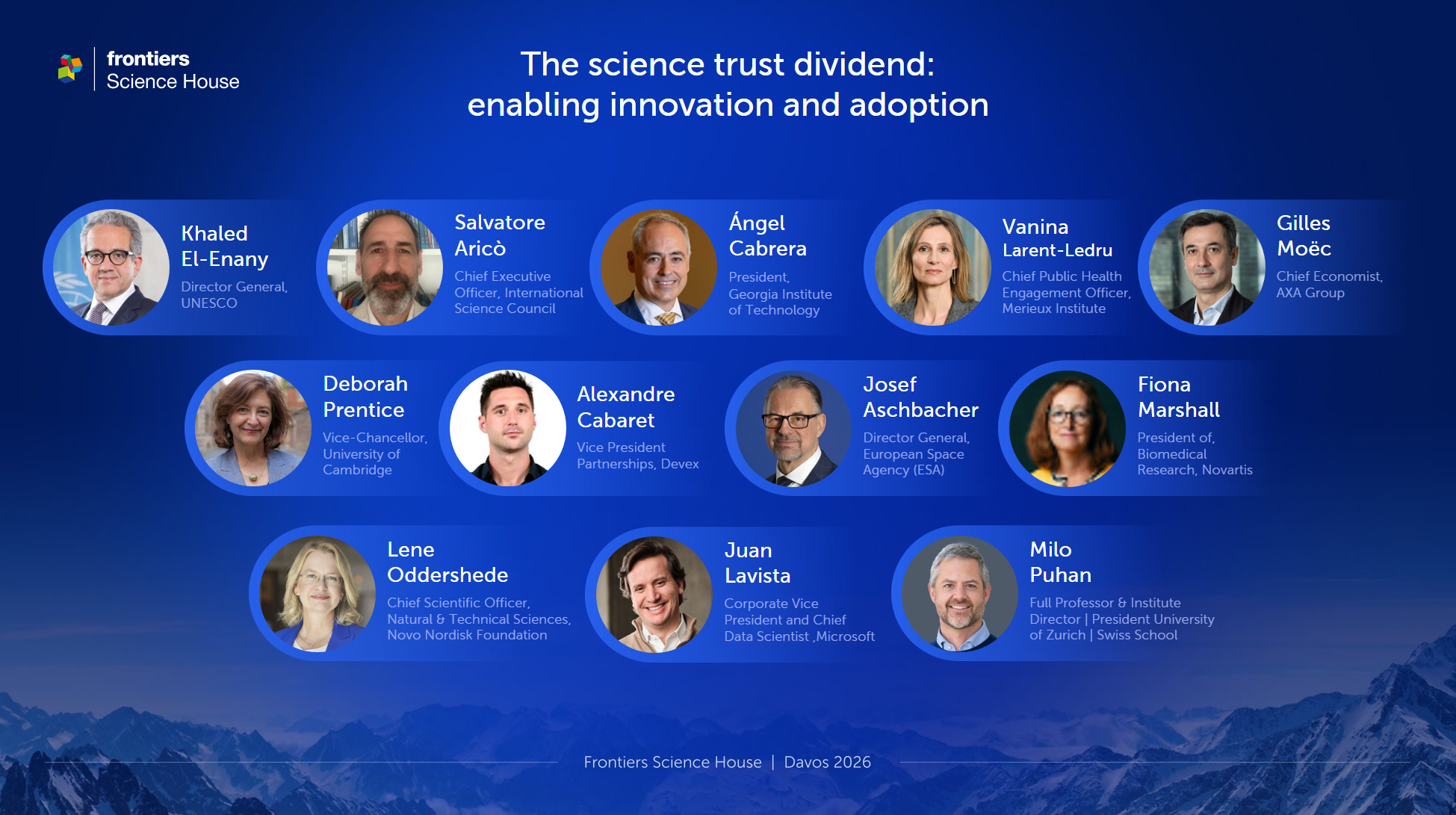
Held under Chatham House rules, the discussion brought together leaders across research, policy, industry, and media to examine how trust is shaped by transparency, governance, and communication practices. Participants emphasized that in an increasingly complex and fragmented information landscape, strengthening trust requires more than scientific excellence. It depends on aligning incentives, improving access to reliable evidence, and building systems that connect knowledge to action across sectors and societies.
At the Frontiers Science House in Davos, the first venue dedicated to transformative science during the World Economic Forum Annual Meeting, this set of sessions examined how advances in AI and biomedical innovation are reshaping healthcare systems. Across discussions on discovery, delivery, and prevention, speakers emphasized that the central challenge is no longer technological capability, but system readiness. The convergence of data, incentives, and environmental risk is driving a shift from reactive care toward integrated and predictive health systems.
At the Frontiers Science House in Davos, discussions about One Sustainable Health highlighted how interconnected risks across human, animal, and environmental systems are reshaping global health. This session underscored a shift from fragmented interventions to system-level responses grounded in cross-sector collaboration.
At the Frontiers Science House in Davos, sessions on cities and the Frontiers Planet Prize explored how planetary health can move from scientific insight to large-scale implementation. Speakers connected planetary boundaries with urban systems, food chains, and governance structures, emphasizing that the key challenge is not knowledge but execution. The discussions highlighted the need to align finance, policy, and data to enable measurable, system-wide transformation anchored in real-world contexts.
At the Frontiers Science House in Davos, the antimicrobial resistance was framed as one of the most pressing yet under-recognized threats to global health systems. Speakers examined how to resolve this tension while preventing AMR from undermining modern medicine.
At the Frontiers Science House in Davos, this session examined how science diplomacy is evolving in a context of increasing geopolitical competition. Speakers highlighted the need to move from reactive cooperation to anticipatory engagement, embedding scientific expertise earlier in diplomatic processes. The discussion emphasized that effective science diplomacy will depend on building trust, strengthening international coordination, and enabling more inclusive global participation in shaping emerging technologies.
At the Frontiers Science House in Davos, this session explored how the rapid growth of AI and digital infrastructure is placing unprecedented pressure on global energy systems. Speakers highlighted the tension between scaling data capacity and maintaining grid stability, affordability, and climate goals, emphasizing the need for flexibility, new energy sources, and smarter system management.
At the Frontiers Science House in Davos, speakers examined the path from scientific breakthroughs to commercially viable fusion energy. The session emphasized the importance of industrialization, supply chains, and policy frameworks to scale solutions.
At the Frontiers Science House in Davos, this session explored how quantum technologies are transitioning from research to early application. The discussion focused on hybrid systems, global coordination, and inclusive capacity building.
At the Frontiers Science House in Davos, speakers examined Europe’s challenge in translating strong research into scalable innovation to ensure its competitiveness, based on the inputs from the Draghi report. The session emphasized the need to better connect funding, markets, and skills to strengthen global competitiveness.
At the Frontiers Science House in Davos, this session explored how space technologies are becoming essential infrastructure for communication, security, and environmental monitoring. The discussion highlighted commercialization trends and the need for faster regulatory and investment frameworks.
At the Frontiers Science House in Davos, this debate explored whether geoengineering should be treated as a necessary risk management tool or a distraction from decarbonization. The discussion highlighted governance challenges, systemic risks, and the urgency of maintaining focus on emissions reduction.
At the Frontiers Science House in Davos, this session examined the widening gap between climate commitments and implementation. Speakers emphasized that the challenge is not awareness but execution, calling for stronger accountability, effective incentives, and deeper engagement from the private sector.
At the Frontiers Science House in Davos, speakers addressed the growing mismatch between the pace of technological change and education systems. The session focused on modular, rapid, and industry-aligned learning models, supported by new intermediaries that can connect skills development directly to labor market demand.
At the Frontiers Science House in Davos, this session highlighted how omic technologies are redefining disease understanding through multi-layered biological insights. The discussion emphasized that the key bottleneck is no longer data generation, but integration, standardization, and open access needed to translate complex datasets into actionable applications.
At the Frontiers Science House in Davos, the first venue dedicated to transformative science during the World Economic Forum Annual Meeting, this session examined how precision biomedicine is moving from controlled trials into real-world care. Speakers highlighted the growing gap between scientific capability and system readiness, emphasizing the need to align diagnostics, data infrastructure, and regulatory models to scale personalized therapies equitably.
Science House

Science governance
Facing mounting geostrategic, political, and technological pressures, science cannot afford to be passive—it must confront the incentives and cultural failings within its own institutions, from the “bibliometric disease” to weakened self-regulation. Only by pre-emptively reforming how it governs, communicates, and justifies itself can science shape its own future and remain a trusted public good, argues Sir Peter Gluckman.
Science has entered a data-rich era, but its integrity, equity, and openness now depend on treating FAIR data as a first-class output and closing the governance gaps around AI-driven research. Without urgent policy action on data standards, infrastructure, and incentives, AI risks accelerating hallucination and eroding trust rather than advancing trustworthy science, argue Barend Mons, Arie Baak, and Koen Jonkers.
In a rapidly shifting geopolitical landscape, scientific institutions must proactively reform their internal incentives and self-governance to protect research integrity and ensure knowledge remains a trusted global public good. Passive compliance with external pressures will no longer suffice if science is to survive as a credible, universally accessible enterprise, argues Sir Peter Gluckman.

“Never waste a good crisis: we must already consider and prepare for the challenges of a post-corona world.”
Dr. Jean-Claude Burgelman
Editor-in-Chief of the Frontiers Policy Labs
Jean Claude Burgelman, Professor of Open Science Policy at the Free University of Brussels (VUB) and former Head of Unit for Open Science Policy at the European Commission, hosts in-depth conversations and analysis with leading experts in policy, business, and academia on the lessons and legacy of COVID-19.
Never miss an update
Get the latest research, expert commentary, funding opportunities and more, straight to your inbox – sign up to the Frontiers Newsletter.