Science advice in challenging settings
About the collection
Science advice in challenging settings is an increasingly relevant issue and there is value in ‘slow conversation’ to explore the challenges and co-create paths forward. This series aims to address some of the recent challenges that emerged in conversations that have taken place through the INGSA Europe community. We invite contributions to this ‘slow conversation’ to explore more deeply how science advice can be effective today and lay evidence based foundations for the future that is being created.

Curated by
Dr Claire Craig
Vice-President (Evidence), INGSA
Chair, INGSA-Europe
Emeritus Fellow, Queen’s College, Oxford
Rokia Ballo
Regional Programme Officer, INGSA-Europe
Prof Ruth Morgan
Professor of Crime and Forensic Science, UCL
Director, UCL Centre for the Forensic Sciences
Co-Director of the UCL Artista Institute
Browse articles
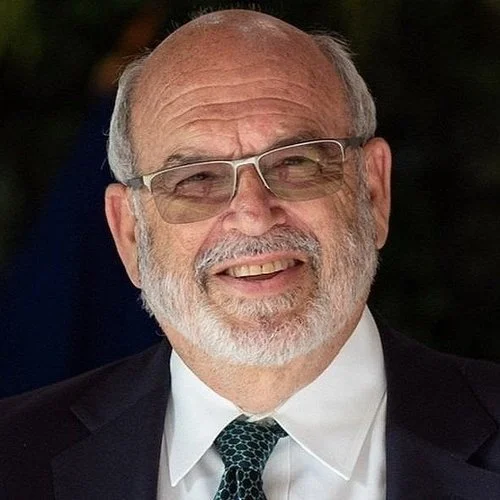
As populism, AI, and political transactionalism reshape how governments use expertise, Sir Peter Gluckman argues that science advice must evolve from slow, analogue evidence synthesis to fast, AI-assisted brokerage — with human experts still essential to frame questions, curate outputs, and keep policy makers honest about what science does and doesn’t know.
When AI pre-digests contested evidence before advisers see it, errors can compress in and disagreement can compress out. Laura V. Zimmermann argues that a flawless-looking AI briefing on labour trafficking still buried a data error and hid real scientific dispute — and asks what advisers and institutions must do as fewer, shared models increasingly shape what counts as evidence.
Science diplomacy has evolved from idealistic collaboration into a pragmatic tool for navigating global tensions, shaping policy, and strengthening international cooperation. As science, diplomacy, and governance become increasingly interconnected, trust, openness, and strategic engagement are becoming essential to solving shared global challenges.
Science for Policy 3.0: AI is transforming how governments use evidence—but efficiency gains may come at a hidden cost. As AI takes over policy workflows, the real challenge is protecting human judgment, expertise, and institutional capacity before they quietly disappear.
This article examines how science advisors in Asia work within diverse political systems. The authors show how advisors deliver scientific evidence while keeping their work accurate and reliable. By comparing state-led development in China and Vietnam with active democracies in India and Indonesia, the text highlights the difficulty of staying neutral. It reviews the trade-offs of inside advisory groups versus independent, arm’s-length systems. Finally, the authors share practical steps to keep science advice stable during government changes, using regional examples like the Fukushima wastewater release.
In this commentary, Guillermo Anlló, Chair of INGSA-Latin America and the Caribbean, argues that shifting political cycles, drastic budget cuts, and the discontinuation of long-term programs are quietly dismantling Latin American science. He warns that losing local research capacity creates global blind spots in climate, biodiversity, and disease tracking, fuels brain drain, and erodes democratic resilience. Anlló calls for regional trust funds, coordinated science diplomacy, and initiatives like INKA to safeguard science as a transnational public good.
Science is driving unprecedented advances in health, technology, and society—yet science advice is facing growing scrutiny and political tension. This piece examines the deeper forces behind this apparent paradox.
A reflection on the institutional, political, and conceptual lessons from the NHS COVID-19 contact tracing app, examining how science advice operates under uncertainty, digital dependency, and crisis conditions.
A first-hand account of the development of the NHS COVID-19 contact tracing app, examining how scientific advice operates under institutional pressure, technical uncertainty, and political scrutiny during a public health crisis.
Ethics advice helps policymakers understand the societal impacts and value trade-offs behind scientific decisions. Strengthening ethics expertise within the science-for-policy ecosystem can lead to more transparent, inclusive, and trustworthy policymaking—especially in times of uncertainty and rapid technological change.
Science and science advice: a defining moment? explores the evolving role of science and scientists in policymaking amid societal complexity, polarization, and uncertainty. It highlights challenges in trust between society, governments, and research institutions, and considers how science advice can remain effective, inclusive, and evidence-based. The article emphasizes collective intelligence, the role of honest brokers, and the importance of iterative, context-sensitive approaches to navigating complex policy landscapes.
Strengthening the International Ecosystem for Scientific Advice examines the growing global and European efforts to build more coordinated, resilient, and inclusive science-for-policy systems. Drawing on recent initiatives by INGSA, the European Commission, and national advisory communities, the article outlines the opportunities and challenges of linking diverse advisory structures, reducing fragmentation, and enhancing institutional capacity for evidence-informed policymaking. It highlights the importance of connectivity, mutual learning, and principled approaches to scientific advice—especially in a period marked by geopolitical uncertainty, technological transformation, and complex societal challenges.
Science advice in challenging settings is an increasingly relevant issue and there is value in ‘slow conversation’ to explore the challenges and co-create paths forward. This series aims to address some of the recent challenges that emerged in conversations that have taken place through the INGSA Europe community. We invite contributions to this ‘slow conversation’ to explore more deeply how science advice can be effective today and lay evidence based foundations for the future that is being created.
Sir Peter Gluckman
Chair, International Network
for Government Science Advice
Sir Peter Gluckman and Prof. Jean Claude Burgelman consider the impact of COVID-19 and the mechanics and interface between science and policymaking at an international level
Sir Peter Gluckman
International Network for Government Science Advice
Sir Peter Gluckman, Chair, International Network for Government Science Advice speaks to Prof. Jean Claude Burgelman, Free University of Brussels about scientific advice and policymaking in the context of the COVID-19 response