

Rethinking the social contract for science: the importance of questions
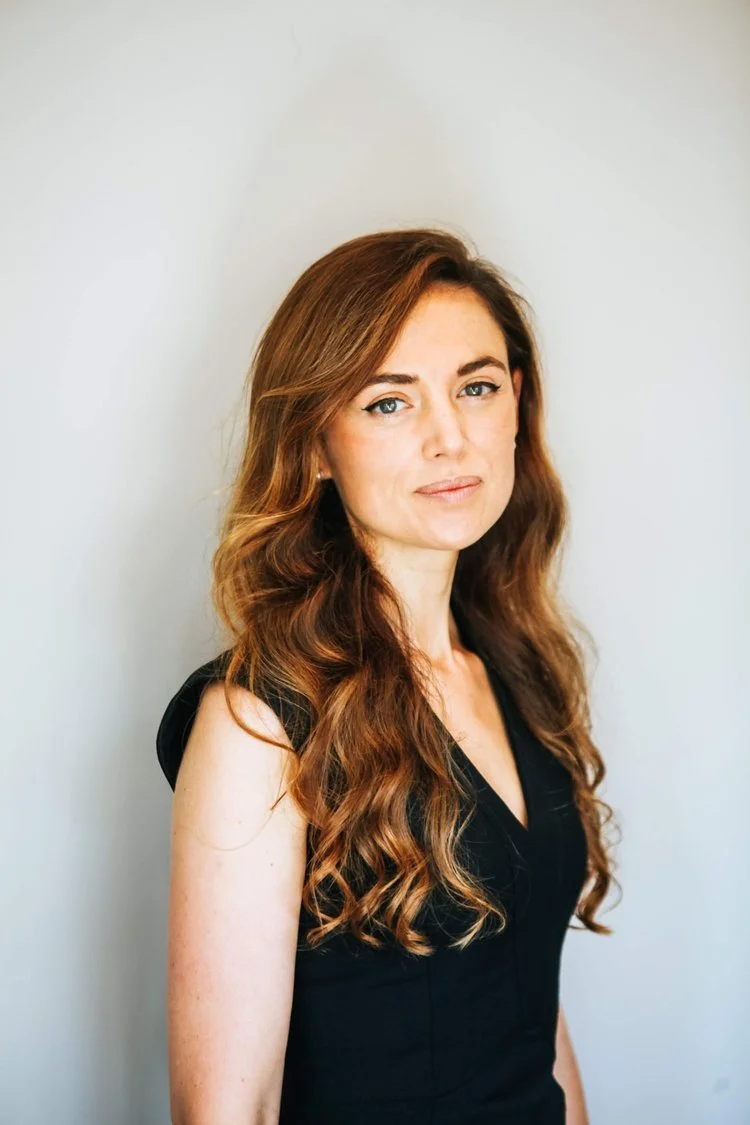
Ruth Morgan
Professor of Crime and Forensic Science, UCL
Director, UCL Centre for the Forensic Sciences
Co-Director of the UCL Artista Institute
DOI: https://doi.org/10.25453/plabs.31066501
Published on January 14th, 2026
The social contract between science and society is predicated on trust. Trust is built, maintained and grown through dialogue over time (and lost and eroded when dialogue is diminished). Dialogue takes a broad range f different forms that are informal and formal, explicit and tacit. The power of dialogue is often recognised and discussed, yet at the same time it is possible to argue that we undervalue it, particularly over the longer term.
Dialogue can be likened to water. Just as a glass of water can quench your thirst in a specific moment, an individual one-off dialogue can be fascinating and insightful and help to address an immediate issue. At the same time when water is aggregated over time and at scale it can sustain ecosystems, transform landscapes, and over longer time periods at sufficient scale it can disrupt the status quo, by carving out mountains, and (in combination with other factors) changing weather patterns and climate trends. Similarly, dialogue at scale and over time can be an agent of transformation.
However, discerning what kind of dialogue is needed in different contexts to build trust is not trivial, particularly in an era where misinformation and disinformation is easily generated and disseminated. We convened a panel at the AAAS 2025 meeting that sought to bring different disciplinary regional and policy perspectives to the question of rethinking the social contract for science. We explored the development of the social contract over the last 80 years, the service of science in society and the importance of the process of ongoing dialogue over and above the short-term outcomes, the ingredients of broad collaborations and agreements, and the importance of courage and humility. Three key themes emerged:
1. Knowledge is restless and disruptive
When thinking about the contract that exists implicitly, and in some contexts explicitly, between society and science it is important to acknowledge that knowledge is dynamic, emerging and evolving, and can be disruptive at small and large scales. There are important questions to be asked around how the disruptiveness of knowledge intersects with a society that is arguably in a season of rapid stepwise changes that are transforming society profoundly at the individual and corporate levels? To what degree can science be deployed to reduce risk and find ways to tackle complex challenges (such as climate change, and environment or health crises)?
2. Knowledge is uncertain
Education is often closely associated with discussions of science and society. However, it is important to get beyond the surficial approach that we just need to find the gap in knowledge and fill it. History reminds us that lack of action or change in society is very often not for a lack of data, or an ‘education problem’. This raises questions about whether we engage with the inherent uncertainty of the science method early enough in formal schooling curricula? Are we learning how to sit with uncertainty and the discomfort that it often brings? Are we learning to be curious when confronted by a gap or a conflict between two or more different forms of knowledge? Are we learning how to disagree well? When thinking about education can we move beyond curricula and content to how we weave humility and curiosity into the way we do science, and the way we interact with science?
3. Knowledge is created and grows through questions
Ultimately, if knowledge and ideas come to be through asking questions, is now a good opportunity to ask how we derive questions and whether we are asking the right questions? Are we recognizing and rewarding curiosity and elements of idealism and pragmatism? Are we creating opportunities for scientists and our communities to be courageous in asking the big questions, the difficult questions, the different questions?
Summary
We are in a time when it is increasingly clear that we have important questions to answer as a society: What do we need? What do we want? And what role does science have in serving society? At the same time, we need to be mindful that the answers will not necessarily be what is most valuable. The process of asking questions, refining those questions, and asking better questions as communities in dialogue is arguably going to have more impact on the social contract between science and society.
Dialogue is critical to exploring what the contract could be and needs to be. Just as water can navigate through known and unknown territories, and just as water can leave an imperceptible trace on the landscape over decades, or transform it overnight, we need to commit to the ongoing large and small scale, diverse and open-ended dialogues to ensure that science can be undertaken with and for society, and that as a society we shape our future collectively.
Of course, agreeing that dialogue is important is one thing, exploring ways of achieving meaningful sustainable dialogue and bringing diverse voices and perspectives together from across traditional boundaries is another. As in many other situations, it starts with the resolve to begin new conversations, an ecosystem that fosters and creates opportunity for dialogue to carry on, meander and evolve, and a commitment to remaining curious about where some of those conversations might take us (even when it may not be immediately clear what the destination might be). And we need different kinds of dialogue happening within and between disciplines, and connecting across traditional boundaries of sector, generation, and region.
Therefore, we need to support porosity across the traditional borders within our institutions and infrastructures so that it is possible to embed the practice and posture of asking questions that start and sustain dialogue. We need to value the craft of asking questions (which means developing how questioning and imagining are instilled in early years education and onwards), and we need to commit to creating opportunities for ongoing dialogue that can refine and challenge those questions as knowledge disrupts society and intersects with uncertainty.
To the degree that as a society we acknowledge the restlessness and uncertainty of knowledge along with the importance of questions, we can build trust across society, and science can be positioned to best serve our planet and people.
Copyright: © 2025 [author(s)]. This is an open-access article distributed under the terms of the Creative Commons Attribution License (CC BY). The use, distribution or reproduction in other forums is permitted, provided the original author(s) or licensor are credited and that the original publication in Frontiers Policy Labs is cited, in accordance with accepted academic practice. No use, distribution or reproduction is permitted which does not comply with these terms.
