

Science House
About the section
Frontiers Science House 2026 was the first-ever dedicated space advancing transformative science during the World Economic Forum Annual Meeting. Through its 56 curated sessions, it connected leading researchers with policymakers, industry leaders, and civil society to advance evidence-informed responses to the world’s most pressing challenges.
Covering diverse topics, sectored by frontiers in open science, human health, planetary health, technology, and governance, the sessions explored how scientific knowledge can be translated into scalable, responsible, and socially relevant solutions.
This Policy Labs Science House collection is a space to continue the dialogue initiated in Davos, capturing key insights, unresolved questions, and emerging priorities to ensure that these conversations continue to highlight the role of science in shaping policy, guiding investment, and strengthening international cooperation.
Curated by
Dr Fred Fenter
Chief Executive Editor, Frontiers / Science House host

Dr George Thomas
Head of External Affairs, Strategic Partnerships, Frontiers
Browse articles
At the Frontiers Science House in Davos, the first venue dedicated to transformative science during the World Economic Forum Annual Meeting, this set of sessions examined how advances in AI and biomedical innovation are reshaping healthcare systems. Across discussions on discovery, delivery, and prevention, speakers emphasized that the central challenge is no longer technological capability, but system readiness. The convergence of data, incentives, and environmental risk is driving a shift from reactive care toward integrated and predictive health systems.
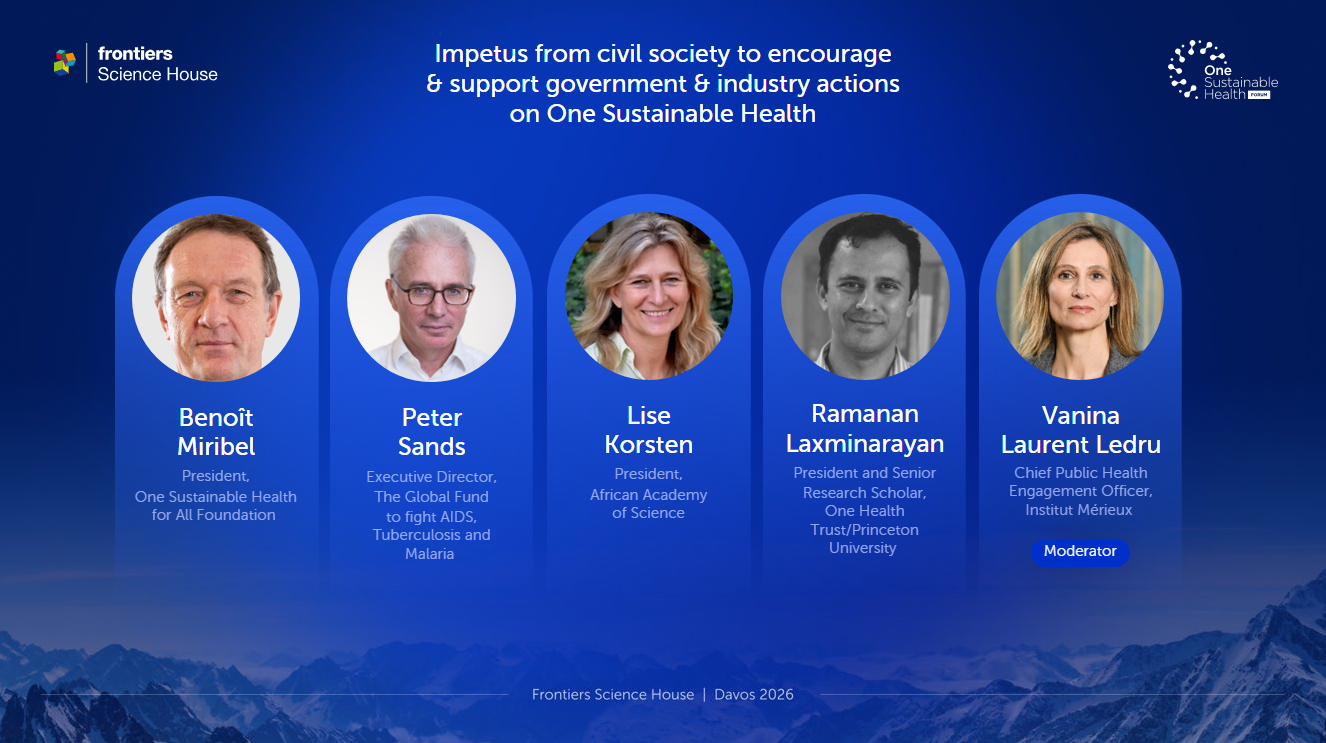
At the Frontiers Science House in Davos, discussions about One Sustainable Health highlighted how interconnected risks across human, animal, and environmental systems are reshaping global health. This session underscored a shift from fragmented interventions to system-level responses grounded in cross-sector collaboration.
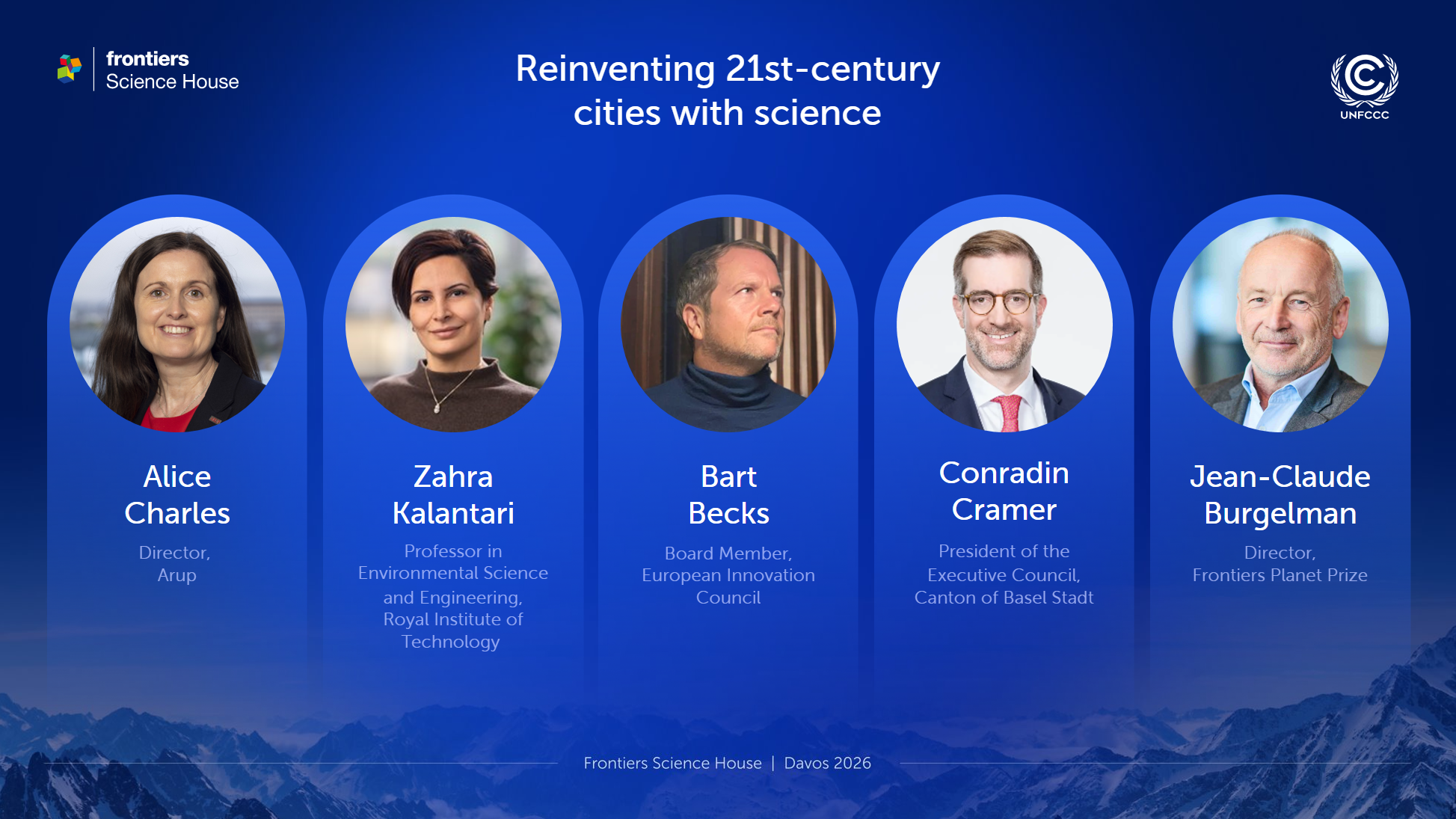
At the Frontiers Science House in Davos, sessions on cities and the Frontiers Planet Prize explored how planetary health can move from scientific insight to large-scale implementation. Speakers connected planetary boundaries with urban systems, food chains, and governance structures, emphasizing that the key challenge is not knowledge but execution. The discussions highlighted the need to align finance, policy, and data to enable measurable, system-wide transformation anchored in real-world contexts.
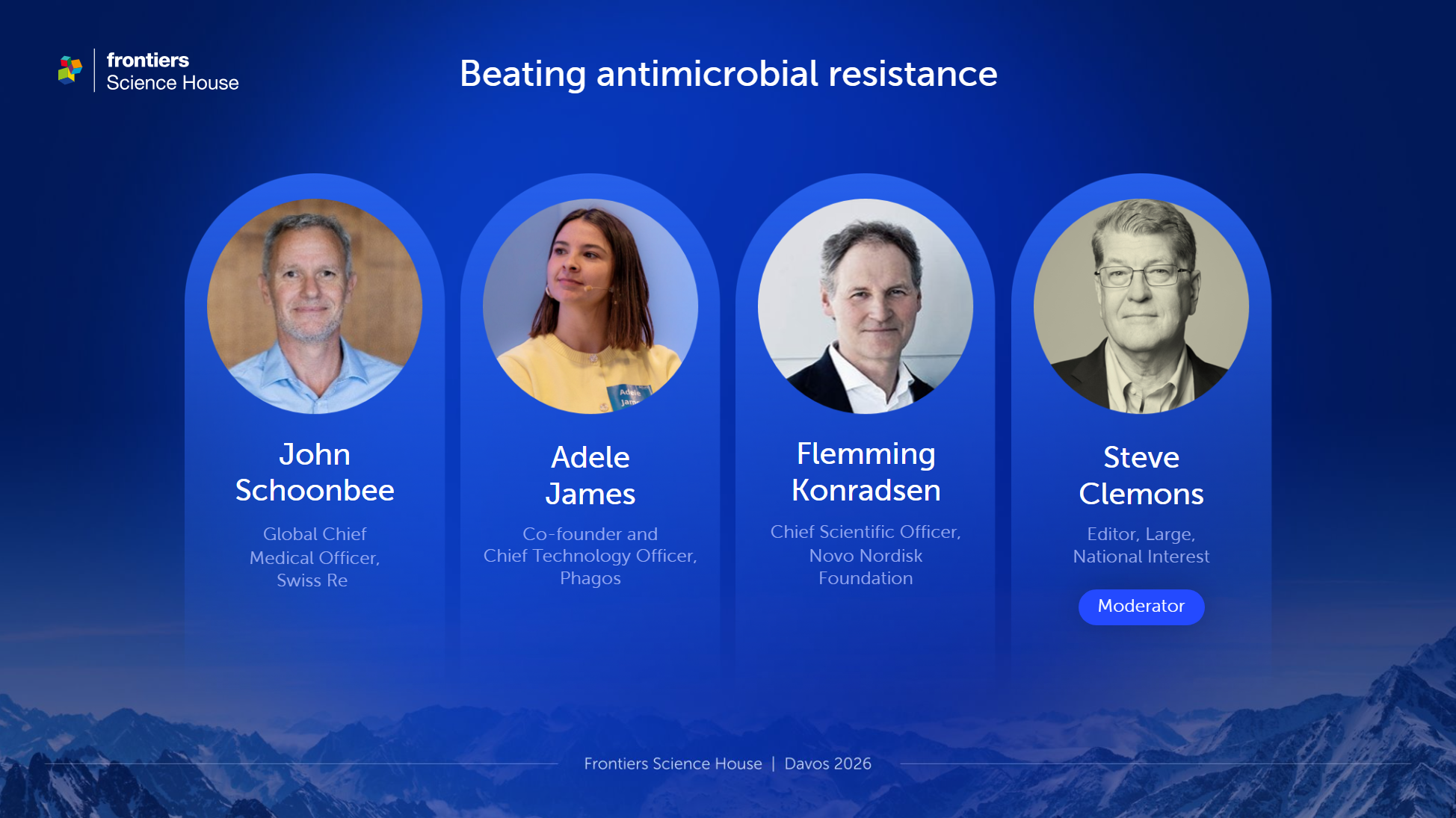
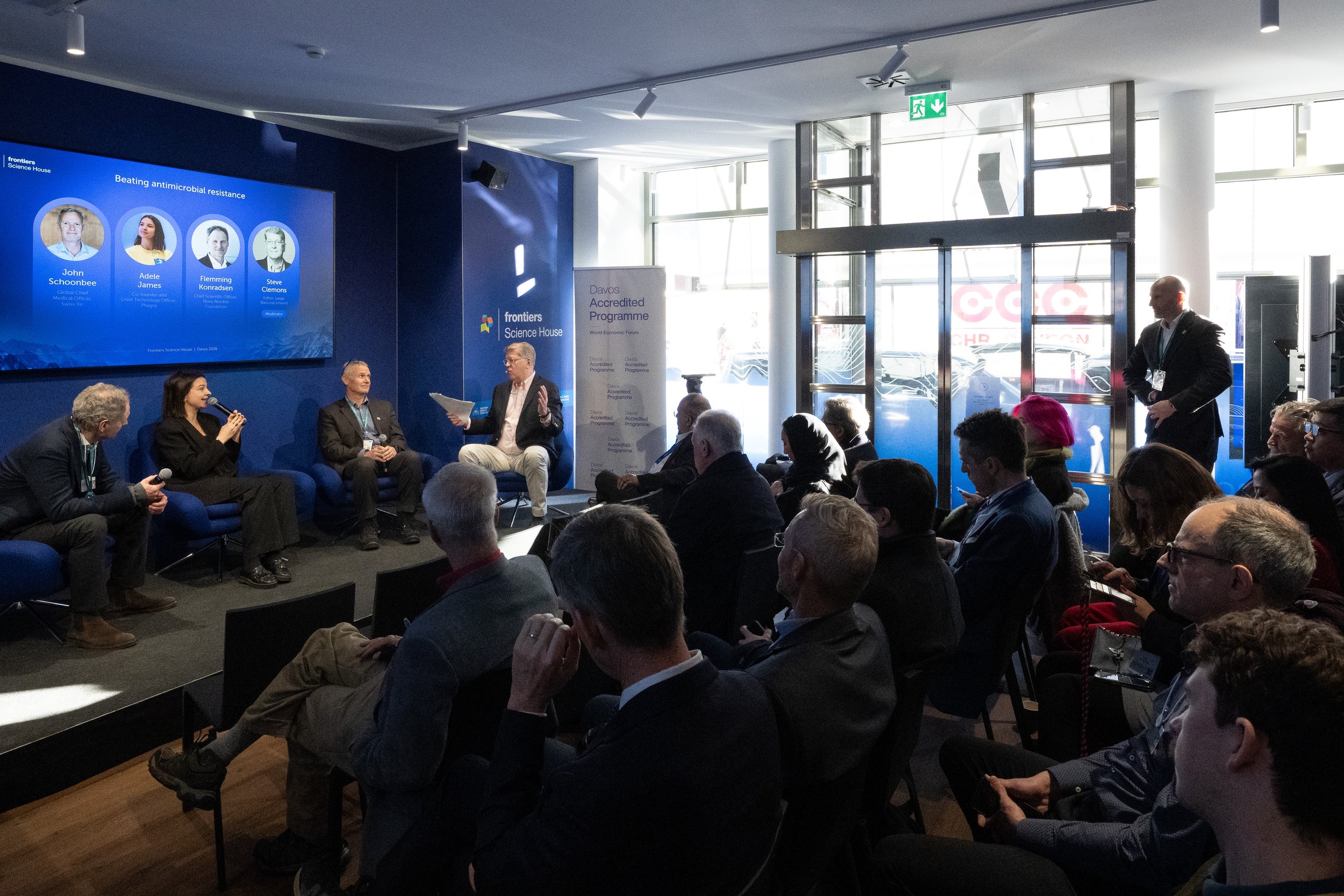
At the Frontiers Science House in Davos, the antimicrobial resistance was framed as one of the most pressing yet under-recognized threats to global health systems. Speakers examined how to resolve this tension while preventing AMR from undermining modern medicine.
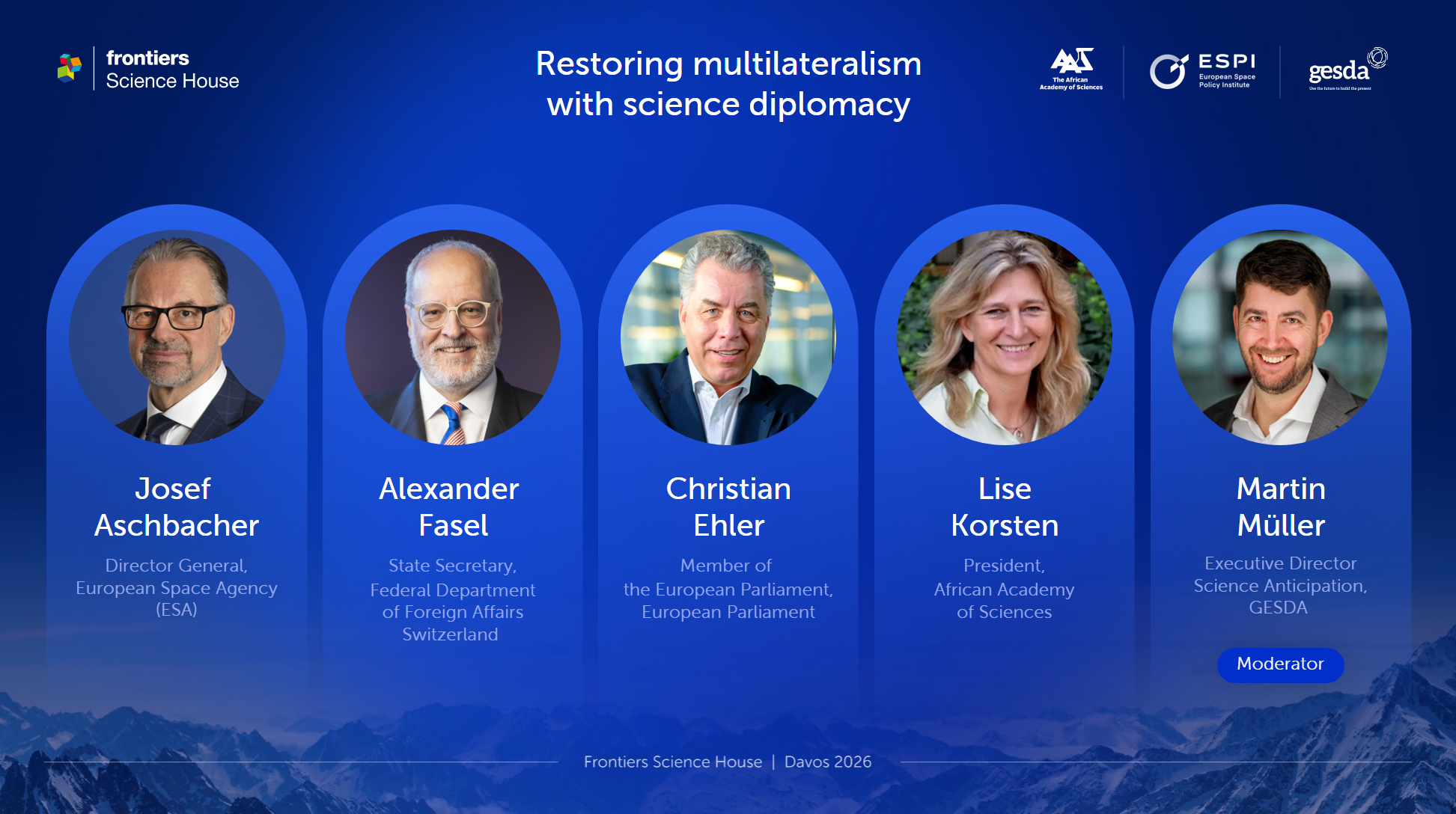
At the Frontiers Science House in Davos, this session examined how science diplomacy is evolving in a context of increasing geopolitical competition. Speakers highlighted the need to move from reactive cooperation to anticipatory engagement, embedding scientific expertise earlier in diplomatic processes. The discussion emphasized that effective science diplomacy will depend on building trust, strengthening international coordination, and enabling more inclusive global participation in shaping emerging technologies.
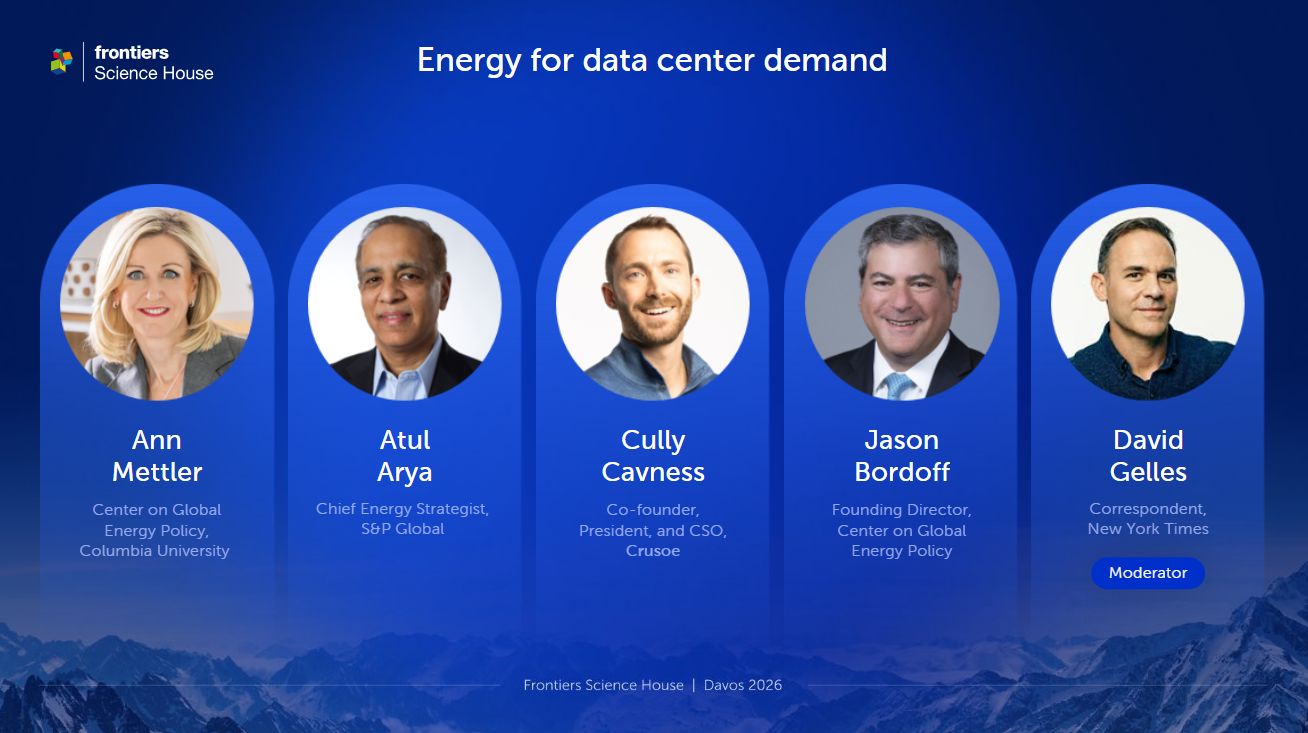
At the Frontiers Science House in Davos, this session explored how the rapid growth of AI and digital infrastructure is placing unprecedented pressure on global energy systems. Speakers highlighted the tension between scaling data capacity and maintaining grid stability, affordability, and climate goals, emphasizing the need for flexibility, new energy sources, and smarter system management.
At the Frontiers Science House in Davos, speakers examined the path from scientific breakthroughs to commercially viable fusion energy. The session emphasized the importance of industrialization, supply chains, and policy frameworks to scale solutions.
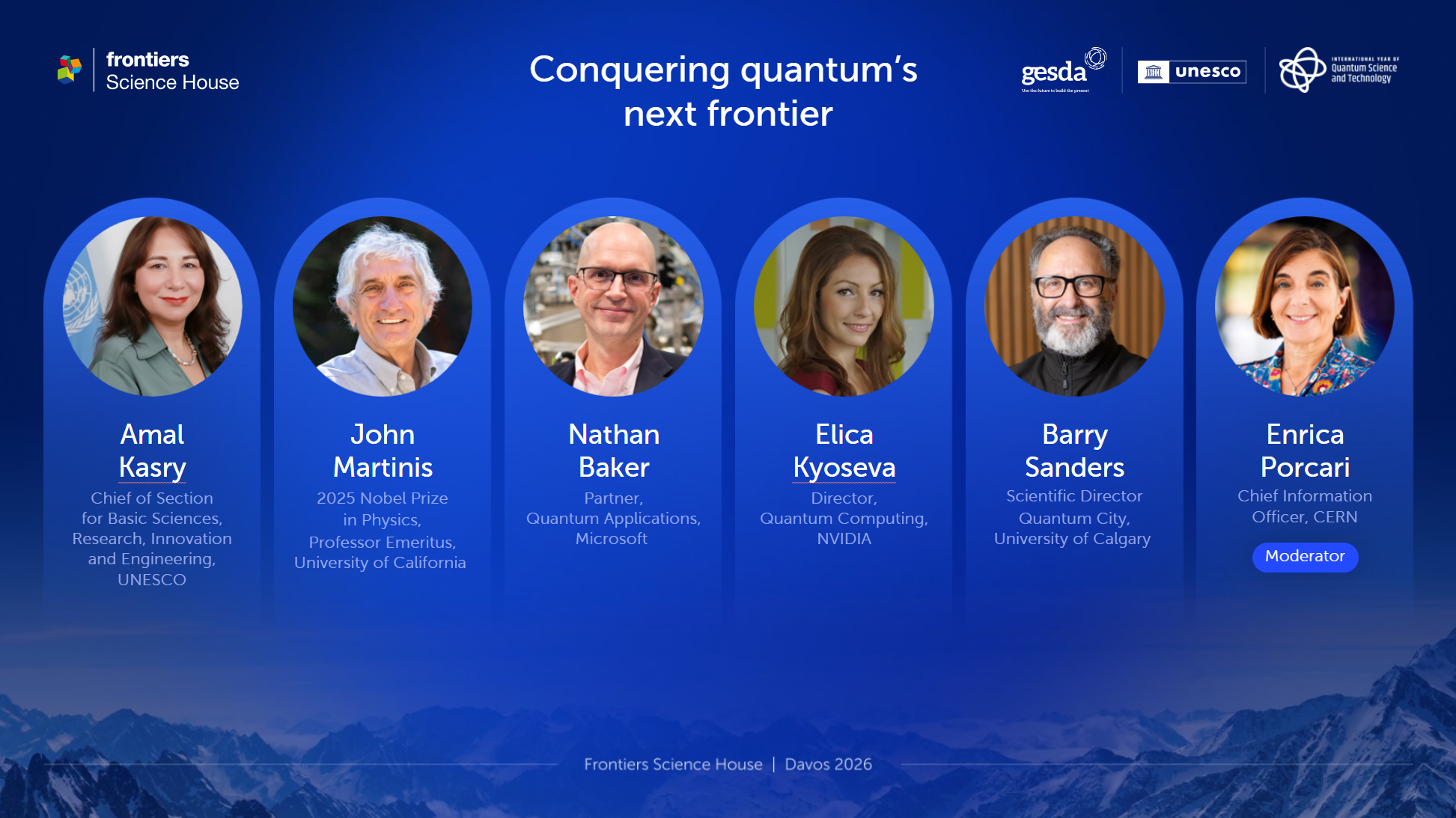
At the Frontiers Science House in Davos, this session explored how quantum technologies are transitioning from research to early application. The discussion focused on hybrid systems, global coordination, and inclusive capacity building.
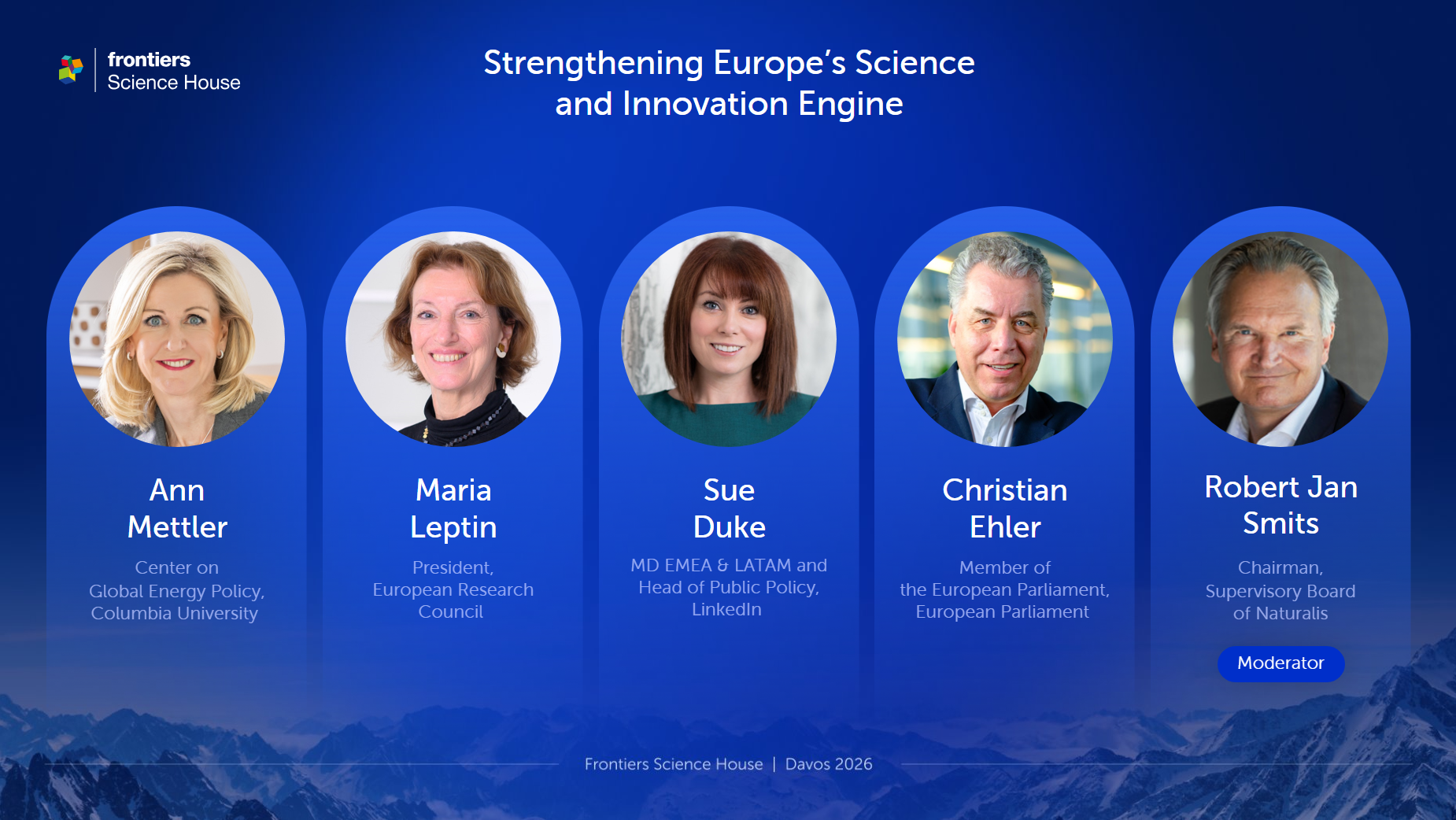
At the Frontiers Science House in Davos, speakers examined Europe’s challenge in translating strong research into scalable innovation to ensure its competitiveness, based on the inputs from the Draghi report. The session emphasized the need to better connect funding, markets, and skills to strengthen global competitiveness.
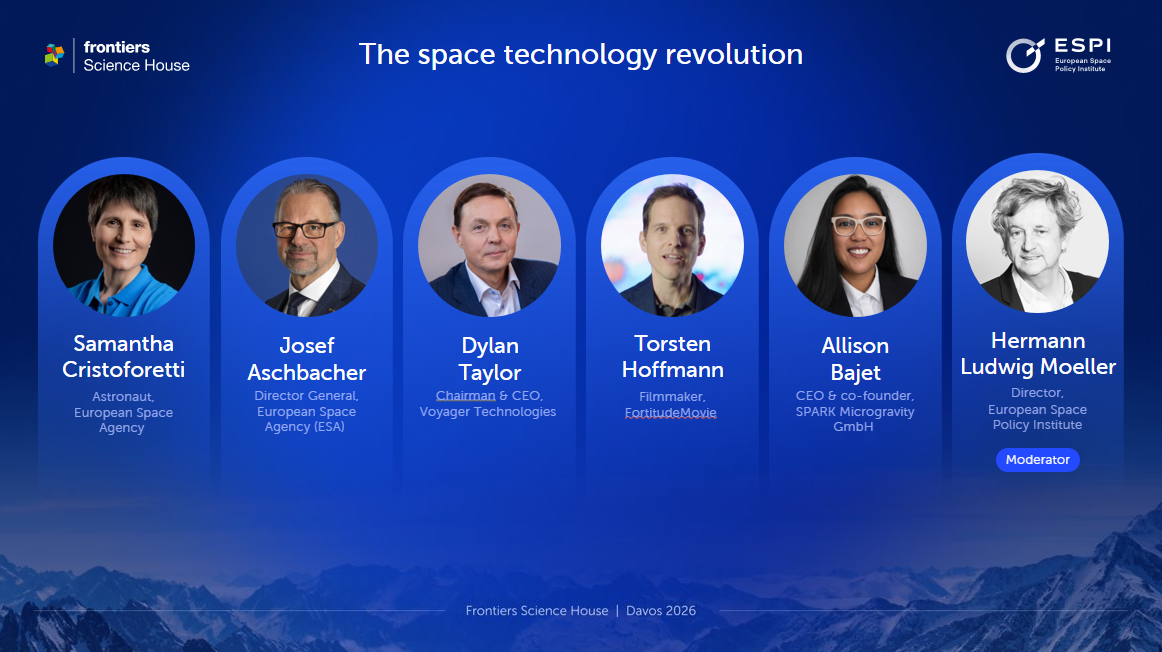
At the Frontiers Science House in Davos, this session explored how space technologies are becoming essential infrastructure for communication, security, and environmental monitoring. The discussion highlighted commercialization trends and the need for faster regulatory and investment frameworks.
At the Frontiers Science House in Davos, this debate explored whether geoengineering should be treated as a necessary risk management tool or a distraction from decarbonization. The discussion highlighted governance challenges, systemic risks, and the urgency of maintaining focus on emissions reduction.
At the Frontiers Science House in Davos, this session examined the widening gap between climate commitments and implementation. Speakers emphasized that the challenge is not awareness but execution, calling for stronger accountability, effective incentives, and deeper engagement from the private sector.
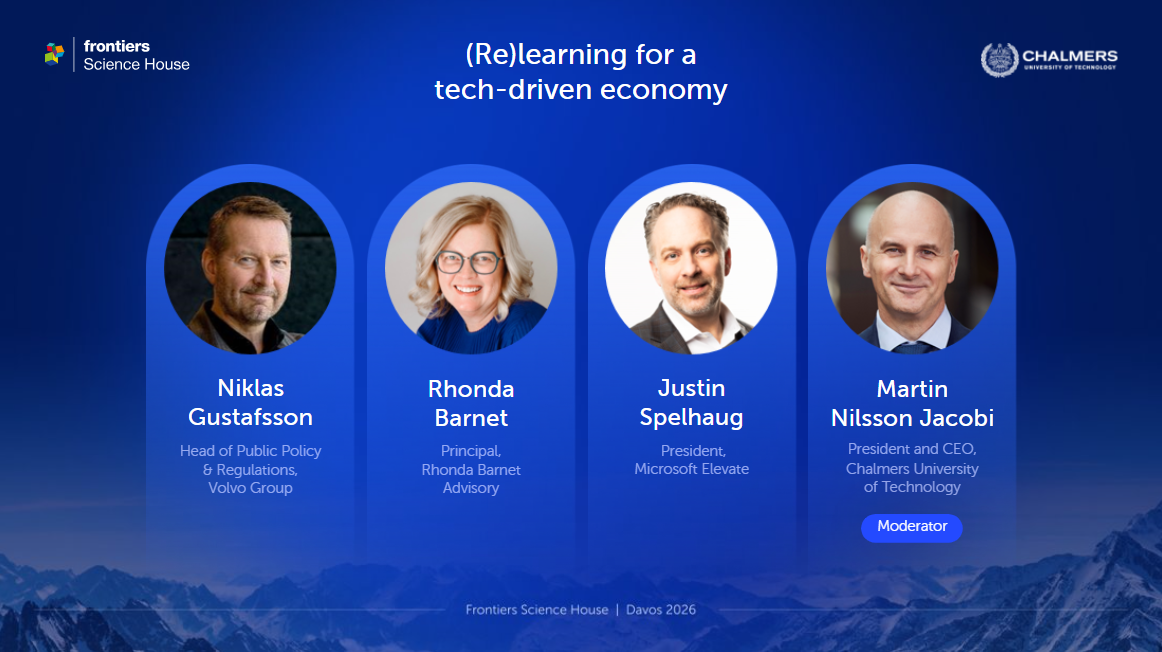
At the Frontiers Science House in Davos, speakers addressed the growing mismatch between the pace of technological change and education systems. The session focused on modular, rapid, and industry-aligned learning models, supported by new intermediaries that can connect skills development directly to labor market demand.
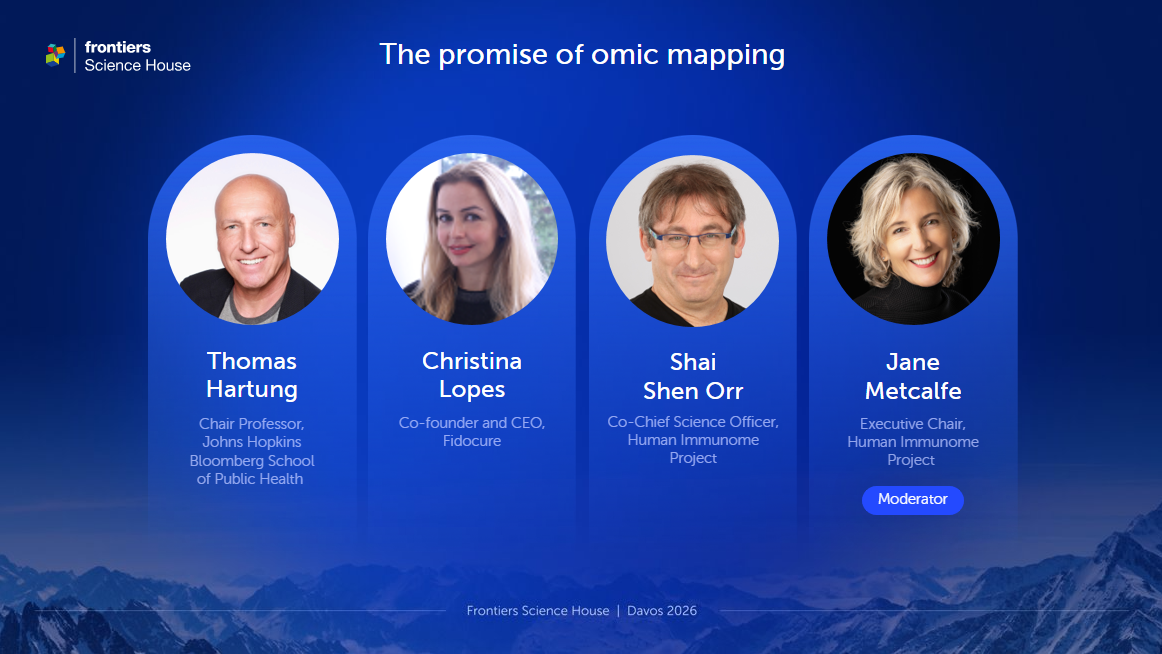
At the Frontiers Science House in Davos, this session highlighted how omic technologies are redefining disease understanding through multi-layered biological insights. The discussion emphasized that the key bottleneck is no longer data generation, but integration, standardization, and open access needed to translate complex datasets into actionable applications.
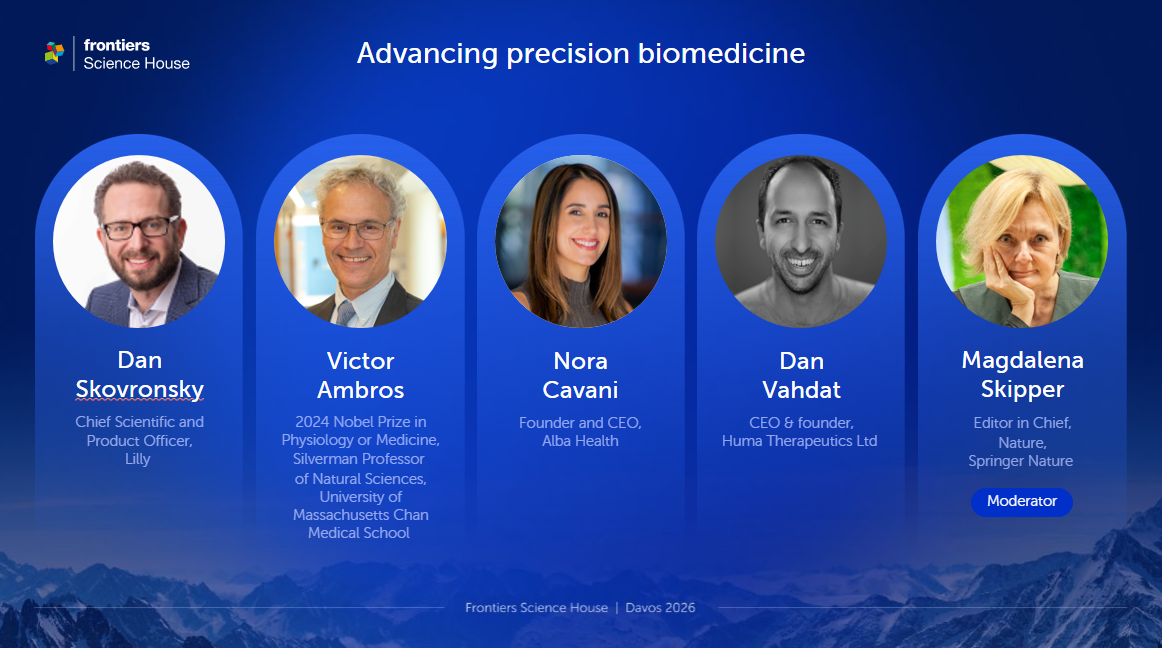
At the Frontiers Science House in Davos, the first venue dedicated to transformative science during the World Economic Forum Annual Meeting, this session examined how precision biomedicine is moving from controlled trials into real-world care. Speakers highlighted the growing gap between scientific capability and system readiness, emphasizing the need to align diagnostics, data infrastructure, and regulatory models to scale personalized therapies equitably.
Never miss an update
Get the latest research, expert commentary, funding opportunities and more, straight to your inbox – sign up to the Frontiers Newsletter.