

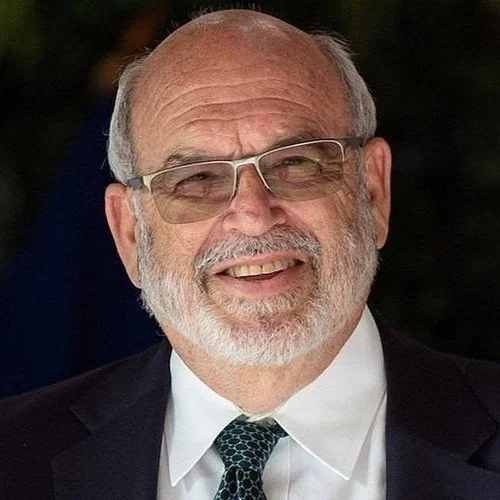
Sir Peter Gluckman
Koi Tű: Centre for Informed Futures, Auckland, New Zealand
Former President, International Science Council
Former President, International Network for Government Science Advice
Published on November 13th, 2026
50 years ago, many young people could do moderately sophisticated mental arithmetic. They had been trained at school to add columns of numbers and were pretty good at it. But then along came the calculator – now mental arithmetic is no longer the skill it was of old. We have offloaded that cognitive task to the machine. Indeed, in much of what people do in their lives, more and more is being offloaded to the algorithm and artificial intelligence (AI)I because cognitive processes are somewhat psychologically and energetically burdensome.
Science is undergoing rapid change due to technological advances at pace. Indeed, science has always been impacted by technology; much of science is made possible only because of technological developments. Without the telescope, Galileo would not have detected the moons of Jupiter and the rings of Saturn (although he did not have resolution and thought they were two moons); without the Large Hadron Collider we would not know of Higgs boson. And AI will allow a new age of scientific discovery.
But AI is changing science in other ways too. AI is already being used extensively in literature review, evidence synthesis, data analysis and increasingly in experimental design, paper writing, peer review and more. We have seen recently an explosion of grant applications written by AI, Now AI is being used and offered to develop the very hypotheses that are the basis of an application in the first place. But the profession of science is based on the essential skills of the scientist in critical thinking, evaluation of available evidence in hypothesis development, scientific methods and analysis, in placing results in perspective and in engaging in critical assessment of other’s work. AI can clearly help or increasingly displace each one of these components. It’s much easier on the brain and much quicker.
If this displacement and cognitive offloading grows, at what point does scientific skill become totally displaced by the machine and the algorithm. No doubt most scientists will say they still provide the credibility test on what the machine does. But at what point does that simply become post-hoc rationalization? The reality will be that the skills of the scientist are largely removed and thus will degrade over time just as our mental arithmetic skills have. And just as many young people no longer learn the basics on mental arithmetic, what will be the future of scientific training as offloading becomes more prevalent.
And if that eventuates what then is a scientist? How will a future scientist be trained? Is the scientist reduced to the technician making observations that cannot be turned over to a machine or are requested by the machine?
This may sound futuristic, but is it? Science must look at itself carefully. There is an inevitability in our human nature that likes to ease our cognitive load. We offload to the calculator, we offload restaurant recommendations, we offload map reading, we offload decisions over so many things because cognitive loads have a cost. The underlying skills for a scientist: observation, analysis and interpretation have been key to human and societal development for thousands of years and in many ways are key to what makes us human.
As science embraces this new and extraordinary technology that it has developed, what are the practices and norms of science that must be retained as a human attribute? Alternatively, will science as we know it be fundamentally changed from a human to an algorithmic attribute? New knowledge will always be developed even if by the machine and we will call that ‘science’, but will there be scientists or will the next generation be primarily technicians with little capacity in the requisite skills that we currently see as essential in a scientist?
Does it matter if this scenario eventuates? Is this an implausible future? Anticipatory foresight is a skill that allows us to think ahead as to the range of possible futures and thus make decisions now that may protect more favored futures.
What does matter is that science is undergoing fundamental change in many ways. AlphaFold has changed protein chemistry, AI is undermining many of the classic challenges in mathematics. Now it is well on the way to changing science itself. The science community needs to reflect urgently on what that means for science, for training, for engagement with society and policy. New norms of scientific practice will have to evolve. Change is inevitable but at what cost to the human condition and the role of scientists in science and in society?
Copyright: © 2026 [author(s)]. This is an open-access article distributed under the terms of the Creative Commons Attribution License (CC BY). The use, distribution or reproduction in other forums is permitted, provided the original author(s) or licensor are credited and that the original publication in Frontiers Policy Labs is cited, in accordance with accepted academic practice. No use, distribution or reproduction is permitted which does not comply with these terms.
