

What science is and how it is done will change
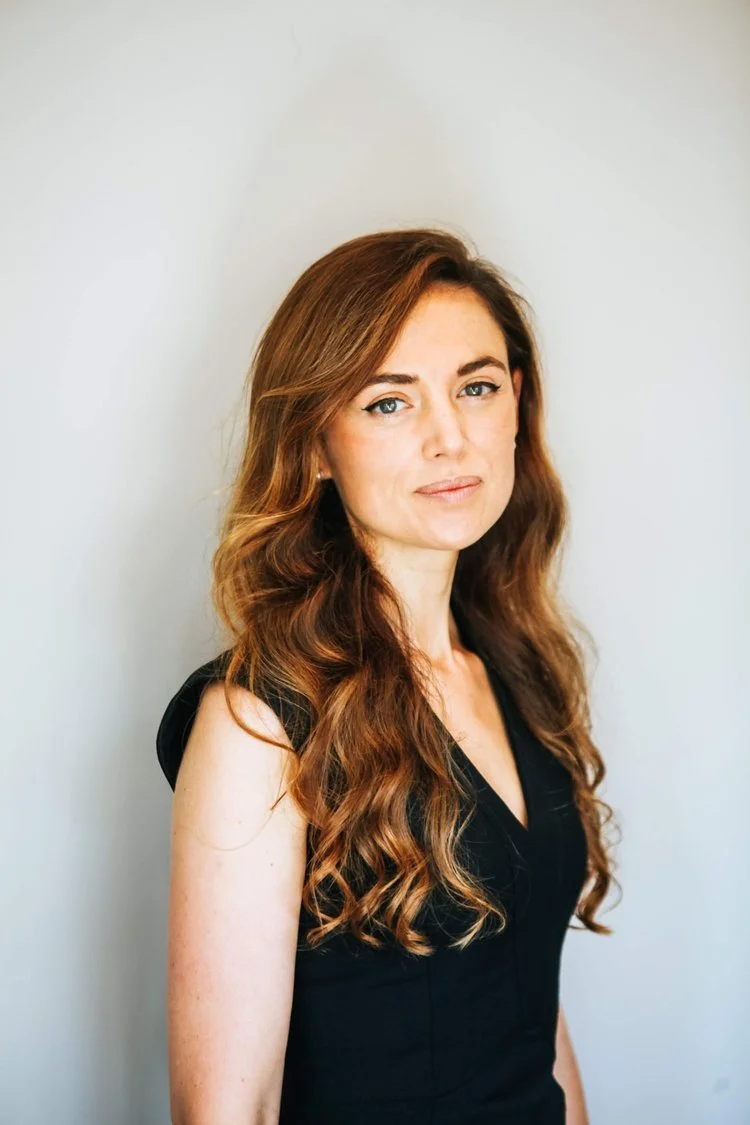
Ruth Morgan
Professor of Crime and Forensic Science, UCL
Director, UCL Centre for the Forensic Sciences
Co-Director of the UCL Artista Institute
DOI: https://doi.org/10.25453/plabs.31064767
Published on January 14th, 2026
The motto ‘rethinking the world with science’ captures the ambition of Frontiers Policy Labs to ask important questions and create space for wide ranging dialogue that shapes the future. As we look forward to the next five years, and a hugely consequential decade, there is broad agreement that the mandate for science being ‘at the table’ and part of that dialogue will remain. However, at the same time we should recognise that the very technological changes that we are witnessing today are profoundly changing the context in which science is conducted, articulates questions, generates insights. Indeed, it is possible to argue that these technological changes are going to change what science is and can be.
Burgelman articulates that these technological changes ‘are reshaping existing institutions, practices and policy’. The growth of AI capabilities is certainly transforming the amount, diversity and depth of knowledge that can be brought to the questions formulated by science, and the processes we follow to gain new insights. Going forward, to achieve breakthroughs that genuinely tackle complex challenges holistically, achieving multidisciplinary approaches will remain critical. Yet, at the same time, our existing frameworks and tools are unlikely to be sufficient to achieve what is needed and, in some cases, they will become obsolete as the context in which we make policy changes. So, to remain relevant, there is going to be a growing necessity to go further, and drill into the intersections between formalised bodies of knowledge to ask questions that set us on the path beyond iterative development to breakthroughs.
As a result, looking forward we must be willing to allow disciplines to clash. When tensions and contradictions come to light, it is the holding of seemingly incompatible perspectives and insights together that allows us to begin to see the whole system (and its complexity) more holistically. When those contradictions can be tolerated and uncertainty embraced as a beginning rather than a dead-end, new questions can emerge. Ultimately, as the way science is done changes, the possibilities of what science can do will grow.
Copyright: © 2025 [author(s)]. This is an open-access article distributed under the terms of the Creative Commons Attribution License (CC BY). The use, distribution or reproduction in other forums is permitted, provided the original author(s) or licensor are credited and that the original publication in Frontiers Policy Labs is cited, in accordance with accepted academic practice. No use, distribution or reproduction is permitted which does not comply with these terms.

Five Years of the Frontiers Policy Labs: Still a Long Way to Go
Prof. Jean-Claude Burgelman
Editor-in-Chief of the Frontiers Policy Labs
