


Rethinking healthcare with AI and innovation
At the Frontiers Science House in Davos, the first venue dedicated to transformative science during the World Economic Forum Annual Meeting, this set of sessions examined how advances in AI and biomedical innovation are reshaping healthcare systems. Across discussions on discovery, delivery, and prevention, speakers emphasized that the central challenge is no longer technological capability, but system readiness. The convergence of data, incentives, and environmental risk is driving a shift from reactive care toward integrated and predictive health systems.
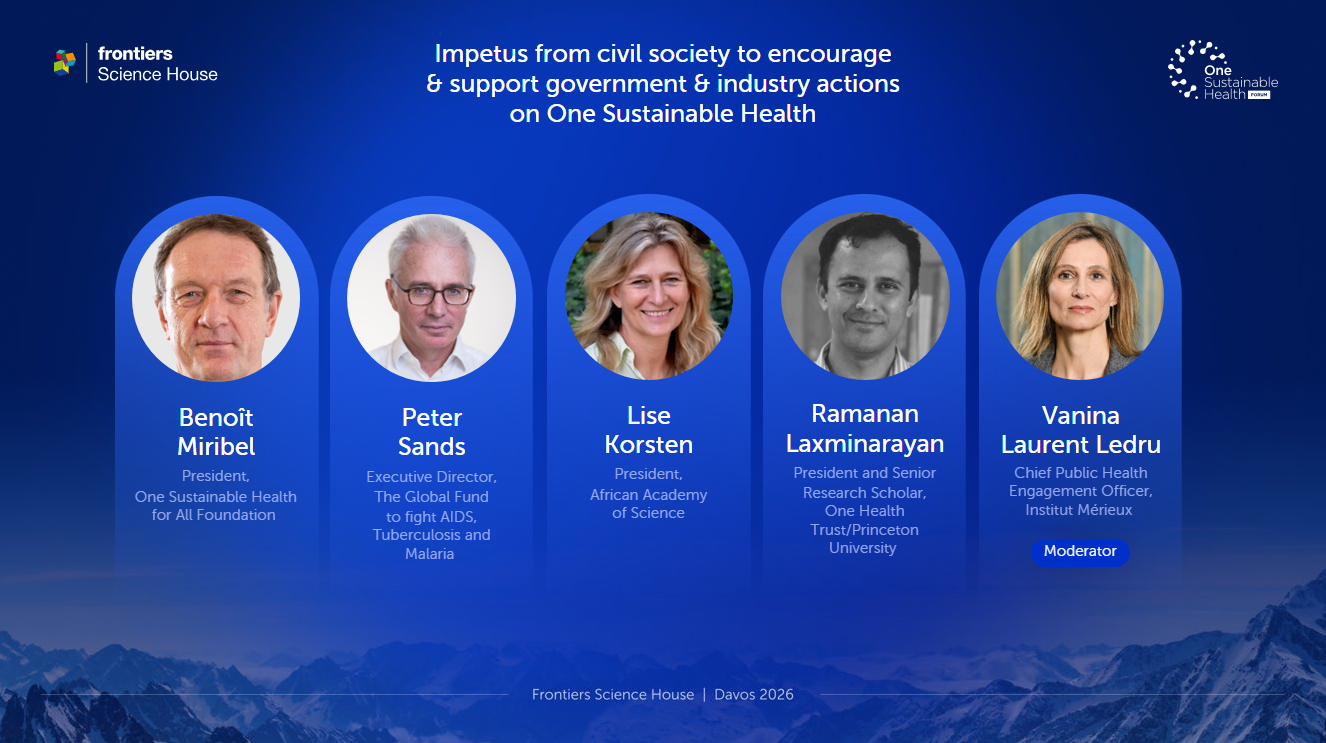
Championing One Sustainable Health for global resilience
At the Frontiers Science House in Davos, discussions about One Sustainable Health highlighted how interconnected risks across human, animal, and environmental systems are reshaping global health. This session underscored a shift from fragmented interventions to system-level responses grounded in cross-sector collaboration.
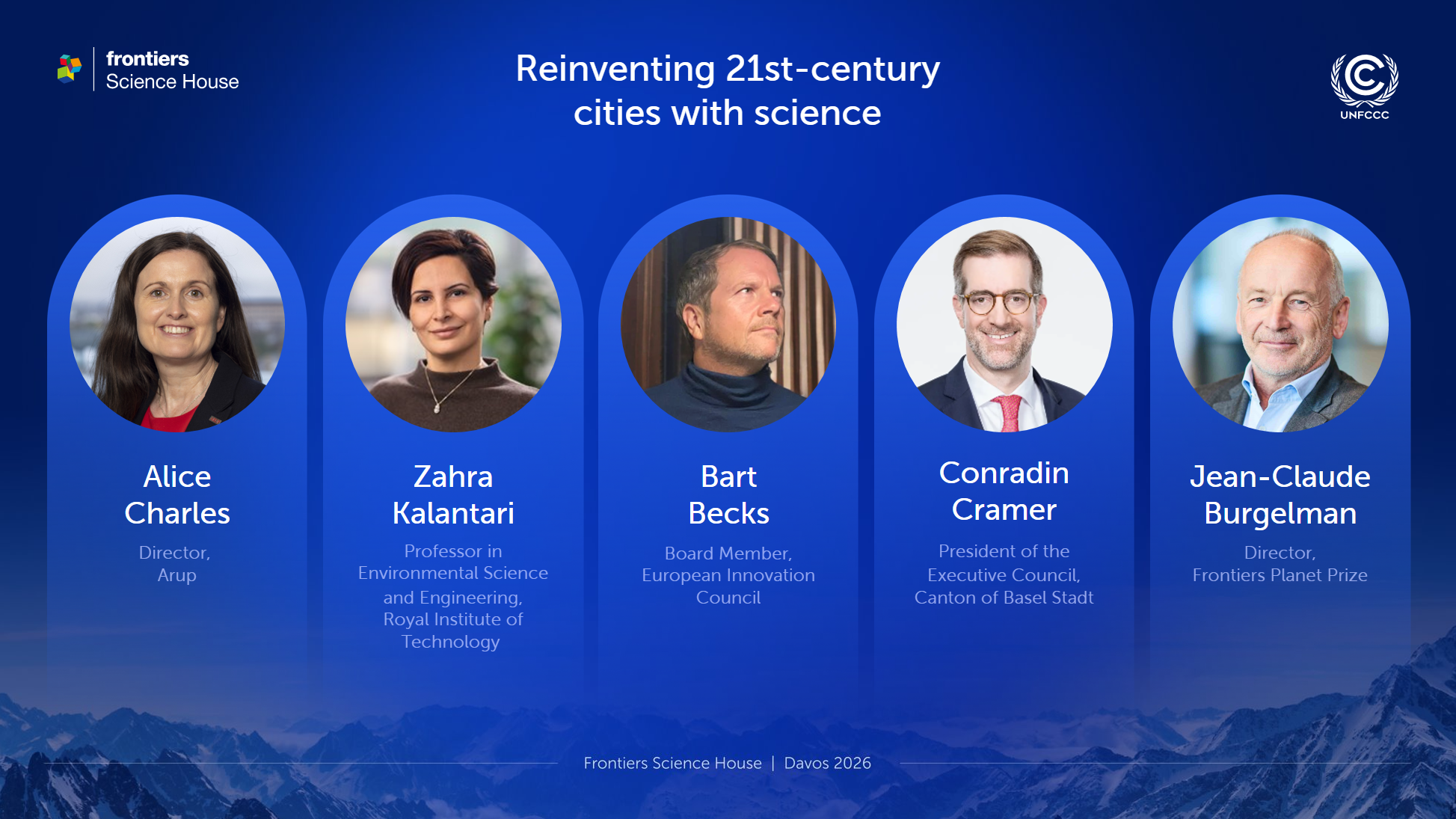
Reinventing 21st-century cities with science
At the Frontiers Science House in Davos, sessions on cities and the Frontiers Planet Prize explored how planetary health can move from scientific insight to large-scale implementation. Speakers connected planetary boundaries with urban systems, food chains, and governance structures, emphasizing that the key challenge is not knowledge but execution. The discussions highlighted the need to align finance, policy, and data to enable measurable, system-wide transformation anchored in real-world contexts.

Beating antimicrobial resistance
At the Frontiers Science House in Davos, the antimicrobial resistance was framed as one of the most pressing yet under-recognized threats to global health systems. Speakers examined how to resolve this tension while preventing AMR from undermining modern medicine.

Restoring multilateralism with science diplomacy
At the Frontiers Science House in Davos, this session examined how science diplomacy is evolving in a context of increasing geopolitical competition. Speakers highlighted the need to move from reactive cooperation to anticipatory engagement, embedding scientific expertise earlier in diplomatic processes. The discussion emphasized that effective science diplomacy will depend on building trust, strengthening international coordination, and enabling more inclusive global participation in shaping emerging technologies.
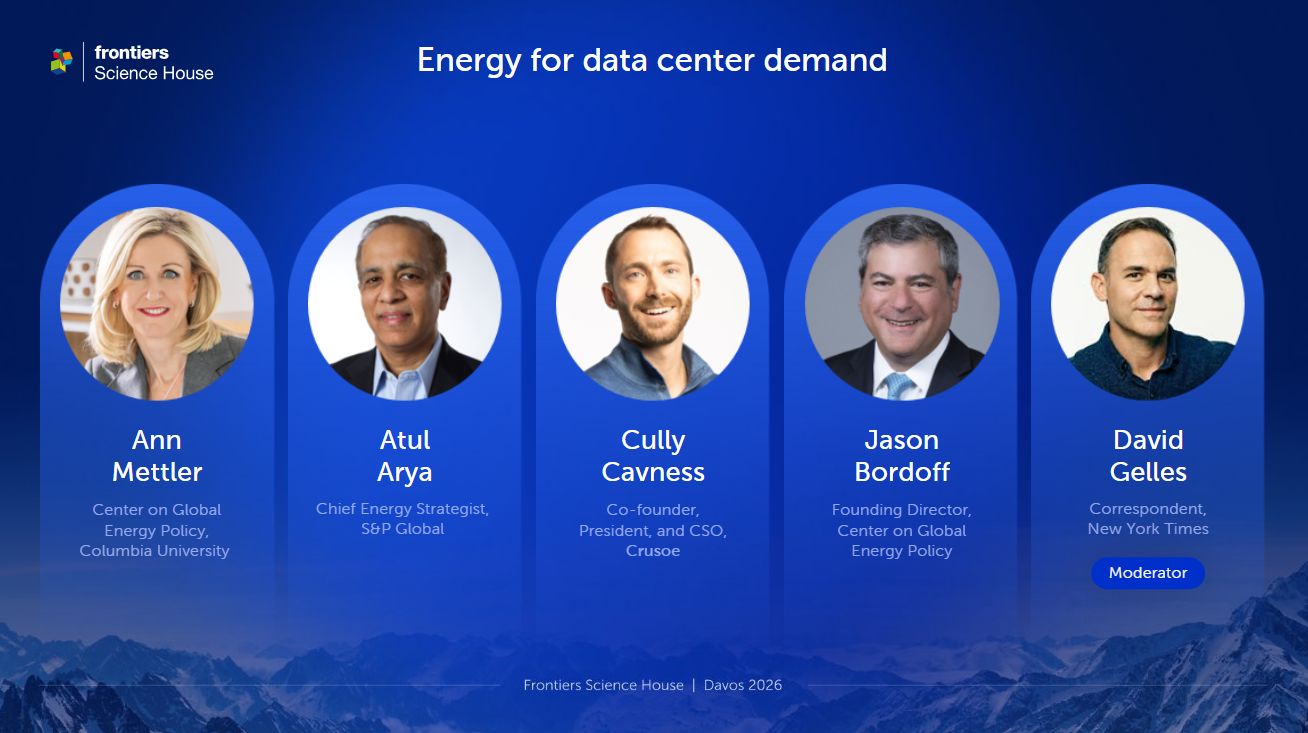
Energy for data center demand
At the Frontiers Science House in Davos, this session explored how the rapid growth of AI and digital infrastructure is placing unprecedented pressure on global energy systems. Speakers highlighted the tension between scaling data capacity and maintaining grid stability, affordability, and climate goals, emphasizing the need for flexibility, new energy sources, and smarter system management.

Fusion now: a coalition for commercialization
At the Frontiers Science House in Davos, speakers examined the path from scientific breakthroughs to commercially viable fusion energy. The session emphasized the importance of industrialization, supply chains, and policy frameworks to scale solutions.
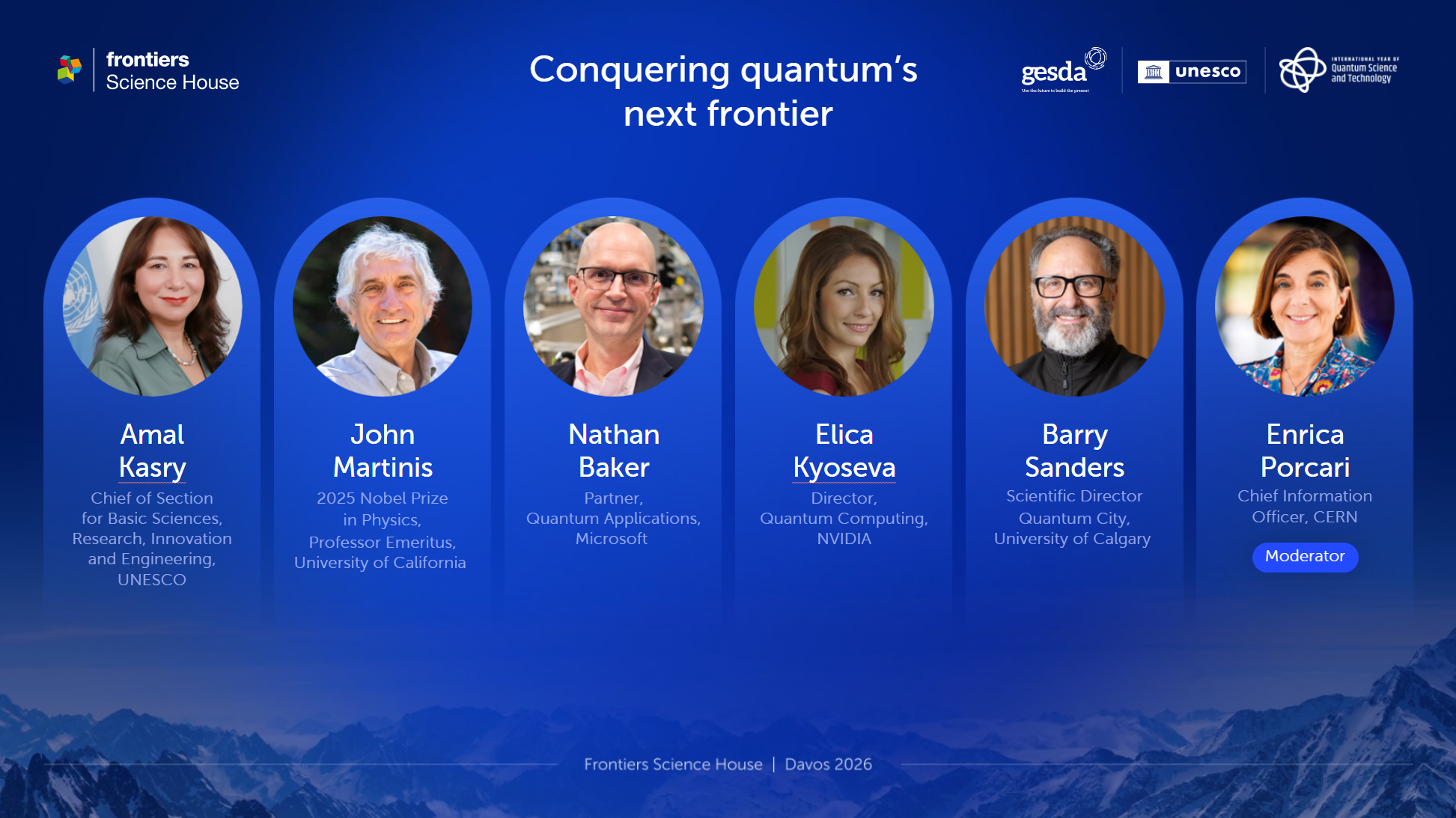
Conquering quantum’s next frontier
At the Frontiers Science House in Davos, this session explored how quantum technologies are transitioning from research to early application. The discussion focused on hybrid systems, global coordination, and inclusive capacity building.
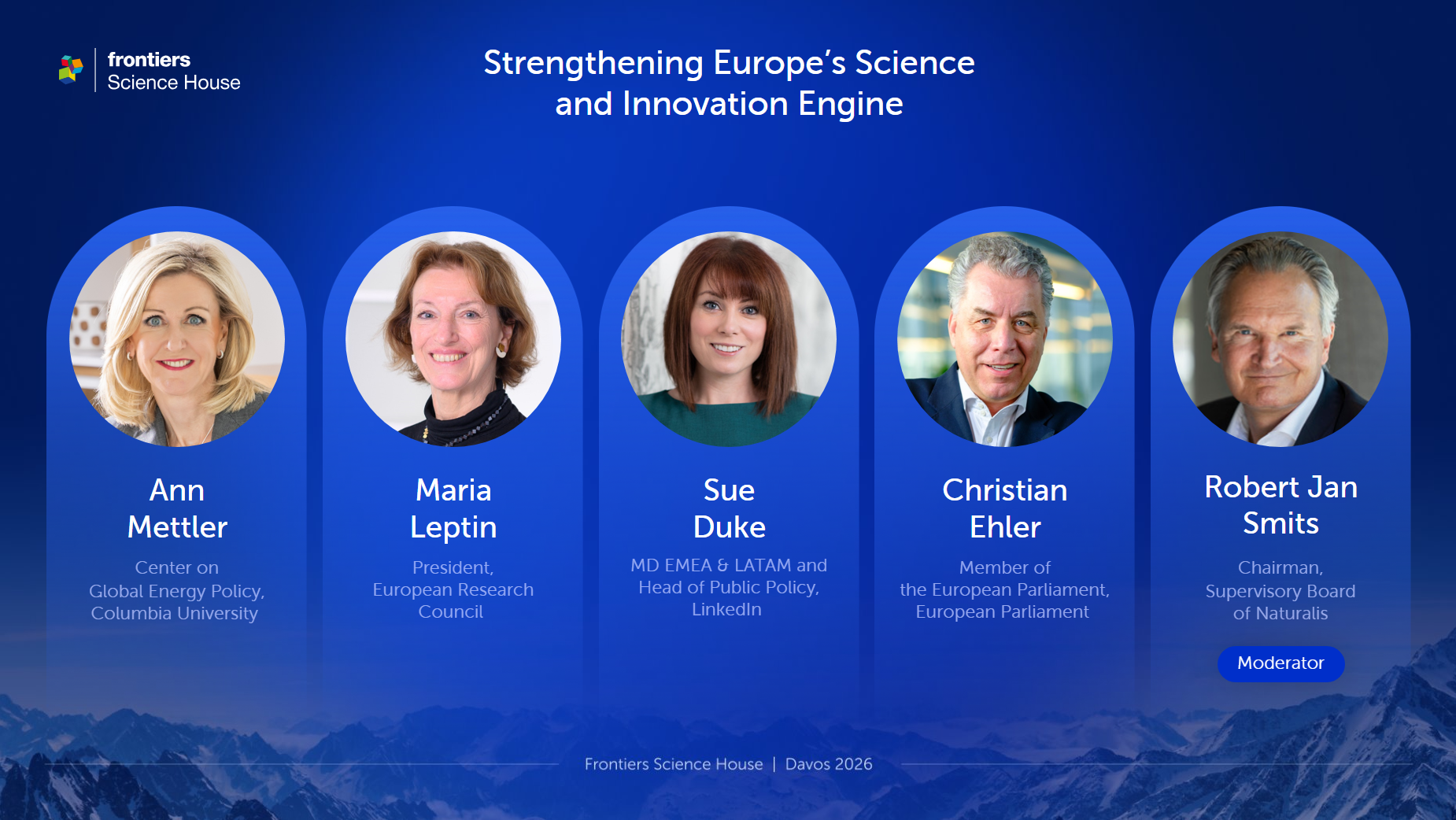
Strengthening Europe’s science and innovation engine
At the Frontiers Science House in Davos, speakers examined Europe’s challenge in translating strong research into scalable innovation to ensure its competitiveness, based on the inputs from the Draghi report. The session emphasized the need to better connect funding, markets, and skills to strengthen global competitiveness.
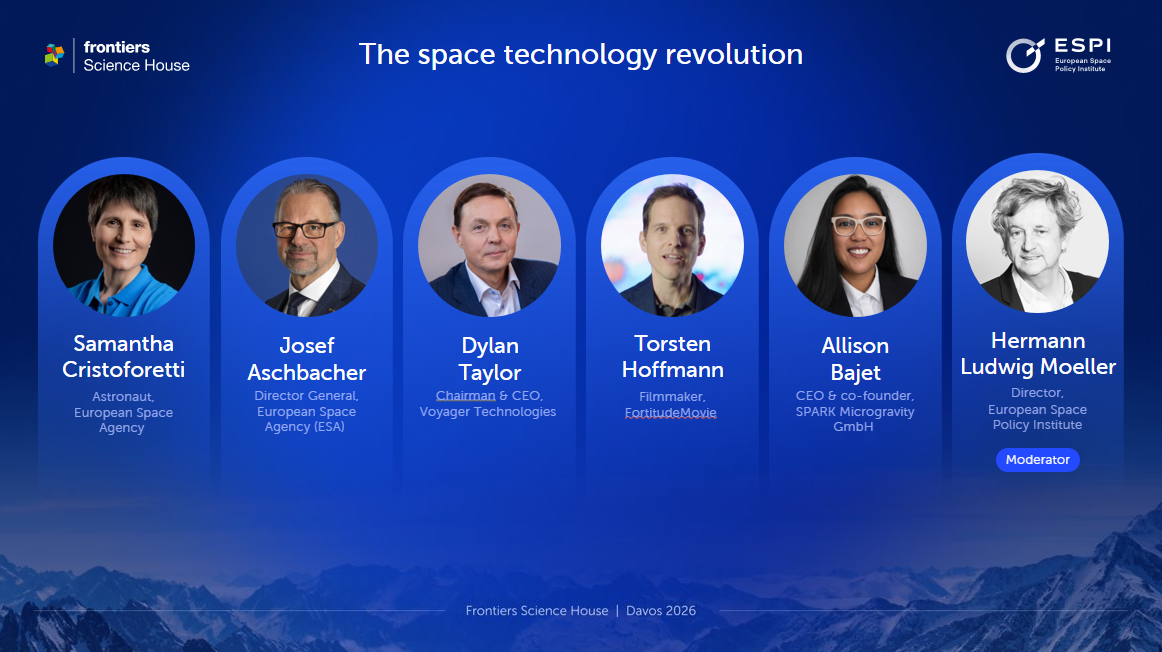
The space technology revolution
At the Frontiers Science House in Davos, this session explored how space technologies are becoming essential infrastructure for communication, security, and environmental monitoring. The discussion highlighted commercialization trends and the need for faster regulatory and investment frameworks.

Experts at odds: debating geoengineering
At the Frontiers Science House in Davos, this debate explored whether geoengineering should be treated as a necessary risk management tool or a distraction from decarbonization. The discussion highlighted governance challenges, systemic risks, and the urgency of maintaining focus on emissions reduction.

Is the Paris agreement dead?
At the Frontiers Science House in Davos, this session examined the widening gap between climate commitments and implementation. Speakers emphasized that the challenge is not awareness but execution, calling for stronger accountability, effective incentives, and deeper engagement from the private sector.
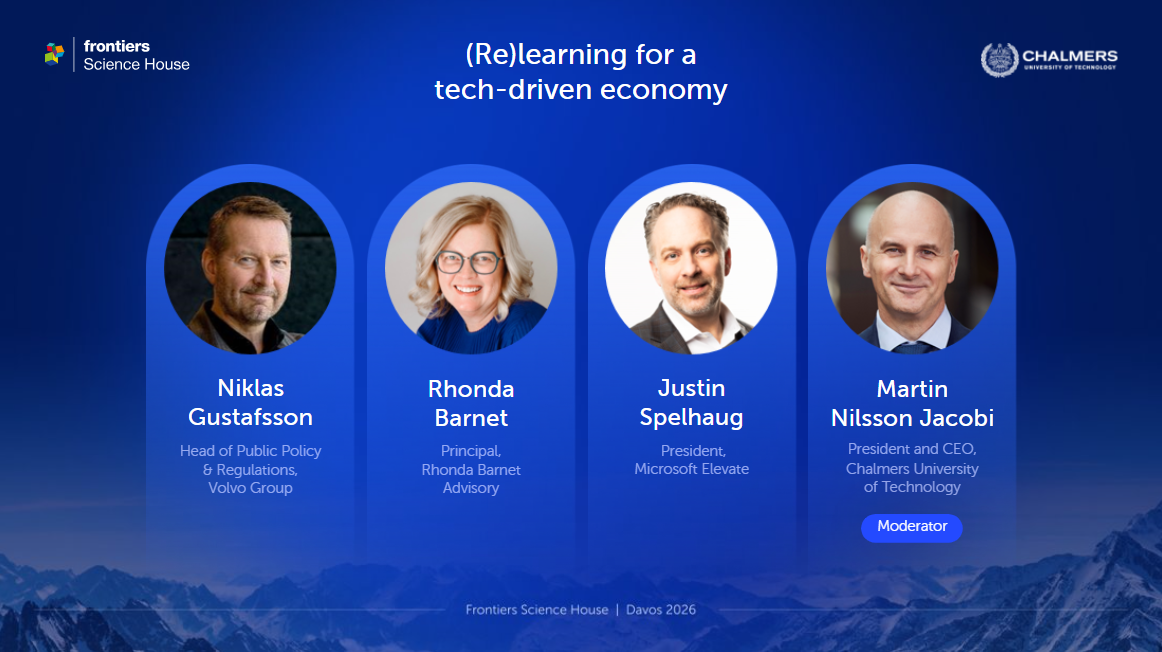
(Re)learning for a tech-driven economy
At the Frontiers Science House in Davos, speakers addressed the growing mismatch between the pace of technological change and education systems. The session focused on modular, rapid, and industry-aligned learning models, supported by new intermediaries that can connect skills development directly to labor market demand.
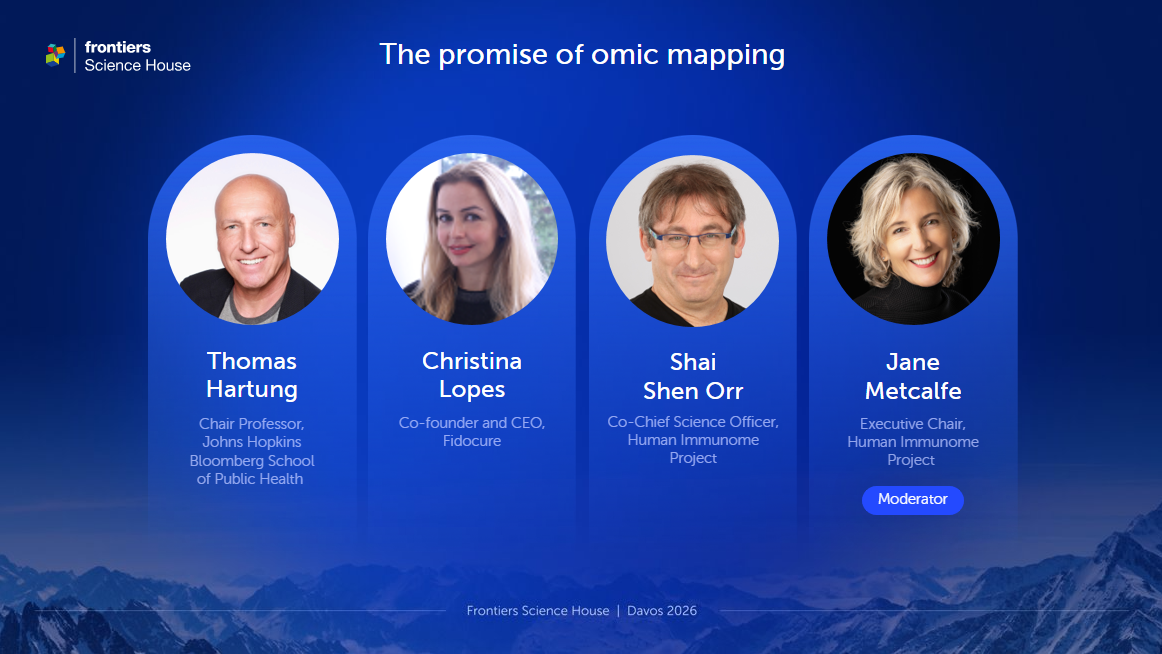
The promise of omic mapping
At the Frontiers Science House in Davos, this session highlighted how omic technologies are redefining disease understanding through multi-layered biological insights. The discussion emphasized that the key bottleneck is no longer data generation, but integration, standardization, and open access needed to translate complex datasets into actionable applications.
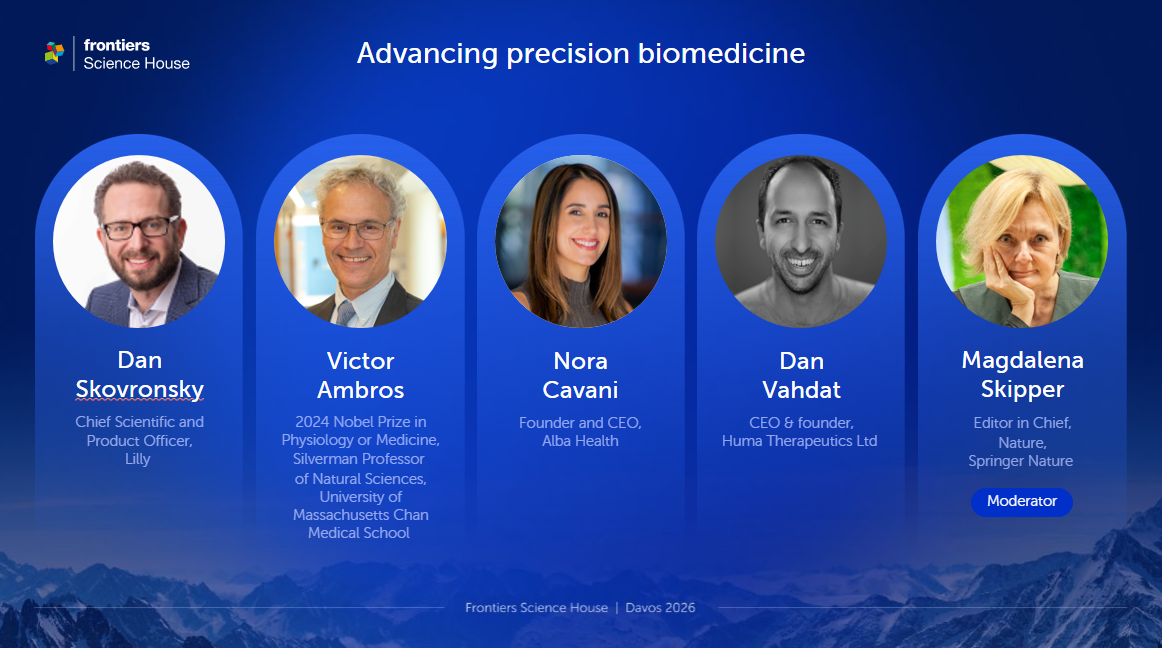
Advancing precision biomedicine
At the Frontiers Science House in Davos, the first venue dedicated to transformative science during the World Economic Forum Annual Meeting, this session examined how precision biomedicine is moving from controlled trials into real-world care. Speakers highlighted the growing gap between scientific capability and system readiness, emphasizing the need to align diagnostics, data infrastructure, and regulatory models to scale personalized therapies equitably.
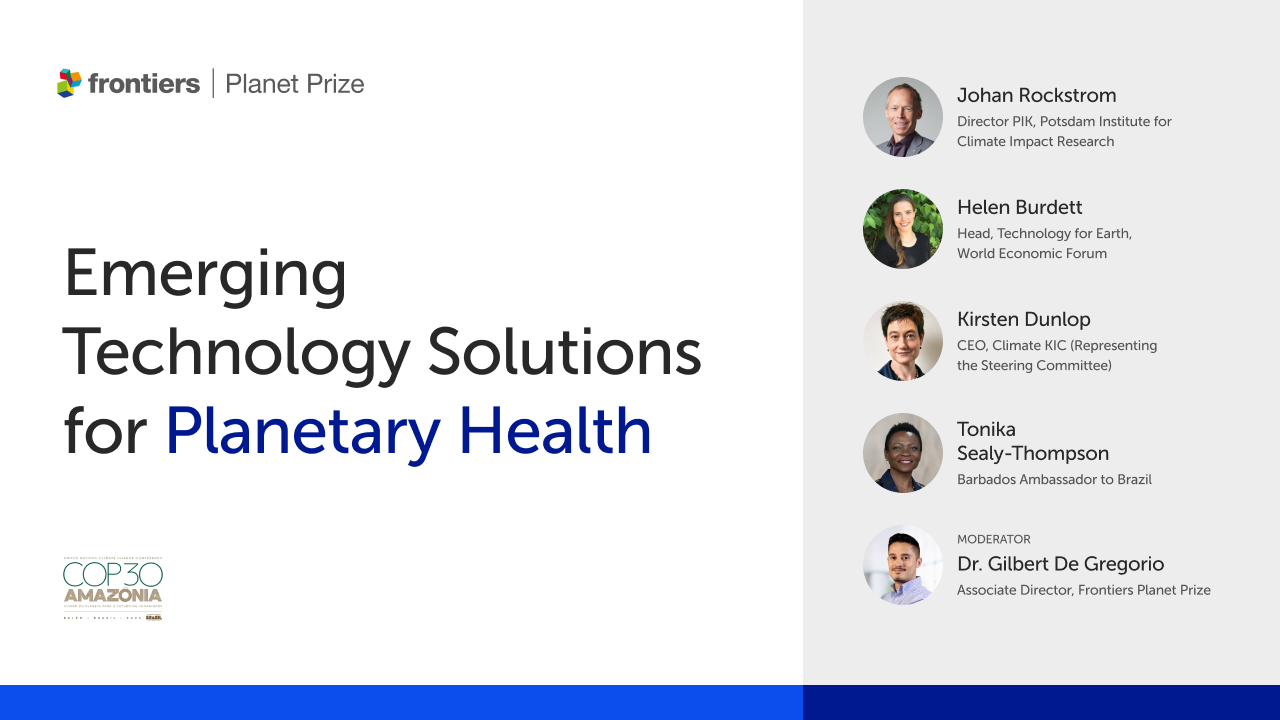
Key Takeaways from the WEF 2025 Emerging Technology Solutions for Planetary Health
Drawing on the World Economic Forum’s first technology report on planetary health, created in partnership with Frontiers, this COP30 panel highlighted key takeaways for deploying ten emerging solutions at scale. Panellists emphasised shifting from self-reported data to precise earth observation, investing in digital-twin diagnostics, and embedding policy, finance, and community co-creation to ensure equitable, real-world impact for restoring planetary systems.

Key Takeaways from the WEF 2025 Top 10 Emerging Technologies
The Top 10 Emerging Technologies of 2025 report, published by the World Economic Forum in collaboration with Frontiers, highlights breakthrough innovations shaping the future of energy, information technology, and sustainability. During a panel discussion focused on the report, experts explored how fusion energy, green chemistry, and next-generation sensing systems are advancing from research to real-world impact. Key themes included AI as a cross-cutting enabler, the centrality of energy to global transformation, and the need for patient capital and societal readiness to scale these technologies.

Exploring the limits and culture of academic freedom: Insights from the 2024 Falling Walls Science Summit
Academic freedom is a prerequisite for scientific advancement and innovation. It serves as the cornerstone of scientific inquiry, granting scholars the unfettered ability to explore, teach, and disseminate ideas without fear of censorship or retribution. More recently, academic freedom has faced mounting political, economic, and social pressures, bringing it back into the global spotlight. Safeguarding this freedom is essential for the continued pursuit of knowledge and the betterment of society.

Insights from COP29
Participating last month at COP29 in Baku, Azerbaijan, I had the pleasure of moderating a discussion with some of the leading voices in climate science and innovation on a subject that couldn’t be more relevant given the setting and the stakes.
The topic of discussion was the underutilization of scientific knowledge in processes geared toward policy consensus and climate action. The question on the floor was: “[If] we possess so much scientific knowledge about the causes for the climate multi-crisis and about the solutions, why then does science not play a bigger role in breaking what seems like an endless cycle of deadlocked discussions?”

Key takeaways from the WEF 2024 Top 10 Emerging Technologies panel
In June, the World Economic Forum (WEF) and Frontiers unveiled the awaited Top 10 Emerging Technologies of 2024 report. Now in its 12th year, the report continues to spotlight groundbreaking technologies that are poised to influence society and address critical global challenges. This year's report is the culmination of extensive research and collaboration among leading experts and innovators, broadening the scope and deepening the analysis of the findings. It showcases technologies that are not only innovative but also have the potential to drive sustainable development and economic growth within the next three to five years. From revolutionizing connectivity to pioneering new applications of artificial intelligence (AI), the 2024 report offers a comprehensive overview of the technologies set to shape our future.