

Rewiring the formal science-policy interface
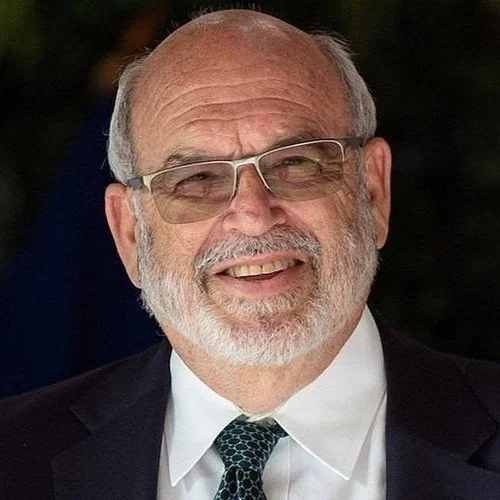
Sir Peter Gluckman
Koi Tű: Centre for Informed Futures, Auckland, New Zealand
President International Science Council
Former President International Network for Government Science Advice
Published on September 18th, 2026
Over the later part of the 20th century and the early part of this century, a number of countries evolved structured mechanisms of science advice to support policy making. Initially there was a focus on security and defense matters, then on the relationship between science and innovation given impetus by the landmark report the Endless Frontier[1], but, by the end of the 20th century, science advice had evolved to embrace broader policy domains where science could assist by providing the scientific evidence on which many other policy considerations could be based. The underlying assumption in these developments was that science advice would help countries reach ‘better’ policy decisions and indeed it was argued this would strengthen democracy[2].
There was a fuzzy distinction between technical advice that could be provided by in-house experts or consultants and the more complex areas which were becoming the focus of higher-level policy considerations. These complex policy dilemmas and so-called ‘wicked problems’ were emerging in every domain of government activity and the failure to meaningfully address them frustrated both politicians and citizens. While not a panacea, more formal processes of science advice became, at least in some countries, a valued part of governments’ toolkit.
In anglophone and a few other countries including Japan, a model evolved with a science advisor directly reporting to the president or prime minister supported by domain-specific science advisors in key ministries. This was supplemented with other processes including advisory committees and in some cases a role for national academies. In Europe a different approach was taken with resistance to individuals being seen to have a direct advisory role to ministers. Instead, science advice was via their national academy and advisory committees. Some legislatures also created advisory mechanisms.
The advisory committee model limited what could be achieved as they were generally somewhat more distant from the policy process. They largely operated by providing reports, either solicited or unsolicited, and in some cases had difficulties reorientating from an academic to a policy focus. Yet unsolicited inputs get little traction. The committee approach limited their capacity to inform the brainstorming stages of policy development or respond acutely to emergencies. Individual science advisors could play a more overt role in supporting diplomatic interests and as public communicators.
Irrespective of the model, the role was intended to synthesize evidence and provide it in useful ways to policy makers. This has been characterized as two steps – evidence synthesis and evidence brokerage[3]. Evidence synthesis is the process of summarizing the relevant scientific evidence in ways and in a timely manner and with the appropriate level of detail to be useful to the policy maker. One challenge that was reinforced by experiences during the Covid pandemic, was the need to avoid overtly narrow domain-specific advice that did not take account of the broader policy considerations that confront policy makers[4].
There will always be a degree of tension between the desire of scientists to provide evidence and the more limited interest of policy makers and politicians to seek evidence. Both sides can exhibit hubris which can create barriers[5]. Evidence brokerage is thus distinctive in that it bridges between what policymakers and politicians want and provides evidence in a useful way. Often the question itself needs clarification and reorientation. Brokerage to the policy community means summarizing what is known, what is not known, the caveats on both, including stating uncertainties and providing an assessment of the conclusions that could be drawn while acknowledging the inferential gap between what is known and concluded[6]. It thus elucidates from a scientific perspective the options that policy makers might have but should not attempt to usurp the role of policy makers in the broader considerations in reaching a decision whether to act and which option to follow.
In the international arena, chief scientists were appointed to several UN agencies and some, such as WHO, appointed science advisory committees. In 2023 the UN Secretary General reestablished a science advisory board although its mandate was largely one of providing evidence synthesis to the secretary general given the that the UN Secretary General has no executive role. The European Commission (which has only regulatory and no executive functions) had tried briefly with a single science advisor but then moved to a panel structure with significant secretarial support and a parallel linkage to a plethora of European academies through an integrating structure, SAPEA. In addition, the Joint Research Centre provides significant in-house capacity.
But over the last decade and accelerated by a changed information environment, more overt transactionalism in politics, and growing polarization in societies, there appears to be less enthusiasm for science advice than previously. This is exemplified in recent surveys [7] that show while publics think overwhelmingly that scientists must engage with the public, only about half of those surveyed strongly agreed with the statement that “scientists should work closely with politicians to integrate scientific results into policymaking”. The survey further showed that this reluctance is somewhat linked to political polarization.
The emergence of populism certainly has confronted science advice. The most extreme populist views see science as elitist and no more valid that any other view (particularly that of populists)[8]. While those views may be held by a small number of people, they can have disproportionate impact. In the context of this polarized rhetoric, science advice must be even more carefully presented in ways that minimize potential accusations of political or ideological bias.
As science has engaged more successfully on complex issues such as sustainability, mental health and social cohesion it increasingly confronts contested values and interests. As a result, politicians of nearly all political persuasions will choose what science they want to accept[9]. This creates a major challenge, and it was here, that individual science advisors often can assist by confronting matters off-the record.
Covid has put proverbial fuel on the fire. Too many scientists claimed a certainty that was not there, lost their detached independence, or were perceived to have done so especially when politicians claimed they were just following the science, when they were using the pandemic for other agendas4. The pandemic also gave fuel to populism and at least in the USA appears to have triggered some loss of trust in science, although in general science still has a high level of trust in most countries[10].
Looking ahead
Identifying how science advice should be best structured and conducted in a more fractured world, both globally and in some cases domestically, where the changed information environment confuses matters is not easy. The policy cycle has become shorter, as policymaking and politics has become more transactional. In this context, traditional long-form evidence synthesis developed over many months will have limited value. The increasingly tight policy linkage between science, technology, economics, security and geostrategic considerations has implications for the role of science advisors; some are being expected to focus more on supporting polices for science and innovation rather than on the role of evidence brokerage[11].
The emergence of sophisticated generative AI tools is adding another challenge for science advice. Knowledge management is significantly changed in all organisations. Many governments have announced they are going to rely increasingly on AI not only in agentic and LLM modes, but also in knowledge management and policy making. Government officials can increasingly, and easily, turn to AI for scientific synthesis without requiring expert input. This will certainly speed the task, aligning with the increasingly transactional political environment. AI may therefore help increase the use of evidence across policy making.
But there will be very significant risks if this process is not curated well, both before and after the ‘digital cogitation’ phase. Expert input remains necessary both before, during and after AI is applied. AI gives answers to the questions/prompts set and dependent on the data sets it has access to. Expertise is needed in defining the questions, the scope of scientific domains to consider, and consequent derivative questions and analyses. Otherwise, incomplete responses inadequately considering the scope of scientific input needed become likely and the implications for useful policy advice may be mismatched. This is not conceptually different to the role of the science broker in matching request and answer.
The rules of brokerage should still apply whether the advice developed is AI mediated or not. It must detail what is known, what is not known, the caveats on both and highlight the uncertainties in conclusions reached and then suggest policy options to consider. Almost inevitably it will require iterative interrogation of the report that emerges. Here the science advisor will need to evaluate the output and in doing so be conscious of the context, the broader consequences of any options identified and the practicalities from a scientific and policy perspective for the advice to be valuable.
Thus, the criteria identified in the analogue age of brokerage remain even in the digital age. There must be good alignment between the need of the policy maker, the questions being asked and the scope of the answer provided. If the outputs of evidence synthesis by AI are not subject to appropriate expert review, errors of interpretation, contextual fit and balance are likely to be inevitable.
The challenge will be to ensure that experts stay in the loop. Advisors, academies and advisory committees who have had a traditional role in evidence synthesis may need to rethink how they operate so that they are equipped to usefully respond very quickly to support and interpret AI driven evidence synthesis. If they are not positioned to do that, they may find themselves irrelevant at the science policy interface.
There will be other areas where the human science advisor will remain essential, most obviously in emergencies and in considering issues like social license for new technologies. Greater thought needs to be given to the role of scientifically informed anticipatory foresight where not only the obvious strong signals are identified but also the weak signals that may become strong[12]. Science advice will have to embrace these skills which extend well beyond classic scenario setting to be of value.
The human-mediated knowledge brokerage role may even become more important in the AI-mediated information age. Unless there are trusted individuals available to interface with policymakers and politicians, the contestation of public opinion, amateur web-based research interpretation by biased media, influential lobbyists and populists, along with AI-derived inputs from a policy community which may or may not be well curated, science advice may be degraded.
The biggest challenge will be dealing with governments and bureaucracies that are trending towards seeing robust scientific input as unnecessary. Work will be needed with such governments who view the world in a much more transactional way. Similarly, the academic community may need to become more pragmatic than their traditional idealistic approach which has dominated in STS, science-policy and science diplomacy-focused academic literature[13]. This transactional turn may mean that analytical approaches that have in the past taken several months or longer will not be valued, and the science system will have to get used to short rapid but well curated inputs usually supported by AI.
Engaging with skeptical governments and publics will not be easy and will require focusing on those domains where governments and their citizens can see value. It is possible to develop strong arguments as to where data can be used across government to make for greater efficiency. For example, robust analytical social science can help those governments with a commitment to funding social support do better in difficult fiscal circumstances.
The science advisory mechanism may show its value in other ways. The role of anticipatory foresight is emerging as an important aspect of policy making extending well beyond technology foresight, although that may be an important element. Most policy making tends towards the short-term, yet as Covid, natural disasters, informal migration and climate change all demonstrate - greater national resilience requires thinking ahead about shocks and stresses, strong and weak signals which need to be considered in forward looking policy making13. Science advisors/mechanisms should develop this competency as, in a fast-changing world, resilience will increasing depend on understand the range of possible futures to prepare for.
Ultimately the need for, and the role of, human-mediated science advice is changing. It is shifting from an analogue model that was appropriate less than two decades ago to a very different environment. Some deep thinking is needed about how, in a much more transactional and digital world, we ensure that robust knowledge is well used to improve decision making in every country.
References
[1] Bush V (1945) The Endless Frontier https://www.pi.infn.it/~giorgio/INFN/3M/SciencetheEndlessFrontier.pdf
[2] Collin H and Evans R (2017) Why democracies need science. Polity Press (Cambridge UK)
[3] Gluckman, P.D., Bardsley, A. & Kaiser, M( 2021).. Brokerage at the science–policy interface: from conceptual framework to practical guidance. Humanit Soc Sci Commun 8, 84 https://doi.org/10.1057/s41599-021-00756-3
[4] International Science Council (2022). Unprecedented &
Unfinished: Policy Lessons and Recommendations from COVID-19 – 2nd edition, Paris, France, DOI: 10.24948/2023.03.
[5] Gluckman, P (2014) Policy: The art of science advice to government. Nature 507, 163–165 . https://doi.org/10.1038/507163a
[6] Douglas H 2009 Science, Policy, and the Value-Free Ideal University of Pittsburgh Press
[7] Cologna, V., Mede, N.G., Berger, S. et al. (2025) Trust in scientists and their role in society across 68 countries. Nat Hum Behav 9, 713–730. https://doi.org/10.1038/s41562-024-02090-5
[8] Collins H, Evans R, Durrant D Weinel M (2020) Experts and the Will of the People: Society, Populism and Science. Springer International Publishing.
[9] Rekker R (2025) A four-level model of political polarization over science: Evidence from 10 European countries, Public understanding of Science:doi.org/10.1177/09636625241306352
[10] Pearson H (2026) Have people stopped trusting science? The data show a surprising story. Nature 655, 22-25
[11] Gluckman, P (2014). The art of science advice to government. Nature 507, 163–16 https://doi.org/10.1038/507163a
[12] Jabbour, J., Davidson, D.J., Carlsen, H. et al. Navigating the winds of change: strategic foresight and the power of weak signals. Sustain Sci 21, 1545–1560 (2026). https://doi.org/10.1007/s11625-025-01786-5
[13] Turekian V, Gluckman P (2025) Rewiring Science diplomacy Science 389, 761 doi.org/10.1126/science.aeb4815
Copyright: © 2026 [author(s)]. This is an open-access article distributed under the terms of the Creative Commons Attribution License (CC BY). The use, distribution or reproduction in other forums is permitted, provided the original author(s) or licensor are credited and that the original publication in Frontiers Policy Labs is cited, in accordance with accepted academic practice. No use, distribution or reproduction is permitted which does not comply with these terms.
